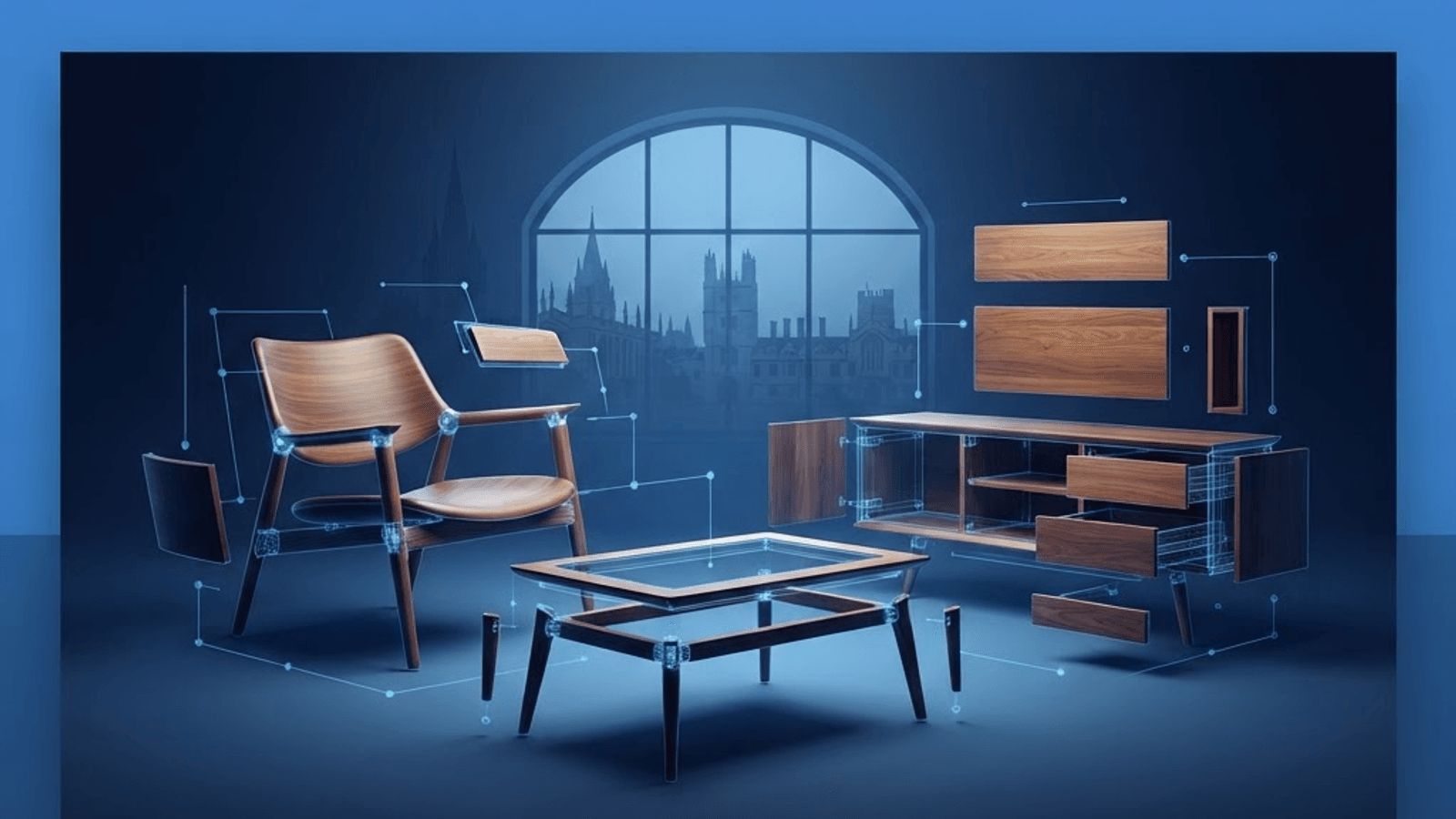
A City With Centuries of Furniture-Making Behind It
Furniture making in Oxford has an unusually long and continuous history. Colleges have commissioned tables, panelling, bookcases and chapel seating for hundreds of years, and that steady demand supported generations of joiners and cabinetmakers in and around the city. Many workshops still operating today can trace their techniques, and occasionally their premises, back to that tradition.
What makes the modern Oxford furniture sector interesting is the coexistence of that heritage with genuinely contemporary manufacturing. In the same week, a local workshop might hand-cut dovetails for a restoration project and run a CNC nesting machine to produce flat-pack components for a student accommodation contract. Both are furniture manufacturing, and both are done well here.
Bespoke, Batch or Contract: Understanding Your Options
Buyers approaching an Oxford furniture manufacturer generally fall into three groups. Private clients and interior designers usually want bespoke pieces, made once, to fit a specific space or match existing joinery. Businesses fitting out offices, cafes or hotels want batch production: twenty identical tables, fifty chairs, a consistent finish and a delivery date. Institutions such as colleges, schools and healthcare providers want contract furniture, which must satisfy fire regulations, contract-grade durability standards and often accessibility requirements.
The skills overlap but the businesses differ. A superb one-man cabinet shop may be the wrong choice for a fifty-room refurbishment, while a large contract manufacturer may have no interest in a single walnut sideboard. Matching the scale of the maker to the scale of the project is the single most useful decision a buyer can make.
The Ten Best Furniture Manufacturers in Oxford
1. Oxford Cabinet Works. A traditional cabinetmaking workshop with a strong reputation for library furniture, bookcases and fitted studies. Solid timber construction, hand-applied finishes and a design service that draws on close study of historic Oxford interiors distinguish its output.
2. Isis Contract Furniture. Built for volume, this manufacturer supplies student accommodation, hotels and healthcare settings with durable case goods and seating. Its specification knowledge is notable, covering fire retardancy, impact resistance and cleanability requirements that private-client makers rarely encounter.
3. Cherwell Joinery and Interiors. Architectural joinery is its core discipline: reception desks, panelling, staircases and fitted units manufactured to architects' drawings. The company works comfortably in listed buildings, where matching existing profiles and using reversible fixings are essential.
4. Cowley Timber and Design. A modern workshop combining CNC machining with skilled assembly, producing contemporary furniture in engineered timber and veneered board. It is a strong choice for designers who need precise, repeatable pieces with clean detailing.
5. Headington Upholstery Company. Specialists in frames, seating and upholstered furniture, from restoring antique chairs to manufacturing new sofas and banquette seating for hospitality clients. Its in-house frame shop allows unusual dimensions and shapes that catalogue suppliers cannot offer.
6. Botley Furniture Manufacturing. A mid-sized producer of office and educational furniture, including desks, storage and height-adjustable systems. Ergonomic compliance and quick lead times on standard ranges have made it a reliable partner for local employers.
7. Summertown Bespoke Kitchens. Although kitchens are its headline product, this company is a genuine furniture manufacturer, building freestanding dressers, islands and pantry units in its own workshop. Painted hardwood and traditional construction sit alongside modern hardware and appliance integration.
8. Kidlington Wood Products. Focused on component and flat-pack manufacture, supplying other furniture businesses as well as end users. Its cutting, edging and drilling capacity makes it a useful subcontractor for designers without their own machinery.
9. Thames Valley Reclaimed Furniture. A sustainability-led maker working with reclaimed timber, salvaged college fittings and responsibly sourced hardwood. Each piece carries provenance information, which resonates strongly with buyers who value material history as much as design.
10. Oxfordshire Studio Furniture. A small designer-maker studio producing limited-run contemporary pieces. Its work is characterised by careful proportion, exposed joinery and unusual timber selection, and it exhibits regularly at national craft events.
Materials, Finishes and Durability
Material choice determines both appearance and lifespan. Solid hardwoods such as oak, ash and walnut remain the premium option, valued for repairability and the way they age. Engineered boards with high-quality veneers offer dimensional stability and are usually the better choice for large flat surfaces and painted work. Contract environments increasingly specify laminates and compact grade surfaces for their resistance to cleaning chemicals.
Finishes matter just as much. Hard-wax oils are easily repaired and popular for domestic furniture. Lacquers give a tougher, more uniform surface suited to commercial use. Water-based systems have improved considerably and are now standard in workshops that want to reduce solvent emissions, which is an increasingly common requirement in tender documents.
Trends in Oxford Furniture Manufacturing
Sustainability leads the agenda. Certified timber, low-emission finishes, take-back schemes and design for disassembly are all moving from optional to expected, particularly in institutional contracts. Repair and refurbishment have also grown into substantial business lines, as organisations recognise that reupholstering and refinishing existing furniture is cheaper and greener than replacement.
Flexible workspace design is another driver. Demand has shifted towards modular tables, mobile storage and acoustic furniture that supports hybrid working patterns. Meanwhile digital tools have changed the client experience, with three-dimensional visualisation now routine before a single board is cut.
Practical Advice for Buyers
Set your budget and timeline honestly at the first conversation, because bespoke furniture cannot be rushed without cost. Ask to see finished work rather than only photographs, and inspect the parts you are not supposed to notice: drawer bottoms, cabinet backs, edge treatments. Confirm who is responsible for delivery, access and installation, which in Oxford's narrow streets and historic buildings is rarely trivial. Get the specification in writing, including timber species, finish, hardware and tolerances.
Oxford's furniture manufacturers offer something increasingly rare: real making capacity, close enough to visit, with people who will discuss the details of a joint or a finish. Whether the requirement is a single heirloom piece or two hundred robust desks, the expertise exists within a few miles of the city centre.
Want your brand featured in front of decision-makers? Publish a guest post or get a link insertion in our guides through AAMAX's guest post and link insertion service.
Helpful Links
 SponsoredAAMAX — Full-Service Digital Agency
Write for Us
Share your expertise with our readers. We welcome guest contributions from industry specialists.
Pitch your idea