A Craft Industry With Modern Capability
Furniture making in Northern Ireland has always combined craft skill with commercial pragmatism. The province produced substantial volumes of upholstered and cabinet furniture through the twentieth century, and while imports reshaped the market, the sector adapted by concentrating on bespoke work, fitted furniture, contract projects and design-led production where customisation and quality justify local manufacture.
Lisburn and Castlereagh is well represented in this landscape. Joinery workshops, kitchen manufacturers, upholsterers and contract furniture suppliers operate across the district, from small artisan workshops in rural areas around Dromara and Glenavy to larger production facilities at Knockmore and Carryduff. Access to the Belfast market and a strong construction sector sustain steady demand.
Ten Furniture Manufacturers Serving the District
1. Lagan Valley Bespoke Kitchens
Designs and manufactures fitted kitchens, utility rooms and pantries using computer-controlled machining alongside hand finishing. In-house spraying, accurate site surveying and single-point project management are its calling cards.
2. Hilden Joinery and Cabinetmaking
A traditional cabinetmaking workshop producing furniture in solid hardwoods and veneers, specialising in dining furniture, library fitments and restoration of period pieces using appropriate jointing methods.
3. Castlereagh Contract Furniture
Supplies and manufactures furniture for hotels, restaurants, care homes and offices, with attention to durability testing, fire performance requirements and consistent repeat supply across phased projects.
4. Dundonald Upholstery Works
Manufactures upholstered sofas, chairs and headboards, and undertakes reupholstery of existing frames, offering wide fabric selection and frame construction suited to heavy domestic or commercial use.
5. Moira Fitted Bedroom Interiors
Focuses on fitted wardrobes, sliding door systems, dressing rooms and storage solutions engineered around awkward room geometry, including sloped ceilings and period property irregularities.
6. Knockmore Commercial Shopfitting and Furniture
Combines furniture manufacture with shopfitting, producing counters, display units, reception desks and bespoke retail fixtures, with installation teams working to tight fit-out programmes.
7. Carryduff Outdoor and Garden Furniture
Manufactures garden furniture, benches, pergolas and planters in treated timber and hardwood, designed and finished for prolonged exposure to Northern Ireland's wet climate.
8. Hillsborough Heritage Furniture Restoration
Specialises in conservation and restoration: veneer repair, French polishing, structural stabilisation and traditional finishing techniques for antique and inherited furniture.
9. Sprucefield Office Furniture Solutions
Provides workplace furniture including desking systems, storage, acoustic booths and collaborative settings, with space planning advice and ergonomic assessment for office refurbishments.
10. Lisburn Timber Products and Components
Manufactures components for other furniture makers and builders: worktops, doors, mouldings, edge-glued panels and machined parts supplied to specification.
Materials and Construction Quality
Judging furniture quality means looking beyond appearance. In cabinet furniture, examine carcase material and thickness, edge banding quality, drawer runner rating and whether joints are dowelled, dominoed or simply screwed. Solid timber offers longevity and repairability but moves with humidity; high-quality plywood and moisture-resistant boards offer dimensional stability, which matters in kitchens and bathrooms.
In upholstery, frame construction is decisive. Kiln-dried hardwood frames with corner blocks and either serpentine springs or hand-tied support outlast stapled softwood frames considerably. Foam density determines whether a seat holds shape after several years, and fabric selection should reflect rub-test performance appropriate to the setting.
Design, Technology and Bespoke Work
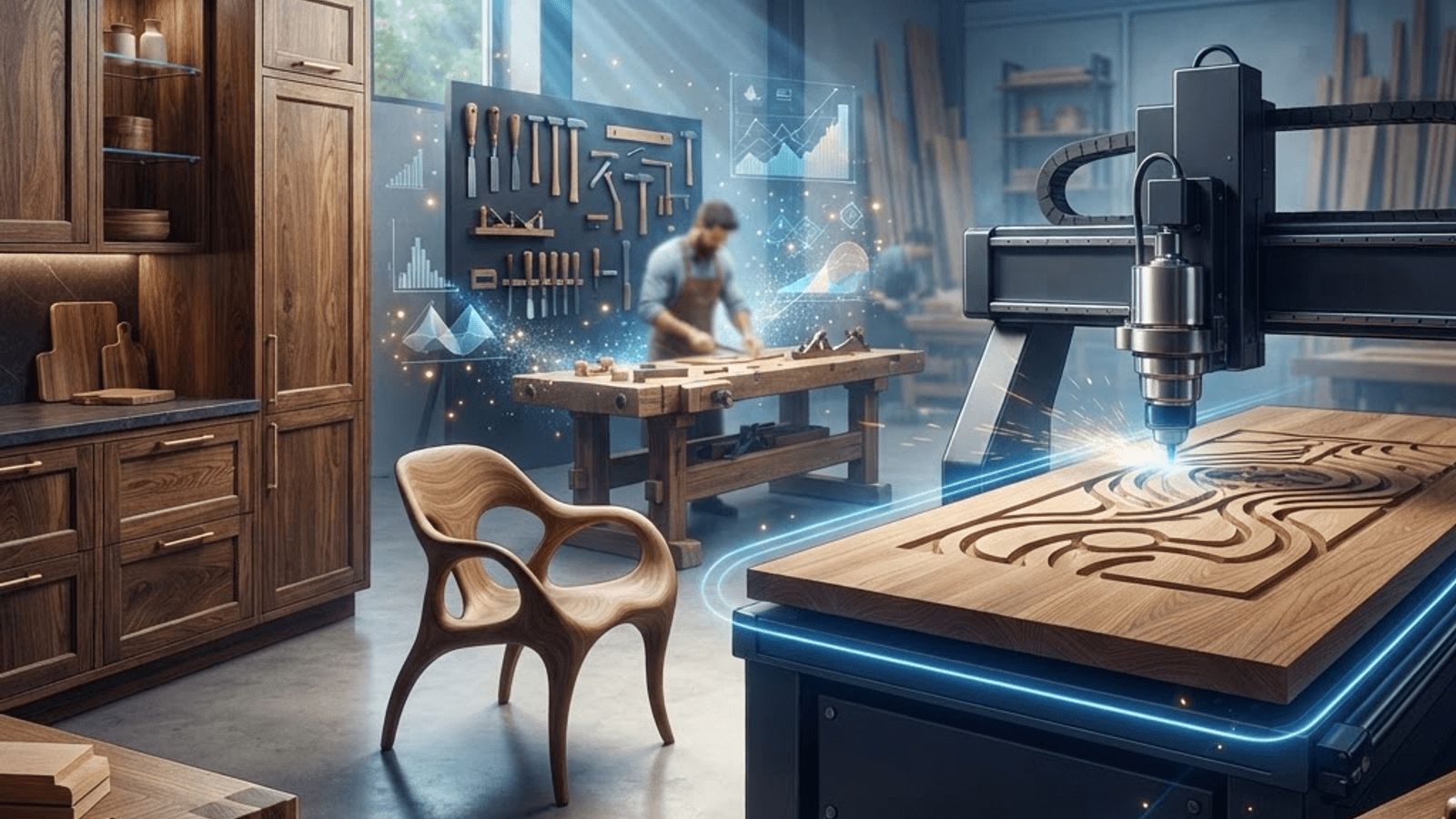
Digital design has changed customer expectations. Three-dimensional visualisation allows clients to see proposed kitchens and interiors before committing, while computer-controlled machining delivers repeatable accuracy that hand cutting cannot match at volume. The combination of digital precision and hand finishing is what allows small local workshops to compete with imported flat-pack production on quality while offering true customisation.
Sustainability and Responsible Sourcing
Timber provenance has become a genuine purchasing criterion. Certified sustainable sourcing, low-emission board products, water-based finishes and design for repair all feature increasingly in specification, particularly on public sector and commercial contracts. Locally manufactured furniture also carries lower transport emissions and generally supports repair rather than replacement, since parts and expertise remain accessible.
Commissioning Bespoke Furniture Successfully
Start with a clear brief covering function, dimensions, storage requirements, finish preferences and budget range. Expect a survey, drawings and a written specification listing materials, hardware brands and finish types. Confirm lead times, payment stages, delivery arrangements and who is responsible for making good decoration after installation. Ask to see completed work in person, since photographs flatter finish quality.
The Value of Buying Locally Made
Bespoke furniture manufactured within Lisburn and Castlereagh typically costs more than mass-produced imports but delivers fit, longevity and repairability that mass production cannot. For kitchens, fitted storage and contract environments where furniture must withstand years of daily use, that difference usually represents better long-term value, and the district's makers have the craft depth and technology to deliver it consistently.
Care, Repair and Longevity
Well-made furniture rewards modest maintenance. Timber surfaces benefit from stable humidity and periodic oiling or waxing depending on finish. Hinges and drawer runners should be adjusted rather than tolerated when they drift. Upholstery lasts considerably longer when cushions are rotated and fabric is protected from prolonged direct sunlight, which fades and weakens fibres.
The advantage of buying from a local manufacturer becomes clearest years later. Replacement doors can be matched, worktops can be refinished, seating can be reupholstered on the original frame and damaged components can be remade rather than the whole piece discarded. That repairability is both an economic and environmental argument, and it is the strongest case for commissioning furniture from makers who will still be reachable when it needs attention.
Want your brand featured in front of decision-makers? Publish a guest post or get a link insertion in our guides through AAMAX's guest post and link insertion service.
Helpful Links
 SponsoredAAMAX — Full-Service Digital Agency
Write for Us
Share your expertise with our readers. We welcome guest contributions from industry specialists.
Pitch your idea