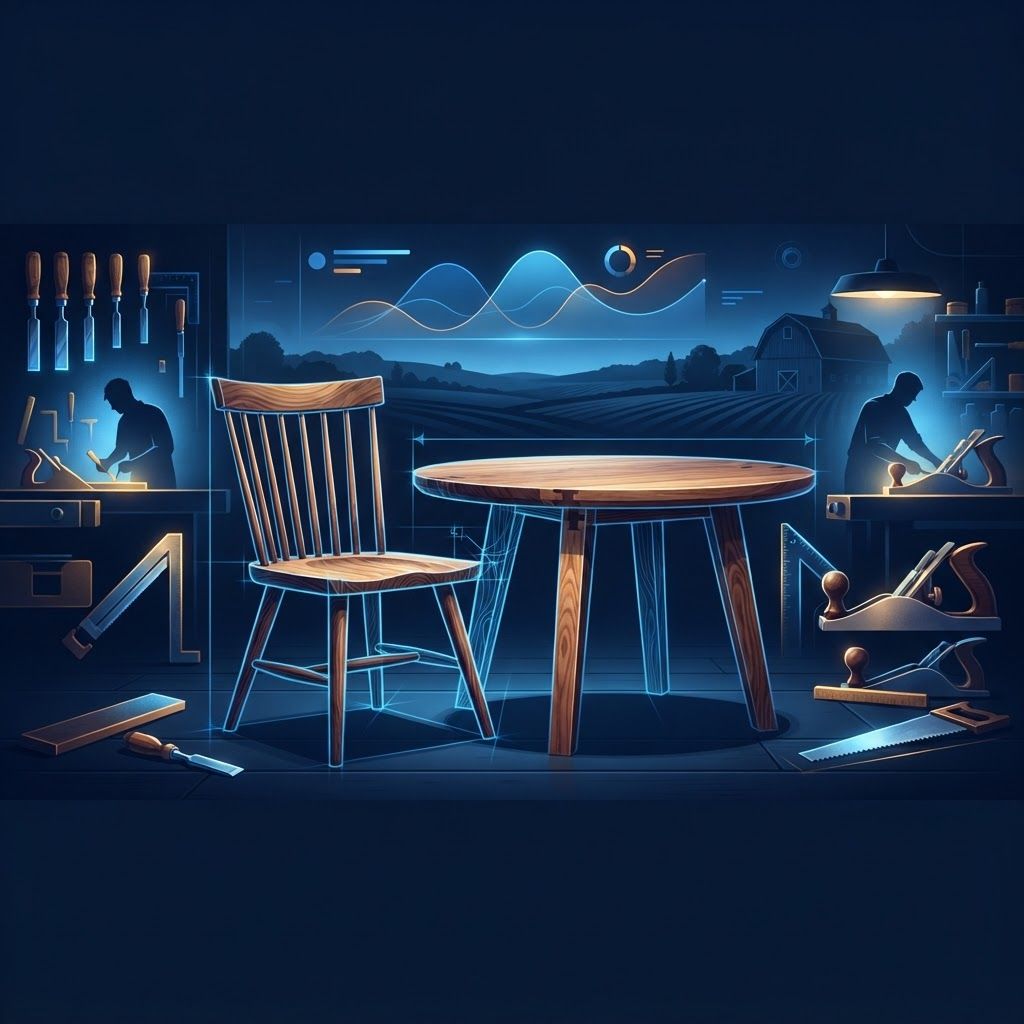
Why Lancaster Furniture Carries a National Reputation
Few places in the United States are as closely associated with fine furniture as Lancaster County. The connection runs deep, rooted in Amish and Mennonite woodworking traditions that treat furniture making as a craft passed from parent to child rather than a job. Those traditions produced a body of knowledge about wood movement, joinery and finishing that industrial furniture production largely abandoned, and customers across the country now seek it out specifically.
What distinguishes Lancaster furniture is not nostalgia but construction philosophy. Solid hardwood rather than veneered particleboard. Mortise and tenon or dovetail joinery rather than staples and dowels. Finishes applied in multiple hand-rubbed coats rather than a single ultraviolet cured pass. These choices cost more and take longer, and they produce pieces that remain serviceable after fifty years of use rather than five.
Alongside the residential craft sector sits a substantial commercial furniture industry producing office systems, healthcare furnishings, hospitality pieces and institutional casework. These manufacturers apply the same construction standards at greater scale, and many have built strong national contract businesses.
What to Look for in a Furniture Manufacturer
Wood species and grading tell you a great deal. Reputable manufacturers specify the species clearly, use kiln dried lumber at appropriate moisture content and are transparent about where solid wood ends and engineered material begins. Joinery is the next indicator. Ask how drawers are constructed, how case corners are joined and whether frames are glued and pinned or merely fastened.
Finishing quality separates good from excellent. Catalysed conversion varnishes and quality lacquers resist household chemicals and moisture far better than simple topcoats. Look for consistent sheen, absence of sanding scratches under raking light and careful attention to underside and interior surfaces. Customisation capability matters for many buyers, as does realistic lead time communication. Finally, warranty terms reveal genuine confidence, and Lancaster manufacturers frequently offer coverage measured in decades.
The Top 10 Furniture Manufacturers in Lancaster
1. Conestoga Hardwood Furnishings. A benchmark producer of solid cherry, oak and walnut dining, bedroom and living room furniture. Conestoga Hardwood Furnishings offers extensive customisation of dimensions, wood species and finish, and its hand applied finishing programme is widely admired.
2. Red Rose Cabinetmakers. Specialising in built-in cabinetry, libraries and kitchen casework, this workshop combines traditional joinery with CNC precision for consistent fit. Its designers work directly with homeowners and architects, producing installations tailored to specific rooms.
3. Susquehanna Contract Seating. Serving hospitality, healthcare and institutional markets, Susquehanna Contract Seating builds chairs, booths and lounge furniture to commercial durability standards. Frame testing and cleanable performance fabrics make its products suitable for demanding public environments.
4. Ephrata Heirloom Woodworks. A small workshop producing high end individual pieces including secretaries, tall case clocks and formal dining suites. Ephrata Heirloom Woodworks maintains genuinely traditional methods, and its waiting list reflects the reputation those methods have earned.
5. Lititz Office Systems. Producing desking, conference tables, storage and modular workstations for commercial clients, Lititz Office Systems bridges craftsmanship and contract requirements. Its ability to match architectural millwork to furniture finishes is frequently requested on corporate projects.
6. Manheim Upholstery Company. Eight-way hand tied springs, hardwood frames and kiln dried construction define this upholsterer's approach. Manheim Upholstery Company builds sofas and chairs designed to be reupholstered rather than discarded, which is increasingly attractive to sustainability minded buyers.
7. Pequea Valley Outdoor Furniture. Producing poly lumber and hardwood outdoor furnishings including Adirondack chairs, dining sets and swings, this manufacturer engineers products for genuine year round exposure. Stainless fastening and UV stable materials support long service life.
8. Strasburg Bedroom Collection. Focused specifically on bedroom furniture, this maker produces beds, dressers, chests and nightstands with dovetailed drawers and full extension hardware. Consistent proportion and detailing across the range allow customers to build complete suites over time.
9. New Holland Institutional Furniture. Building library shelving, classroom furniture, laboratory casework and church furnishings, this company understands the abuse institutional pieces endure. Reinforced construction and easily replaceable components reduce lifetime cost significantly.
10. Lancaster Live Edge Studio. Working with locally sourced slabs of walnut, maple and sycamore, this studio produces contemporary tables, benches and counters that highlight natural wood character. Careful drying and stabilisation prevent the movement problems that plague poorly executed live edge work.
Trends in Furniture Manufacturing
Sustainability has moved from marketing angle to purchasing criterion. Buyers increasingly ask about lumber sourcing, formaldehyde emissions from panel products and finish chemistry. Lancaster manufacturers are generally well positioned here, since solid hardwood from regional forests and long product lifespans represent genuinely lower environmental impact than imported flat pack alternatives.
Customisation has expanded dramatically, aided by digital tools that let customers visualise species, stain and dimension combinations before ordering. Many local manufacturers now treat made-to-order as standard rather than exceptional. A third trend is the growth of direct-to-consumer sales, which has allowed workshops that once depended entirely on retail galleries to build national customer bases.
Making Your Selection
Visit a showroom and inspect pieces physically. Open drawers, look at the back panel, run a hand along an unseen edge. Quality reveals itself in places manufacturers assume nobody will check. Ask direct questions about construction and note whether answers are specific or evasive.
Be realistic about lead times, because genuine handcrafted furniture cannot be produced in a week and any promise otherwise deserves scepticism. Consider total lifetime value rather than initial price. A dining table from a Lancaster workshop may cost several times what a mass market equivalent does, yet it will still be in use, and likely still beautiful, long after the alternative has been replaced three times over.
Want your brand featured in front of decision-makers? Publish a guest post or get a link insertion in our guides through AAMAX's guest post and link insertion service.
Helpful Links
 SponsoredAAMAX — Full-Service Digital Agency
Write for Us
Share your expertise with our readers. We welcome guest contributions from industry specialists.
Pitch your idea