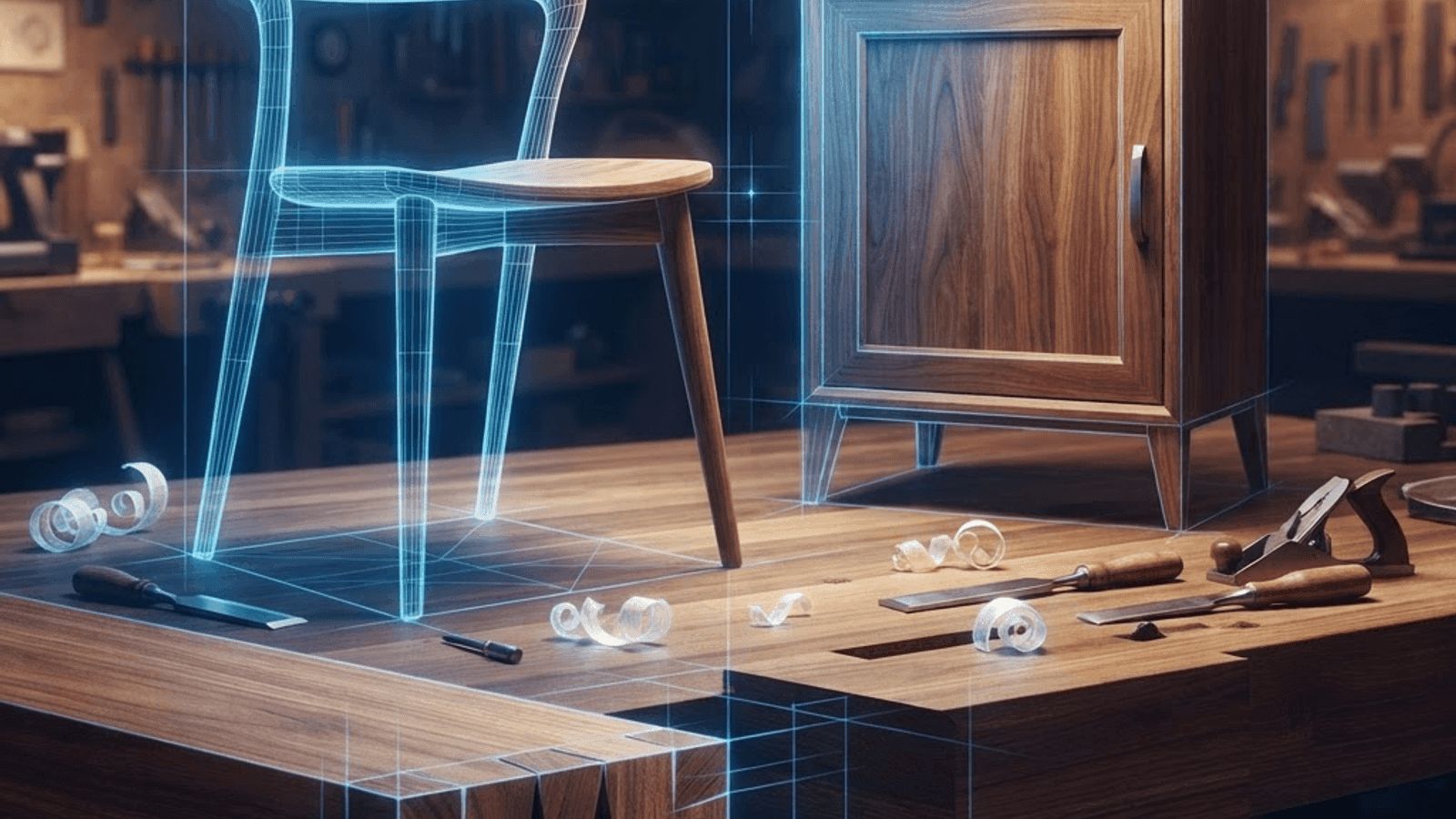
A Strong Tradition of Furniture Making
Hertfordshire and its neighbouring counties have deep roots in woodworking and furniture production, and East Hertfordshire continues that tradition in a modern form. The district supports cabinetmakers, bespoke kitchen manufacturers, joinery workshops, upholstery businesses, contract furniture suppliers and specialist restorers.
Several conditions favour the sector. The district has a large stock of period homes requiring sympathetic, made-to-measure furniture and joinery. Affluent households and interior designers support demand for handmade pieces. Commercial demand comes from hospitality, offices, schools and healthcare facilities across the region, while proximity to London gives local makers access to a substantial design market without London premises costs.
Types of Furniture Manufacturing in the District
Bespoke residential work dominates: fitted kitchens, wardrobes, libraries, media units, bootrooms and freestanding pieces made to individual specification. Architectural joinery is closely related, covering staircases, panelling, windows, doors and heritage replication for listed buildings.
Contract furniture forms a second stream, producing seating, tables, reception furniture and fitted units for hospitality and commercial interiors, usually to fire and durability standards. Upholstery businesses manufacture and reupholster sofas and chairs, while restoration specialists conserve antique furniture using traditional techniques and materials.
The Top 10 Furniture Manufacturers in East Hertfordshire
1. Hertford Bespoke Cabinetmakers. Produces handmade fitted kitchens and freestanding furniture in solid timber, known for hand-cut joinery, traditional finishes and precise site surveying.
2. Lea Valley Joinery Works. Delivers architectural joinery including staircases, panelling and heritage window and door replication for period and listed properties.
3. Stortford Contract Furniture. Manufactures seating and fitted furniture for hospitality and commercial interiors, with fire-rated fabrics and contract-grade construction.
4. Amwell Upholstery Studio. Specialises in handmade sofas and chairs plus full reupholstery, using traditional sprung construction and natural fillings.
5. Sawbridgeworth Design & Cabinet Co. Combines in-house design with CNC-assisted production for contemporary fitted furniture and wardrobe systems.
6. Rib Valley Timber Furniture. Works with locally sourced hardwoods to produce dining tables, benches and solid timber pieces with responsibly managed material sourcing.
7. Northgate Office Interiors Manufacturing. Produces desking, storage and reception furniture for workplace fit-outs, including acoustic and modular solutions.
8. Ware Furniture Restoration Workshop. Undertakes antique restoration, French polishing, veneer repair and conservation of historic furniture.
9. Buntingford Outdoor Furniture Makers. Manufactures garden benches, tables and structures in durable hardwood and weather-resistant finishes.
10. Hertfordshire Shopfitting & Display Manufacture. Builds retail display units, counters and shopfitting joinery for commercial and exhibition environments.
Materials, Craft and Quality Indicators
Furniture quality is visible in details most buyers overlook. Solid timber framing rather than stapled softwood, dovetailed or mortise-and-tenon joints instead of dowels and screws, properly seasoned and moisture-controlled material, hand-applied finishes built in layers, and drawer runners and hinges specified for genuine long-term cycling all separate lasting furniture from disposable product.
For upholstery, look at frame construction, spring systems, foam density and fabric rub test ratings. For fitted furniture, examine carcass material thickness, edge treatment and the accuracy of scribing to uneven period walls, which is where craft skill genuinely shows.
Sustainability in Furniture Production
Furniture has a long life if made well, which makes durability the single most effective sustainability measure. Leading local makers reinforce that with responsibly certified timber, low-VOC finishes, water-based lacquers, offcut recovery, and repairable construction that allows components to be replaced rather than the whole piece discarded.
Reupholstery and restoration deserve particular mention. Refurbishing a well-made frame consumes a fraction of the material and energy of new production, and East Hertfordshire has genuine depth of skill in this area.
How to Choose a Furniture Maker
Visit the workshop. Seeing work in progress reveals build quality, organisation and the level of hand craft involved. Ask to see completed projects comparable to yours and speak to previous clients about accuracy, timekeeping and how issues were resolved.
Clarify the process: design and drawing stages, survey timing, material selection, deposit structure, lead time and installation arrangements. Confirm what is included, particularly appliance integration, worktop templating, electrical and plumbing coordination and making good after installation. Understand the guarantee and how minor adjustments after fitting are handled, since timber moves seasonally and good makers expect to return.
Practical Advice for Clients
Provide accurate room dimensions, but expect a proper survey before manufacture. Decide on appliances, sanitaryware and ironmongery early because these dictate cabinet dimensions. Consider how you actually use the space, including storage volume, worktop working areas and circulation, rather than replicating a magazine layout. Realistic lead times of several weeks or months are normal for genuine bespoke work and are a sign of demand rather than inefficiency.
Working With Designers and Architects
A considerable share of local furniture production reaches clients through interior designers, architects and building contractors rather than directly. That route places different demands on makers: drawings must integrate with wider construction packages, materials and finishes must match specified schedules precisely, and delivery has to align with a programme where delays affect multiple trades.
Manufacturers who handle this well invest in proper technical drawing, CNC-assisted accuracy for repeatable components and clear communication about site readiness requirements such as plastered walls, screed drying and services positions. They also understand contract obligations around fire performance, formaldehyde emissions and durability testing in commercial settings. For clients, choosing a maker experienced in coordinated projects avoids the friction that arises when a purely domestic workshop is placed into a complex construction environment.
Final Thoughts
Furniture manufacturing in East Hertfordshire blends traditional craftsmanship with modern production capability, serving period homes, contemporary interiors and commercial spaces alike. Commissioning locally offers direct contact with the maker, precise fit and pieces built to last decades rather than seasons.
Want your brand featured in front of decision-makers? Publish a guest post or get a link insertion in our guides through AAMAX's guest post and link insertion service.
Helpful Links
 SponsoredAAMAX — Full-Service Digital Agency
Write for Us
Share your expertise with our readers. We welcome guest contributions from industry specialists.
Pitch your idea