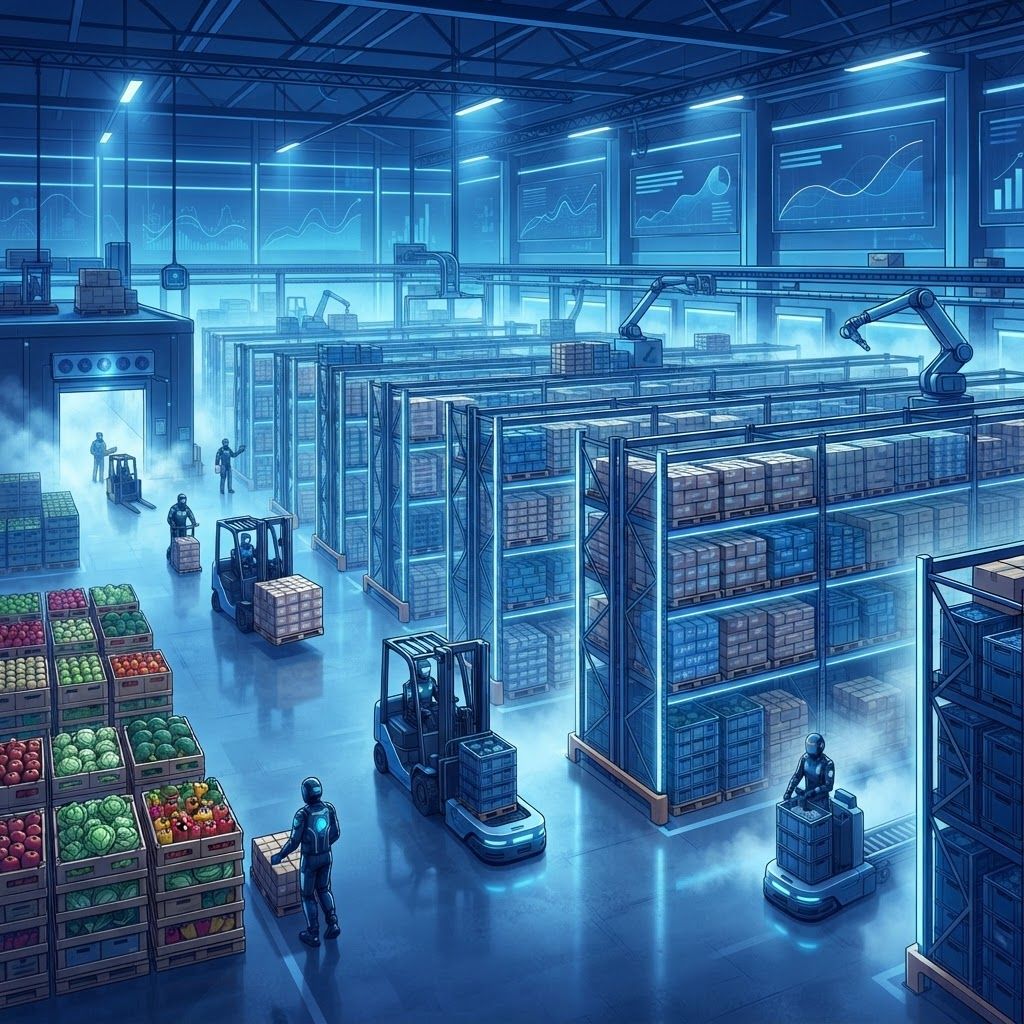
Food Wholesale and Warrington's Strategic Advantage
Food distribution is one of the most demanding forms of wholesale. Products have finite shelf lives, temperature control is legally mandated, delivery windows are narrow, and customers cannot simply wait until tomorrow. In that environment, location is everything, and Warrington's position at the junction of the M6, M56 and M62 gives local wholesalers an unusually strong operating base.
From a Warrington depot a chilled vehicle can reach Manchester, Liverpool, Chester, Preston and much of North Wales well within a single morning delivery round. That reach, combined with warehouse and cold storage costs lower than those in central conurbations, explains why so many food distribution businesses have established themselves in and around the town.
The local customer base is broad. Independent restaurants and takeaways, pubs and hotels, cafes and coffee shops, schools and care homes, convenience stores, farm shops, contract caterers and food manufacturers all rely on wholesale supply. Their needs vary enormously, which is why the sector has segmented into clear specialisms.
The Ten Leading Categories of Food Wholesalers in Warrington
1. Broadline Foodservice Wholesalers
Broadline wholesalers are the one-stop suppliers of the catering trade, carrying ambient groceries, frozen products, chilled goods, drinks and non-food disposables in a single delivery. Their advantage is consolidation: a restaurant can place one order rather than managing six suppliers. The best operators combine wide range with reliable delivery slots, online ordering, and account managers who understand menu costing.
2. Fresh Produce Suppliers
Fruit and vegetable wholesalers work on daily cycles, buying from wholesale markets, growers and importers and delivering within hours. Quality consistency, seasonal knowledge and early morning delivery are decisive. Leading Warrington produce suppliers also offer preparation services such as washed, peeled and cut vegetables, which saves substantial kitchen labour for busy caterers.
3. Butchery and Meat Wholesalers
Meat wholesalers supply beef, lamb, pork, poultry and prepared cuts to caterers and retailers. This category demands rigorous cold chain discipline and full traceability from farm to delivery. Strong suppliers offer bespoke butchery to specification, consistent portion weights that protect menu margins, and clear provenance information that chefs increasingly want to publicise.
4. Fish and Seafood Distributors
Seafood wholesalers handle fresh and frozen fish, shellfish and prepared seafood products. Given the extremely short shelf life of fresh fish, these businesses live or die by supply chain speed and cold chain integrity. The best provide daily availability lists, sustainable sourcing information and skilled filleting and portioning services.
5. Dairy and Chilled Goods Wholesalers
Dairy distributors supply milk, cream, butter, cheese, yoghurt and chilled desserts. Reliability is paramount, since dairy is used in almost every commercial kitchen daily. Leading suppliers maintain temperature-monitored fleets, offer both national brands and artisan cheeses, and provide frequent delivery schedules that limit the storage burden on customers.
6. Bakery and Patisserie Suppliers
Bakery wholesalers supply bread, rolls, morning goods, cakes and frozen bake-off products. The rise of bake-off has transformed this category, allowing cafes and convenience stores to offer freshly baked products without a bakery. Strong suppliers combine reliable early delivery with consistent product quality and a range spanning everyday lines to premium patisserie.
7. Frozen Food Distributors
Frozen specialists supply vegetables, prepared meals, potato products, desserts, ice cream and frozen proteins. Frozen supply offers caterers extended shelf life, portion control and reduced waste, which is why the category continues to grow. Key differentiators include cold storage capacity, delivery frequency and range depth across both value and premium tiers.
8. Beverage and Drinks Wholesalers
Drinks wholesalers supply soft drinks, juices, water, coffee, tea, beers, wines and spirits to pubs, restaurants and retailers. Beverage margins are important to hospitality profitability, so buyers value competitive pricing alongside dispense equipment support, staff training and help with drinks list development.
9. World Foods and Speciality Ingredient Wholesalers
Speciality wholesalers supply Asian, Middle Eastern, Mediterranean, Caribbean and other world food ingredients to restaurants and retailers. The North West's diverse population and thriving independent restaurant scene make this a substantial segment. Authenticity, ingredient range depth and knowledge of regional cuisines are the main strengths of leading operators.
10. Organic, Free-From and Health Food Wholesalers
Health-focused wholesalers supply organic produce, gluten-free, plant-based, low-sugar and functional food products. Demand has grown strongly as dietary requirements and health awareness have increased. Reliable suppliers provide clear allergen documentation, certification evidence and detailed nutritional data, all of which caterers now need for legal labelling compliance.
Food Safety and Cold Chain: The Non-Negotiables
Any credible food wholesaler must operate to rigorous safety standards, and buyers should verify this rather than assume it. Core expectations include documented hazard analysis systems, temperature-controlled vehicles with continuous monitoring and recorded data, full batch traceability enabling rapid recall, allergen management processes preventing cross-contamination, and recognised third-party food safety certification.
Allergen management deserves particular attention. Legal obligations around allergen information have tightened significantly, and caterers depend entirely on accurate supplier data to comply. A wholesaler who provides complete, up-to-date allergen specifications is not offering a courtesy but a legal necessity.
Trends Shaping Food Wholesale
Several forces are reshaping the sector. Cost pressure has been relentless, with energy, labour and commodity inflation squeezing both wholesalers and their hospitality customers. This has driven greater interest in yield-efficient products, portion control and menu engineering support from suppliers.
Sustainability has become a genuine purchasing factor. Caterers face questions about food miles, packaging waste and sustainable sourcing from their own customers. Wholesalers responding with reduced plastic packaging, local sourcing programmes, sustainable seafood certification and food waste reduction initiatives have gained real commercial advantage.
Plant-based and flexitarian demand continues to expand. What began as a niche category now requires meaningful range depth, and wholesalers who have built credible plant-based offerings serve their customers better than those treating it as a token line.
Digital ordering has transformed the buying experience. Modern platforms offer live stock visibility, order history repeat functions, price transparency, delivery tracking and integration with kitchen management systems. For a chef ordering at eleven at night after service, this capability matters enormously.
Labour shortages in hospitality have also increased demand for prepared and semi-prepared products. Pre-portioned proteins, prepared vegetables and bake-off bakery all reduce skilled kitchen labour requirements, and wholesalers have expanded these ranges accordingly.
How to Choose a Food Wholesaler
Begin with delivery reliability, which outranks almost everything else. Ask about delivery windows, frequency, minimum order values and what happens when a vehicle is delayed. Request references from similar businesses in your area.
Verify food safety credentials properly, including certification, temperature monitoring practice and traceability systems. Assess range fit against your actual menu, and check whether the supplier can deliver both your everyday volume lines and occasional speciality items.
Examine pricing structure transparency, including how price changes are communicated and whether contract pricing is available on core lines. Consider quality consistency by trialling products before committing. Evaluate the quality of allergen and specification documentation, since incomplete data creates genuine legal risk.
Finally, weigh the value of added services such as menu costing support, equipment loan, staff training or stock management assistance. For independent operators especially, a knowledgeable wholesaler can function as a genuine business partner rather than merely a delivery service.
The Outlook for Food Wholesale in Warrington
Despite cost pressures across hospitality, the fundamentals remain sound. Eating out and food-to-go remain deeply embedded consumer habits, the North West's restaurant scene continues to develop, and institutional catering for schools, healthcare and care homes provides stable baseline demand.
Warrington's logistics position, cold storage infrastructure and proximity to a large and diverse customer base give local wholesalers a durable advantage. Those investing in digital ordering, sustainability credentials and genuine customer support will lead the market. For any food business across the North West, the Warrington wholesale sector offers depth, speed and reliability that few regional alternatives can match.
Want your brand featured in front of decision-makers? Publish a guest post or get a link insertion in our guides through AAMAX's guest post and link insertion service.
Helpful Links
 SponsoredAAMAX — Full-Service Digital Agency
Write for Us
Share your expertise with our readers. We welcome guest contributions from industry specialists.
Pitch your idea