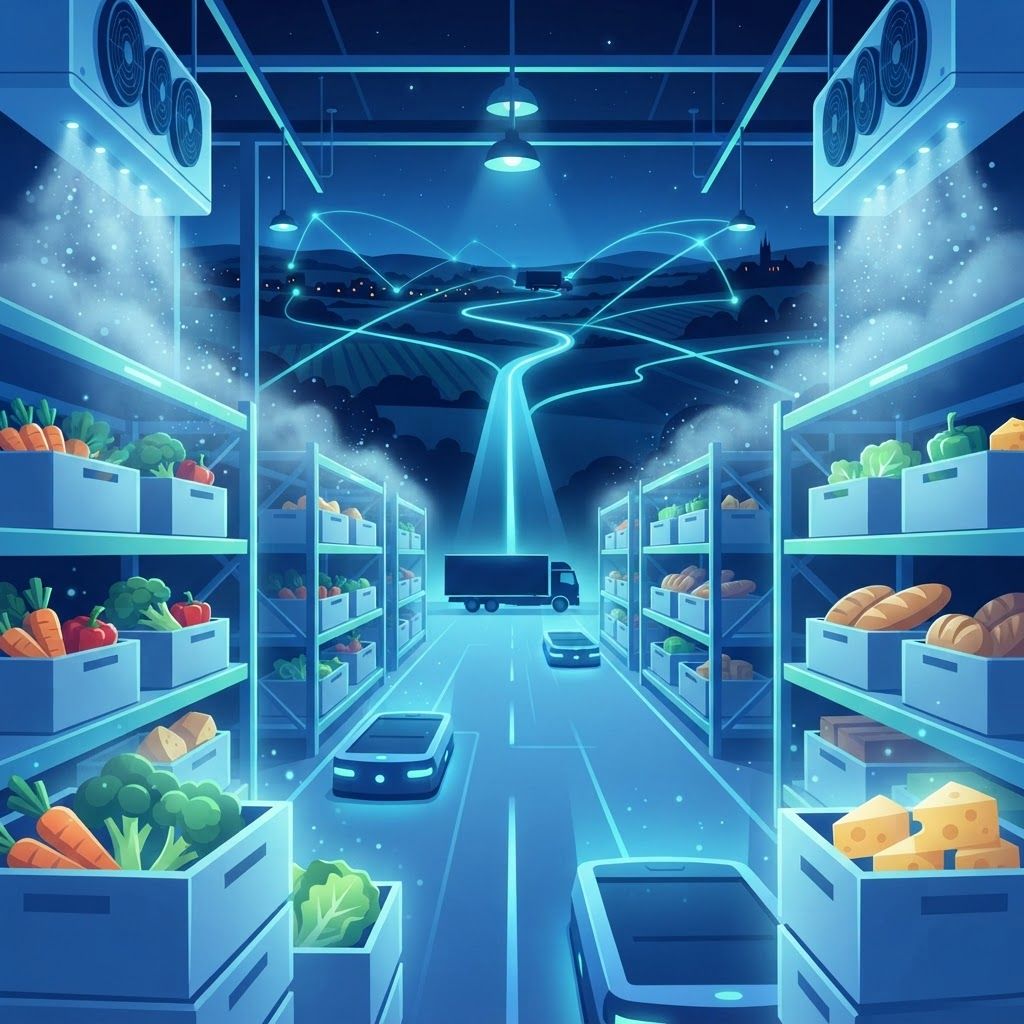
Feeding a Growing Essex Town
Colchester's food and drink scene has expanded considerably over the past decade. Independent restaurants, specialist coffee shops, gastropubs across the surrounding villages, a busy university catering operation, care homes, schools and a thriving events trade all need dependable food supply, often daily and often early in the morning.
The town sits in one of the most agriculturally productive parts of England. North Essex grows cereals, vegetables and salad crops; the Colne and Blackwater estuaries produce internationally regarded oysters; and Mersea Island has a food identity of its own. That proximity gives Colchester caterers an advantage many urban operators lack — genuine access to local provenance without a long supply chain.
Understanding the Types of Food Wholesaler
Food wholesale divides into clear categories, and most catering businesses use several suppliers rather than one.
Broadline foodservice distributors deliver across all categories — frozen, chilled, ambient, non-food and cleaning — on scheduled routes. They suit operators who want to consolidate ordering and minimise deliveries.
Fresh produce wholesalers supply fruit, vegetables, salads and herbs, often with daily delivery and market-based pricing that moves with season and availability.
Butchers and meat wholesalers provide primals, portioned cuts, poultry and charcuterie, with butchery to specification and full traceability.
Fish and seafood suppliers deliver fresh and frozen product, shellfish and prepared fish, working to very short lead times because quality degrades rapidly.
Dairy and bakery distributors handle high-frequency, short-shelf-life goods with early morning delivery windows.
Speciality and ethnic food importers supply the ingredients that define particular cuisines, which matters greatly in a town with as diverse a restaurant scene as Colchester.
Drinks wholesalers cover beer, wine, spirits, soft drinks and coffee, frequently with dispense equipment and cellar services attached.
Cash and carry operators serve smaller businesses that prefer to buy as needed rather than commit to scheduled deliveries.
Notable Food Wholesalers Serving Colchester
National broadline distributors covering Essex — operations of the type run by Brakes, Bidfood and Country Range members — deliver into Colchester on fixed weekly schedules. Their strengths are enormous range, consistent product specification, allergen and nutritional data provided in usable digital form, and online ordering with order history. For multi-site operators or businesses with heavy compliance requirements, that data infrastructure is genuinely valuable and difficult for smaller suppliers to match.
Regional and independent foodservice wholesalers serving north Essex compete effectively on service rather than scale. Smaller minimum orders, greater willingness to add an emergency drop, flexible delivery windows, and a driver and account manager who know the business by name. Many Colchester chefs deliberately split their spend, using a national supplier for ambient and frozen volume while relying on a regional independent for responsiveness.
Fresh produce wholesalers supplying Colchester kitchens operate on early morning delivery cycles, often drawing on New Covent Garden and regional growers alongside local Essex farms. The best offer daily market reports, help chefs plan around seasonal peaks, and prepare cut vegetables to specification — a significant labour saving for kitchens struggling to recruit.
Butchers and meat wholesalers in the Colchester area supply restaurants, pubs and butchers' shops with beef, lamb, pork, poultry and game. Essex and Suffolk farm sourcing is a real selling point locally, and many operators can name the farm on a menu. Practical differentiators are butchery to precise specification, consistent portion weight and yield, dry-ageing capability, and full traceability documentation.
Seafood and shellfish suppliers connected to the Colne and Mersea occupy a distinctive place in the local supply chain. Colchester native oysters have a reputation stretching back to Roman occupation, and the surrounding estuaries continue to produce oysters, mussels and seasonal fish. Suppliers here work with genuinely short lead times and depend on cold chain discipline. For restaurants, local provenance of this quality is both a menu asset and a marketing story.
Dairy and bakery distributors serving the town deliver milk, cream, butter, cheese, bread and pastry on early morning rounds, frequently seven days a week. Reliability is everything: a missed bread delivery is immediately visible to customers. Many now also supply artisan bakery and regional cheese ranges that let independents differentiate.
Speciality and world food importers supplying Colchester restaurants provide the authentic ingredients behind the town's Indian, Chinese, Turkish, Italian, Thai and Middle Eastern kitchens. These suppliers hold detailed product knowledge that broadline distributors cannot replicate, and for many restaurants they are irreplaceable.
Drinks wholesalers covering Essex supply cask and keg beer, wine, spirits and soft drinks, often bundling dispense equipment, line cleaning, glassware and cellar advice. The growth of Essex breweries and English wine — including vineyards within reach of Colchester — has given local venues genuinely compelling regional drinks lists.
Cash and carry and wholesale club operators accessible from Colchester, including formats of the kind run by Bestway, Booker and Costco, serve smaller cafes, takeaways and convenience retailers who value immediate availability and no minimum order over scheduled delivery.
Catering equipment and disposables suppliers complete the picture with packaging, cleaning chemicals, kitchen consumables and light equipment — increasingly focused on compostable and recyclable packaging as regulation tightens.
Trends Shaping Food Wholesale
Provenance has become a commercial necessity rather than a differentiator. Diners ask where food comes from, and suppliers who can evidence farm-level sourcing help operators justify pricing and build trust.
Allergen management has been transformed by regulation, including the requirements around pre-packed for direct sale food. Wholesalers who deliver accurate, machine-readable allergen and specification data materially reduce their customers' compliance burden and legal exposure.
Cost volatility remains the sector's dominant pressure. Energy, labour, feed and freight costs have driven sustained food inflation, and wholesalers have responded with fixed-price periods, menu engineering support and yield analysis to help customers protect margin.
Sustainability now runs through packaging reduction, food waste minimisation, route optimisation, electric delivery vehicles and plant-based range development. Public sector and education contracts increasingly score these factors formally.
Labour shortages in professional kitchens have increased demand for prepared and semi-prepared products — pre-cut vegetables, portioned proteins, prepared sauces — that reduce skilled labour requirements without compromising quality.
Digital ordering has become standard, with mobile ordering, live stock visibility, spend analytics and integration with EPOS and stock systems helping operators control cost more precisely.
How to Build a Resilient Supply Chain
Avoid single-supplier dependency. Operators who relied on one distributor learned hard lessons during recent disruption. Maintain at least one credible alternative in each critical category.
Match delivery schedules to your kitchen's reality. Delivery windows, cut-off times and days served matter more than headline pricing for a business that opens for lunch.
Verify food safety credentials properly. Ask for BRC or equivalent certification, temperature monitoring records and traceability procedures. Your own due diligence obligations extend to your suppliers.
Interrogate cold chain integrity. Refrigerated vehicles, temperature logging and correct handling at delivery are non-negotiable for chilled and frozen goods.
Negotiate on total value rather than line price. Delivery frequency, minimum order, payment terms, wastage allowances and free equipment loan often outweigh a few percent on cost price.
Use local provenance deliberately. In Colchester, oysters, seasonal vegetables, Essex meat and regional beer and wine are real menu assets — not just ethical choices but points of genuine competitive difference.
Final Thoughts
Colchester's food wholesale sector combines national distribution scale, responsive regional independents and exceptional local provenance from the surrounding farmland and estuaries. For restaurants, pubs, schools and care providers across north Essex, the strongest approach is a broadline supplier for volume and compliance data, supported by specialist fresh, meat and seafood suppliers who deliver quality and provenance. Building those relationships thoughtfully protects both margin and reputation.
Want your brand featured in front of decision-makers? Publish a guest post or get a link insertion in our guides through AAMAX's guest post and link insertion service.
Helpful Links
 SponsoredAAMAX — Full-Service Digital Agency
Write for Us
Share your expertise with our readers. We welcome guest contributions from industry specialists.
Pitch your idea