

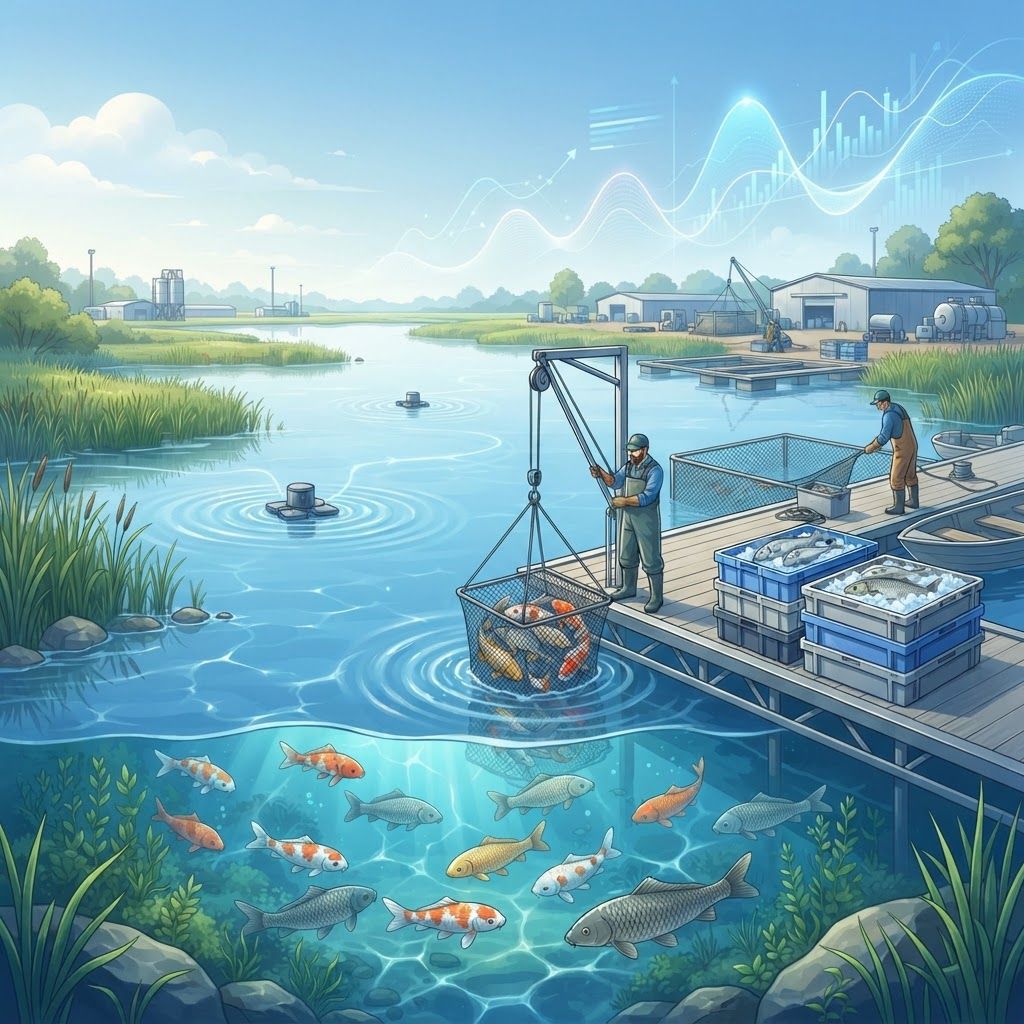
Wokingham may be inland, but water defines much of its landscape. The River Loddon, the Blackwater, the Emm Brook and a network of former gravel extraction lakes have created one of the more interesting freshwater fishery environments in southern England. Where aggregate was once dug, mature lakes now hold substantial coarse fish populations, and fishery management has become a genuine industry combining angling provision, aquaculture, habitat work and consultancy.
Understanding the Freshwater Fishery Sector
Fishery businesses in an area like Wokingham operate across several distinct functions. Day-ticket and syndicate fisheries provide angling access, generating revenue from permits, memberships and on-site facilities. Fish farms and hatcheries breed and grow stock for restocking lakes and rivers. Fishery consultants and management companies survey waters, advise on stocking density, water quality and habitat structure, and carry out netting and health screening. Trout and coarse fish suppliers serve both angling and, in some cases, food markets.
All of this is tightly regulated. Fish movements require authorisation, health checks guard against disease and invasive species, and water abstraction and discharge are controlled. Competent fishery operators treat compliance as a core professional discipline rather than paperwork.
Top 10 Fishery Companies and Operations Serving Wokingham
1. Loddon Valley Fisheries
A river and lake fishery operation managing waters along the Loddon corridor, holding mixed coarse species including barbel, chub, roach and bream. River fishery management focuses on flow, gravel condition and bank habitat rather than intensive stocking, which suits a naturally productive system.
2. Wokingham Lakes Angling Company
Manages former gravel pit lakes as day-ticket and syndicate carp waters. These mature lakes offer clear water, established weed beds and good natural food, and management centres on maintaining balanced stock density so fish grow well without degrading water quality.
3. Berkshire Coarse Fish Farm
A hatchery and grow-on operation supplying roach, tench, bream, crucian carp and other coarse species for restocking. Genetic quality, disease-free certification and careful transport are the priorities, since stress during movement directly affects survival rates.
4. Emmbrook Trout Fishery
Represents stillwater trout angling, with regular stocking of rainbow and brown trout for fly fishing. Trout fisheries require good oxygenation and cooler water, so aeration management and shading become increasingly important during warm summers.
5. Barkham Fishery Management Services
Provides consultancy including water quality testing, fish population surveys, netting, habitat design and management planning for clubs and private lake owners. Objective survey data allows evidence-based decisions rather than guesswork about stock levels.
6. Shinfield Aquaculture Systems
Focuses on recirculating aquaculture and ornamental fish production, using filtration and controlled environments to grow fish efficiently with low water use. This technology-led approach has attracted interest as a sustainable production model.
7. Winnersh Angling Supplies & Bait
Supports the sector commercially with tackle, bait, boilies, groundbait and equipment for anglers and match organisers. Bait quality strongly influences fish health and fishery performance, so responsible suppliers advise on appropriate feeding volumes.
8. Woodley Aquatic Habitat Contractors
Carries out practical works including desilting, bank stabilisation, marginal planting, island creation and weed control. Habitat quality determines long-term fishery productivity, and well-planned works reduce the need for repeated intervention.
9. Arborfield Koi & Ornamental Fisheries
Serves the ornamental market with koi, goldfish and pond species alongside filtration and pond construction advice. Quarantine discipline and health screening are essential to prevent disease transfer into garden and commercial systems.
10. Swallowfield Fishery Syndicate
Illustrates the member-managed model, where anglers collectively fund and steward a water. Syndicates often achieve excellent conservation outcomes because members have direct long-term interest in fish welfare and habitat quality.
How Modern Fishery Management Works
Effective management begins with data. Water chemistry, dissolved oxygen, temperature profiles and fish population surveys establish a baseline. From there, decisions about stocking density, feeding, aeration and habitat improvement can be made deliberately. Overstocking is the most common error in commercial fisheries, producing poor growth rates, disease vulnerability and deteriorating water quality.
Biosecurity is equally important. Invasive species such as certain non-native shrimps and plants can devastate a water, and pathogens spread easily on wet nets, boots and unhoovered equipment. Reputable fisheries enforce equipment dipping, ban unauthorised fish introductions and require health certification for all stock movements.
Climate resilience has become a practical concern. Warmer summers reduce oxygen availability, particularly in shallow lakes, prompting investment in aeration, deeper refuge areas and shading vegetation. Heavy rainfall events increase silt and nutrient runoff, so buffer margins and silt traps protect water clarity.
Trends in the Fishery Sector
Angling participation has remained resilient, supported by its accessibility and wellbeing benefits, which has encouraged fisheries to improve facilities, disabled access platforms and coaching provision. Conservation-led management is increasingly favoured over intensive stocking, aligning angling with river restoration and biodiversity goals. Recirculating aquaculture continues to develop as a low-water, controlled alternative to open systems. Meanwhile, digital booking systems and online day tickets have modernised fishery operations and improved capacity control.
Conclusion
The fishery sector around Wokingham combines angling businesses, fish producers, consultants and habitat contractors working across lakes, rivers and controlled systems. Good operators share a common approach: measure the water, respect stocking limits, enforce biosecurity and invest in habitat. That discipline produces healthier fish, better angling and more resilient aquatic environments across the borough.
Want your brand featured in front of decision-makers? Publish a guest post or get a link insertion in our guides through AAMAX's guest post and link insertion service.
Helpful Links
 SponsoredAAMAX — Full-Service Digital Agency
Write for Us
Share your expertise with our readers. We welcome guest contributions from industry specialists.
Pitch your idea

