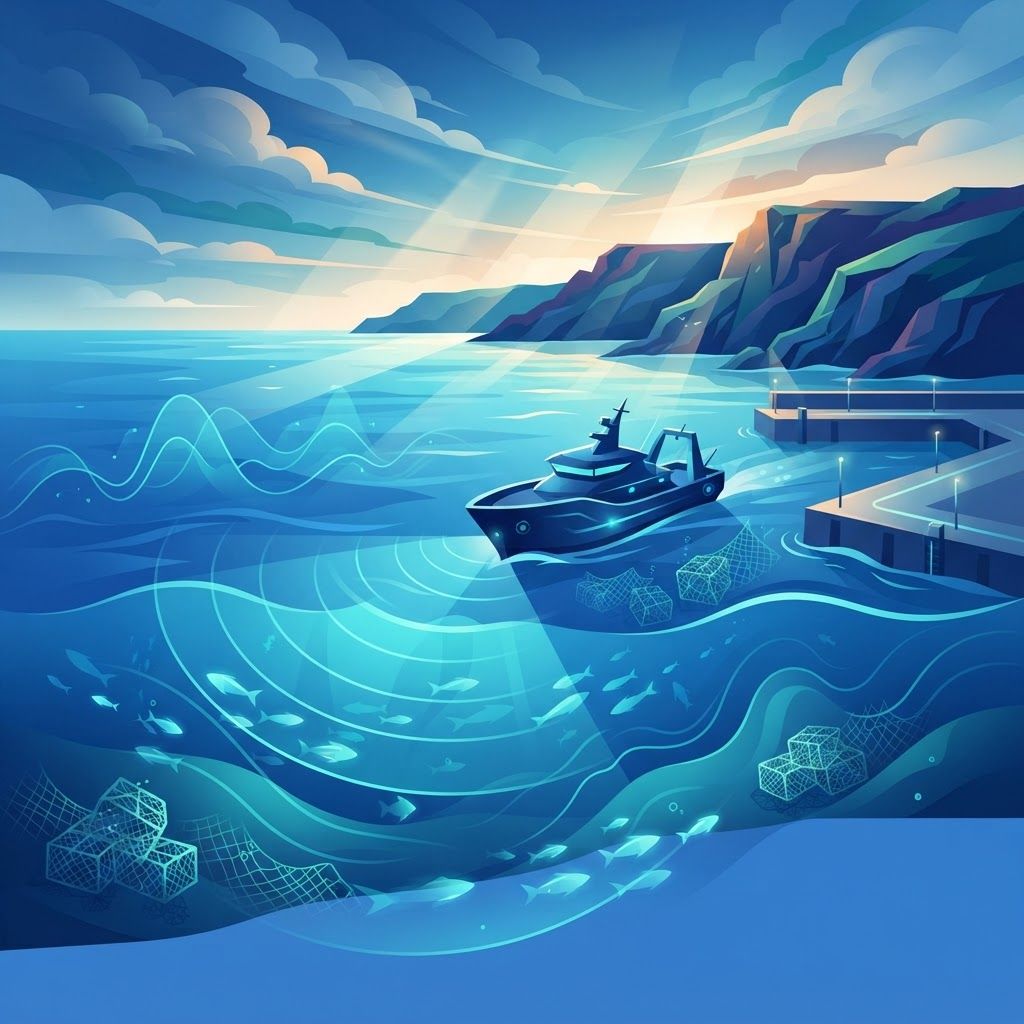
Fishing Along the Glamorgan Heritage Coast
The Vale of Glamorgan has more than twenty miles of coastline, running from Penarth around Barry Island and westward along the dramatic limestone cliffs of the Glamorgan Heritage Coast towards Ogmore. This is not a landscape of large fishing ports, but it has supported fishing activity for centuries and continues to sustain a working seafood sector today.
The Bristol Channel presents unusual conditions. It has one of the largest tidal ranges in the world, with fast currents, heavily sedimented water and constantly shifting conditions. These characteristics shape what can be caught and how. Inshore potting for crab, lobster and whelk is well suited to the rocky ledges along the heritage coast, while netting and line fishing target species including bass, cod, conger, skate and dogfish. The channel also supports historically significant migratory species, and there is a long tradition of small-scale fishing from beaches and small harbours.
Alongside catching, the sector includes processing, wholesale distribution, aquaculture, shellfish purification and increasingly direct retail to consumers who want fresh local seafood.
The Structure of the Local Seafood Sector
Inshore fishing operations use small vessels working day trips within a limited range. Potting for shellfish dominates, and crab and lobster from the Bristol Channel have a good reputation for quality. These businesses are typically owner-operated, often family run across generations, and are highly sensitive to weather, fuel costs and quota arrangements.
Shellfish processing and purification is a specialist activity. Bivalve shellfish harvested from classified waters must be purified in controlled tanks before sale, a regulated process requiring approved premises and monitoring. Crab and lobster processing includes cooking, picking and packing.
Seafood wholesale and distribution links catch to market, supplying restaurants, hotels, fishmongers and retailers throughout south Wales. Given the freshness window on seafood, efficient cold chain logistics are essential.
Aquaculture is a smaller but growing category, and there is increasing interest across Wales in low-impact farming of shellfish and seaweed, which requires no feed input and can deliver environmental benefits alongside production.
Recreational and charter fishing forms a further strand, supporting tourism along the coast and contributing to the local visitor economy.
Ten Fishery Companies Serving the Vale
Glamorgan Coast Fisheries operates inshore potting vessels targeting crab and lobster along the heritage coast, supplying both local and export markets.
Barry Harbour Seafood combines catching with wholesale distribution, delivering fresh fish and shellfish to restaurants across the region.
Penarth Shellfish Company focuses on shellfish purification, processing and packing to the standards required for direct sale.
Bristol Channel Fishing Vessels runs a small fleet working netting and line methods for bass, cod and mixed demersal species.
Coastal Seafood Processing handles filleting, portioning and freezing for wholesale and catering customers requiring consistent preparation.
Llantwit Bay Lobster specialises in live lobster and crab, maintaining holding facilities that allow supply continuity through poor weather.
Vale Aquaculture Ventures works in shellfish and seaweed cultivation, exploring low-impact marine production suited to channel conditions.
Severn Estuary Fish Merchants operates as a wholesale merchant, buying from local and wider Welsh landings for regional distribution.
Rhoose Smokehouse and Curing produces smoked and cured seafood products, adding value to local catch and extending shelf life.
Ogmore Charter Fishing completes the list, providing recreational sea angling charters that support coastal tourism.
Sustainability and Fisheries Management
Sustainability is the defining issue in fishing, and the picture is genuinely complex. Welsh inshore fisheries are managed through a combination of licensing, quota allocation, gear restrictions, minimum landing sizes, closed areas and seasonal closures. Marine protected areas along the Welsh coast add further spatial management.
Potting for crab and lobster is generally regarded as one of the lower-impact fishing methods, since pots are static, selective and cause minimal seabed disturbance. Undersized and berried females can be returned alive, and escape gaps in pots reduce capture of juveniles. Responsible operators exceed minimum requirements voluntarily, recognising that stock health determines their long-term livelihood.
Stock assessment in the Bristol Channel is challenging because of the mixed nature of the fishery and the difficulty of surveying turbid, high-energy water. Collaborative work between fishers and scientists, including catch data sharing and tagging studies, has improved understanding considerably.
Water quality is a further concern. Shellfish harvesting areas are classified according to microbial contamination, which determines whether purification is required. Improvements to wastewater infrastructure and agricultural runoff management directly affect the commercial viability of shellfish harvesting.
From Catch to Plate
Seafood is among the most perishable of foods, and handling determines quality far more than most consumers realise. Rapid chilling after capture, careful handling to avoid bruising, and maintenance of an unbroken cold chain all preserve texture and flavour. Operators who invest in ice production, insulated handling and refrigerated transport achieve noticeably better product.
Traceability requirements mean that seafood must be documented from catch through to sale, recording vessel, area, species and date. This supports both food safety and confidence that fish is what it claims to be.
Direct sales have grown substantially. Consumers increasingly buy from quayside outlets, local fishmongers and delivery schemes, attracted by freshness and provenance. For fishing businesses, direct selling captures far more value than selling through intermediaries, though it requires food business registration and different skills.
Hospitality demand along the coast is another important market. Restaurants in Penarth, Barry and the heritage coast villages increasingly feature local seafood, and visitors specifically seek it out.
Final Thoughts
Fishery companies operating along the Vale of Glamorgan coast maintain a genuine working maritime tradition in challenging Bristol Channel conditions. The sector is small in scale but meaningful in character, supplying high quality shellfish and fish to local markets while supporting processing, wholesale and tourism businesses. Its future depends on careful stock management, continued improvement in coastal water quality and consumer willingness to value local, seasonally available seafood.
Want your brand featured in front of decision-makers? Publish a guest post or get a link insertion in our guides through AAMAX's guest post and link insertion service.
Helpful Links
 SponsoredAAMAX — Full-Service Digital Agency
Write for Us
Share your expertise with our readers. We welcome guest contributions from industry specialists.
Pitch your idea