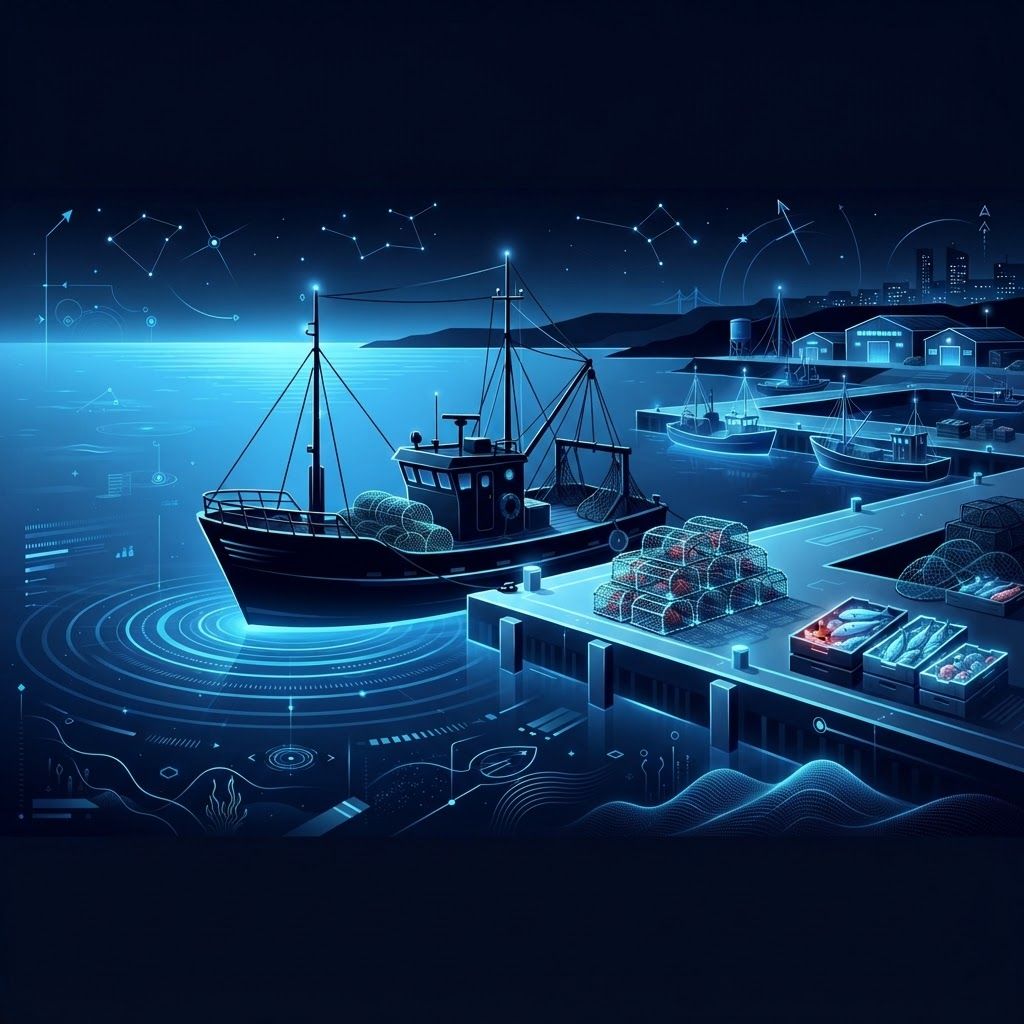
A Working Fishing Port on the Kent Coast
Ramsgate is one of Kent's most significant fishing ports, and the fishing industry remains a genuine working part of Thanet's economy rather than a heritage attraction. The Royal Harbour supports a fleet ranging from small inshore day boats to larger vessels working the North Sea and eastern Channel, alongside shellfish potters, processors, merchants and the supporting trades of net making, engineering, ice supply and cold storage.
Thanet's position is geographically advantageous. The Isle sits at the junction of the Thames Estuary, the southern North Sea and the Dover Strait, giving access to varied and productive fishing grounds within relatively short steaming distance. Proximity to London and to Channel crossings also places the port close to major markets.
The Fleet and How It Operates
Inshore day boats form the backbone of the local fleet. These smaller vessels fish within a day's range, returning daily with fresh catch. Their advantage is exceptional freshness — fish landed and sold within hours — and lower fuel consumption. They typically use nets, lines, pots or small trawls.
Trawlers tow nets for demersal species including plaice, sole, cod, whiting and skate. Modern gear increasingly incorporates selectivity devices that allow undersized and non-target fish to escape.
Netters use static gill and tangle nets for species such as sole, bass and cod, hauling after a soak period.
Potters target shellfish — crab, lobster and whelk — with baited pots set in strings. Whelk fishing is particularly significant in the Thames Estuary and has been a major component of Kent landings.
Line and rod vessels catch bass, mackerel and other species with minimal bycatch and excellent quality, often achieving premium prices.
Dredgers harvest scallops and other bivalves where licensed and where grounds permit.
Species Landed at Thanet
The catch profile reflects the mixed grounds nearby. Flatfish including plaice, sole and dab are consistent landings. Roundfish such as cod, whiting, pollack and bass appear seasonally. Skate and ray species are important commercially. Herring and sprat run seasonally in the Thames Estuary. Shellfish landings include brown crab, lobster, whelk and, in some seasons, scallops. Cuttlefish and squid have grown in commercial importance, with cuttlefish in particular becoming a valuable export species to continental markets.
Seasonality is pronounced. Understanding which species are at their best in which months allows buyers to source higher quality at lower cost while supporting sustainable fishing patterns.
Processing, Merchanting and Distribution
Beyond the boats, Thanet supports a network of shore-based businesses. Fish merchants buy catch, grade and pack it, and distribute to wholesale markets, restaurants, retailers and export customers. Processing operations fillet, portion, smoke and prepare products for retail and food service. Cold storage and ice supply are essential infrastructure for maintaining the cold chain from vessel to customer.
Export is significant. Continental European markets, particularly France, Spain and Italy, value species that UK consumers buy less readily — cuttlefish, skate, whelks and certain flatfish — and Thanet's proximity to the Channel supports this trade.
Retail and direct sales have also grown. Fishmongers, harbourside sales and restaurant direct supply allow the fleet to capture better value while giving customers genuinely fresh local fish.
Sustainability and Fisheries Management
Sustainability is the defining issue for the sector, and the picture is more positive than often assumed.
Quota management controls landings of key commercial species, with allocations designed to keep stocks within sustainable limits. Scientific stock assessment informs annual decisions.
Technical measures include minimum conservation reference sizes, mesh size regulations, closed areas and seasonal closures protecting spawning aggregations.
Gear selectivity improvements — square mesh panels, escape gaps in pots, modified trawl designs — reduce bycatch of undersized fish and non-target species substantially.
Marine Protected Areas around the Kent coast restrict certain activities to protect habitats and species, including designated conservation zones in the Thames Estuary and off Thanet.
Inshore fisheries management is administered regionally, with local byelaws addressing specific stocks and grounds — whelk fishery management measures being a notable example.
Certification schemes provide independent verification of sustainable practice, and buyers increasingly require it.
Low-impact fishing methods — pots, lines and static nets — generally have lower seabed impact and fuel use than towed gear, and command growing market recognition.
Challenges Facing the Industry
The sector faces real pressures. Fuel costs represent a major share of operating expense and have been volatile. Quota availability constrains what can be landed even when fish are abundant. Crew recruitment and retention is difficult in a physically demanding industry. Regulatory complexity, including catch recording, licensing and export documentation, imposes administrative burden disproportionate to small business capacity. Export procedures following changes in trading arrangements added friction to continental sales, particularly damaging for a sector where speed is essential. Offshore development, including wind farm construction in the Thames Estuary, affects access to traditional grounds. And climate-driven changes in species distribution are shifting what is available and where.
How Buyers Can Source Responsibly
Chefs, retailers and wholesalers in Thanet and beyond can make a genuine difference through sourcing decisions.
Buy seasonally and locally. Fish at its natural peak is better quality, cheaper and lower impact than imported alternatives.
Broaden species choice. Concentrating demand on a handful of popular species increases pressure on those stocks while under-valued local species — dab, gurnard, whiting, mackerel, cuttlefish — offer excellent eating and better availability.
Ask about method and origin. Day-boat and pot-caught product typically carries lower environmental impact and superior quality.
Accept variable sizing. Rigid size specification forces discarding or downgrading of perfectly good fish.
Support whole-fish usage. Buying whole rather than pre-filleted reduces waste and provides bones and trim for stock.
Verify traceability documentation, which is a legal requirement through the supply chain and evidences legitimate, recorded catch.
The Cultural and Economic Importance of Thanet Fishing
Beyond its economic contribution, the fishing industry is central to Thanet's identity. Ramsgate's harbour, the working boats, the fish stalls and the maritime trades that support them are part of what makes the district distinctive. That character underpins tourism value as well as direct employment.
Conclusion
Fishery businesses in Thanet operate in a demanding environment shaped by regulation, cost pressure and environmental change, yet they continue to land exceptional quality seafood from productive local grounds. The strongest operations combine skilled fishing, rigorous cold chain management, transparent traceability and genuine engagement with sustainability. For buyers, sourcing seasonally, broadening species choice and building direct relationships with the local fleet delivers better product and supports an industry worth preserving.
Want your brand featured in front of decision-makers? Publish a guest post or get a link insertion in our guides through AAMAX's guest post and link insertion service.
Helpful Links
 SponsoredAAMAX — Full-Service Digital Agency
Write for Us
Share your expertise with our readers. We welcome guest contributions from industry specialists.
Pitch your idea