

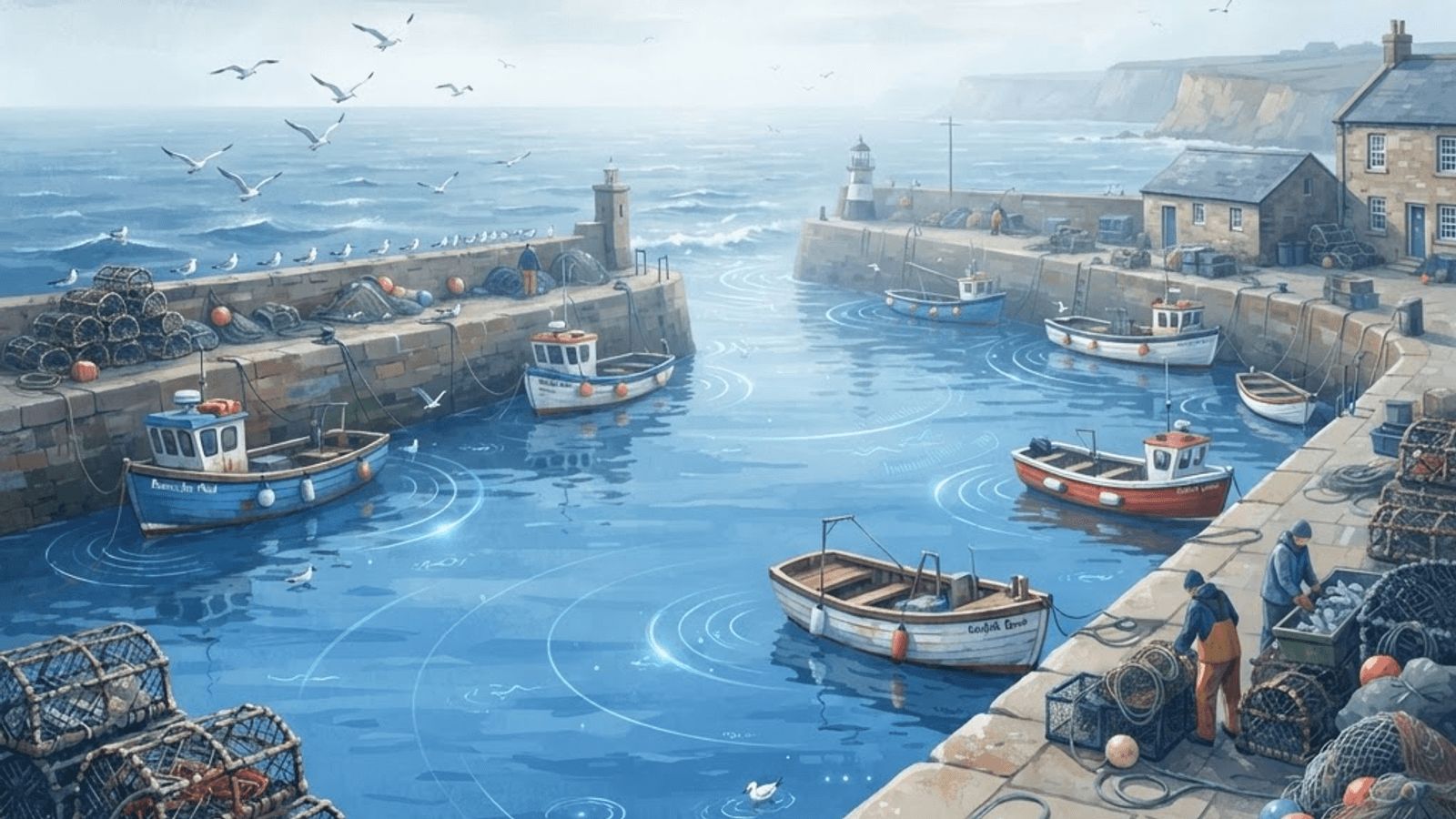
Norwich, the Norfolk Coast and Its Fisheries
Norwich is an inland city, but it is only a short drive from one of the most distinctive fishing coastlines in England. The Norfolk coast, from Cromer and Sheringham round to Great Yarmouth and Lowestoft, supports a small-boat fleet working crab and lobster pots, along with vessels landing skate, plaice, sole, bass, herring and whelks. Inland, the Broads and Norfolk's rivers support eel fishing traditions, freshwater aquaculture and a substantial angling economy.
Cromer crab in particular has become a regional emblem, prized for sweet, dense meat that reflects the chalk shelf on which the crabs feed. That reputation supports a supply chain running directly into Norwich restaurants, fishmongers and delicatessens, and gives the city an unusually good seafood offer for somewhere without a harbour of its own.
Understanding the Fishery Sector
Fisheries businesses fall into several categories, and knowing the difference helps buyers make better decisions. Catching businesses own and operate vessels. Processors handle grading, filleting, picking, cooking, freezing and packing. Merchants and wholesalers aggregate supply and distribute it. Aquaculture businesses farm rather than catch. Retailers and fishmongers sell to the public, often with their own processing.
Across all of them, three things determine quality. Handling speed matters most: fish that is chilled properly within minutes of landing keeps far better than fish handled casually. Cold chain integrity through processing and delivery preserves that advantage. And species knowledge, understanding when a species is in condition and when it is best left alone, separates good merchants from indifferent ones.
On the compliance side, look for documented catch records, traceability from vessel to plate, appropriate food hygiene approval for processing premises, and shellfish classification compliance for harvesting areas. For sustainability, certification schemes and fishery improvement projects provide evidence rather than assertion.
The Top 10 Fishery Companies Serving Norwich
1. Norfolk Coast Crab and Lobster Company
A potting business working the inshore grounds off north Norfolk, supplying live and freshly cooked crab and lobster. Sustainable pot fishing has a low seabed impact and allows undersize and egg-bearing animals to be returned alive, which supports long-term stock health.
2. Cromer Shellfish Processors
Specialists in cooking, dressing and picking crab, supplying restaurants, delis and retailers. Hand-picking preserves meat texture in a way that mechanical extraction cannot, and the traceability back to individual boats is a genuine selling point for chefs.
3. Yarmouth North Sea Fisheries
A vessel operator landing mixed whitefish and flatfish, supplying merchants and processors. Quota management, gear selectivity improvements and cooperation with scientific stock assessment work are increasingly central to how responsible operators of this type work.
4. Norwich Seafood Merchants
A wholesale merchant supplying fish and shellfish to hospitality customers across the city, buying from local landings and national markets to guarantee continuity. Filleting, portioning and early morning delivery make it practical for kitchens without their own fish preparation capability.
5. Broads Aquaculture Enterprises
A freshwater farming operation producing trout and coarse fish for the table, for restocking and for angling fisheries. Recirculating systems and careful water management reduce environmental impact while providing supply that does not depend on wild stock levels.
6. Wensum Smokehouse
Traditional cold and hot smoking of fish, producing smoked salmon, kippers, mackerel and specialist products. Norfolk and neighbouring Suffolk have a deep smoking heritage, and small-batch curing with quality raw material produces results that industrial processes rarely match.
7. Fine City Fishmongers
A retail and trade counter operation supplying households, restaurants and market customers with daily fresh fish. Knowledgeable staff who advise on cooking method, seasonality and alternatives to overfished species do a great deal to shift consumer habits positively.
8. East Anglia Whelk and Mollusc Fisheries
Focused on whelks, mussels and other molluscs, much of which is processed for export as well as domestic sale. Shellfish water classification, purification where required and rigorous testing regimes are fundamental to safety in this category.
9. Norfolk Sustainable Fisheries Group
A cooperative of small-boat operators pooling marketing, cold storage and distribution while committing to shared sustainability standards. Collective action of this kind gives small vessels commercial leverage they cannot achieve individually and strengthens the case for inshore fleet protection.
10. Broadland Angling and Fishery Management
Managing coarse and game fisheries, lake stocking, habitat improvement and angling access. Recreational fishing generates significant economic activity across Norfolk, supporting tackle retailers, accommodation providers and hospitality businesses throughout the year.
Sustainability and Industry Challenges
Sustainability is the defining issue for the sector. Stock assessments, quota allocation, minimum landing sizes, gear restrictions and marine protected areas all shape what can be caught and how. Norfolk's inshore potting fishery is often held up as a relatively low-impact model, but even here concerns about pot numbers, bycatch and warming waters require active management.
Climate change is altering species distribution noticeably. Warmer North Sea temperatures have shifted the range of several species, bringing new opportunities alongside the decline of traditional catches. Herring, once the foundation of Great Yarmouth's economy, is a reminder of how completely a fishery can change.
Economic pressures compound this. Fuel costs, crew recruitment, port infrastructure and export administration all weigh on small operators. At the same time, consumer interest in local, traceable, sustainably caught seafood has never been higher, which creates real opportunity for businesses that can tell their story credibly and supply consistently.
Buying and Eating Seafood Well
Buy seasonally and stay flexible. Asking your fishmonger or supplier what is good today, rather than insisting on a specific species, almost always produces better quality at a better price. Look for evidence of traceability, and be willing to try under-utilised species, since spreading demand across more species reduces pressure on the most heavily fished stocks.
For hospitality operators in Norwich, the proximity of the coast is a genuine asset worth building menus around. Naming the boat, the port or the fishery on a menu turns a dish into a story, supports local operators and gives customers a reason to choose your restaurant over one serving anonymous frozen product from the other side of the world.
Want your brand featured in front of decision-makers? Publish a guest post or get a link insertion in our guides through AAMAX's guest post and link insertion service.
Helpful Links
 SponsoredAAMAX — Full-Service Digital Agency
Write for Us
Share your expertise with our readers. We welcome guest contributions from industry specialists.
Pitch your idea

