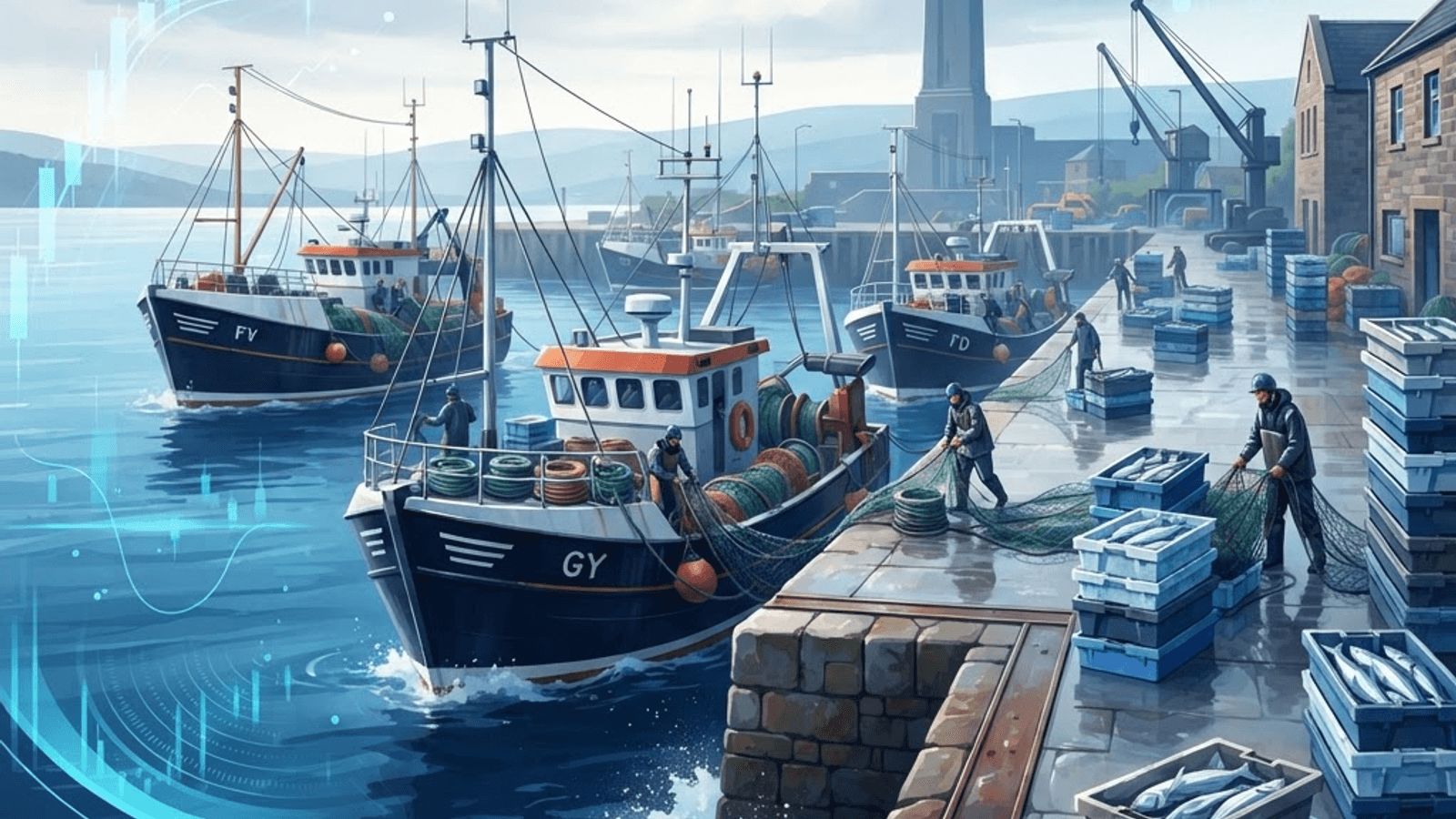
Grimsby and the Seafood Industry
Few industries are as closely identified with a place as seafood is with Grimsby. The town built its wealth on fishing, and while the distant water fleet that once filled the docks has gone, the seafood industry itself did not disappear. Instead it transformed. Today North East Lincolnshire is a processing, value-adding and distribution centre rather than primarily a catching port, and by many measures it handles a larger volume and value of seafood than at any point in its history.
The cluster is remarkable in its density. Within a few square miles sit primary processors filleting whitefish, secondary manufacturers producing coated and prepared products, smokehouses continuing traditional cold smoking methods, cold storage operators, shellfish specialists, packaging suppliers, equipment engineers and logistics companies specialising in temperature-controlled distribution. That concentration of skill and infrastructure is the industry's real competitive advantage, and it is why fish landed elsewhere in Europe still travels to Grimsby to be processed.
What Defines a Strong Fishery Business
Food safety and traceability sit at the centre of everything. Serious operators hold recognised third-party certification, maintain documented cold chain control, and can trace product back to vessel, catch area and landing. Sustainability credentials have become equally important, with certification schemes and responsible sourcing policies now a condition of supplying most major retailers and foodservice groups.
Beyond compliance, look at technical capability: filleting yield performance, freezing and glazing quality, packaging technology, and the ability to develop products with customers rather than simply supply commodity fish. Cold chain integrity, measurable and documented, separates good operators from risky ones. And in a sector where species availability shifts with quota, season and weather, honest communication about supply is one of the most valuable qualities a supplier can offer.
The Top 10 Fishery Companies in North East Lincolnshire
1. Grimsby Docks Fish Merchants
Operating at the traditional heart of the trade, Grimsby Docks Fish Merchants buys, grades, fillets and distributes fresh whitefish to wholesalers, retailers, fishmongers and foodservice customers. Its strengths are daily market knowledge, skilled hand filleting, and the flexibility to supply small mixed orders that larger processors cannot economically handle. For chefs and independent retailers, that responsiveness and species advice is exactly what is needed.
2. Humber Seafood Processing
A larger-scale primary and secondary processor, Humber Seafood Processing produces portioned, skinned, coated and prepared seafood products for retail and foodservice customers nationally. Investment in high-care production areas, metal detection, automated portioning and controlled freezing allows consistent specification at volume. Its product development capability supports retailers launching new lines, and full traceability documentation satisfies demanding audit regimes.
3. Traditional Grimsby Smokehouse Company
Cold smoking over wood in brick kilns is a genuinely traditional craft, and this smokehouse continues it, producing smoked haddock and cod with the pale colour and clean flavour associated with the town's heritage product. Skilled smokers judge timing by conditions rather than clocks, and the resulting product commands premium positioning with delicatessens, restaurants and specialist retailers who value authenticity over speed.
4. Immingham Cold Chain and Frozen Seafood Storage
The industry cannot function without cold storage, and this operator provides bulk frozen storage, blast freezing, temperature-controlled handling and pick-and-pack services to processors, importers and traders. Continuous temperature monitoring, documented compliance and flexible capacity allow customers to manage seasonal peaks and import consignments without capital investment in their own facilities.
5. Estuary Shellfish Company
Shellfish requires distinct handling, purification and live logistics expertise. Estuary Shellfish Company supplies crab, langoustine, mussels, whelks and prawns, working with inshore fishermen along the Lincolnshire coast as well as wider sources. Its knowledge of live holding, purification requirements and rapid export routes supports both domestic customers and continental markets where demand for British shellfish remains strong.
6. Freshney Fish Wholesale and Distribution
Bridging processors and end users, Freshney Fish Wholesale and Distribution runs temperature-controlled delivery to restaurants, hotels, fish and chip shops and retailers across the region. Multiple weekly deliveries, mixed order flexibility and reliable arrival times allow kitchens to buy close to demand and reduce waste. Its account teams provide practical guidance on species substitution when supply tightens, protecting menus without compromising quality.
7. North Sea Sustainable Sourcing Company
Responsible sourcing has become a commercial necessity, and this business specialises in certified and responsibly sourced seafood supply, providing chain of custody documentation and stock status information to buyers. Its work helps retailers and foodservice operators meet published sourcing commitments, and its transparency on fishery status allows customers to make informed choices rather than relying on generic assurances.
8. Waltham Seafood Product Development
Value-added manufacturing is where much of the industry's growth sits. This company develops and produces ready meals, fish cakes, coated products, marinated lines and retail packs, working from concept through trials to production. Its understanding of retailer specifications, shelf life validation, allergen control and packaging performance shortens development timelines for customers launching new products.
9. Port Seafood Import and Export Services
International trade underpins the modern Grimsby industry. Port Seafood Import and Export Services manages inbound and outbound seafood consignments, handling documentation, health certification, customs formalities and temperature-controlled logistics. Its familiarity with export requirements has become increasingly valuable, and its coordination of onward distribution helps processors access continental customers reliably.
10. Lincolnshire Aquaculture and Fish Farming Enterprises
Farmed seafood now accounts for a substantial share of global supply, and this business operates and supports aquaculture production, including recirculating systems and freshwater fish farming, alongside supplying farmed product into the local processing cluster. Its focus on water quality management, feed efficiency and fish health represents an important complementary strand to wild capture supply as demand continues to grow.
Trends in the Seafood Industry
Sustainability certification and responsible sourcing continue to shape buying decisions, with retailers requiring documented stock status rather than general claims. Automation is advancing in filleting, portioning and packing, driven partly by persistent labour shortages. Aquaculture is expanding its share of supply, changing species availability and pricing. Packaging is under pressure to reduce plastic while maintaining shelf life and cold chain protection. And consumer interest in provenance is creating genuine premium opportunities for products with a clear regional identity, something Grimsby is unusually well placed to exploit.
Advice for Seafood Buyers
Specify clearly, including species, size grade, presentation, glaze percentage on frozen product and packaging format, because ambiguity in seafood specification leads to disappointment. Ask for traceability and certification documentation as standard. Discuss seasonality openly and build menus with flexibility, since insisting on a single species year round increases cost and risk. Verify cold chain arrangements, and audit temperature records periodically rather than assuming compliance.
Conclusion
North East Lincolnshire's fishery sector is a genuine national asset, combining traditional craft skills such as cold smoking with modern processing, cold chain and international logistics capability. Whether you need fresh fish for a restaurant, certified frozen product at volume, shellfish for export or product development support, the depth of expertise available within this small district is difficult to match anywhere else in the country.
Want your brand featured in front of decision-makers? Publish a guest post or get a link insertion in our guides through AAMAX's guest post and link insertion service.
Helpful Links
 SponsoredAAMAX — Full-Service Digital Agency
Write for Us
Share your expertise with our readers. We welcome guest contributions from industry specialists.
Pitch your idea