

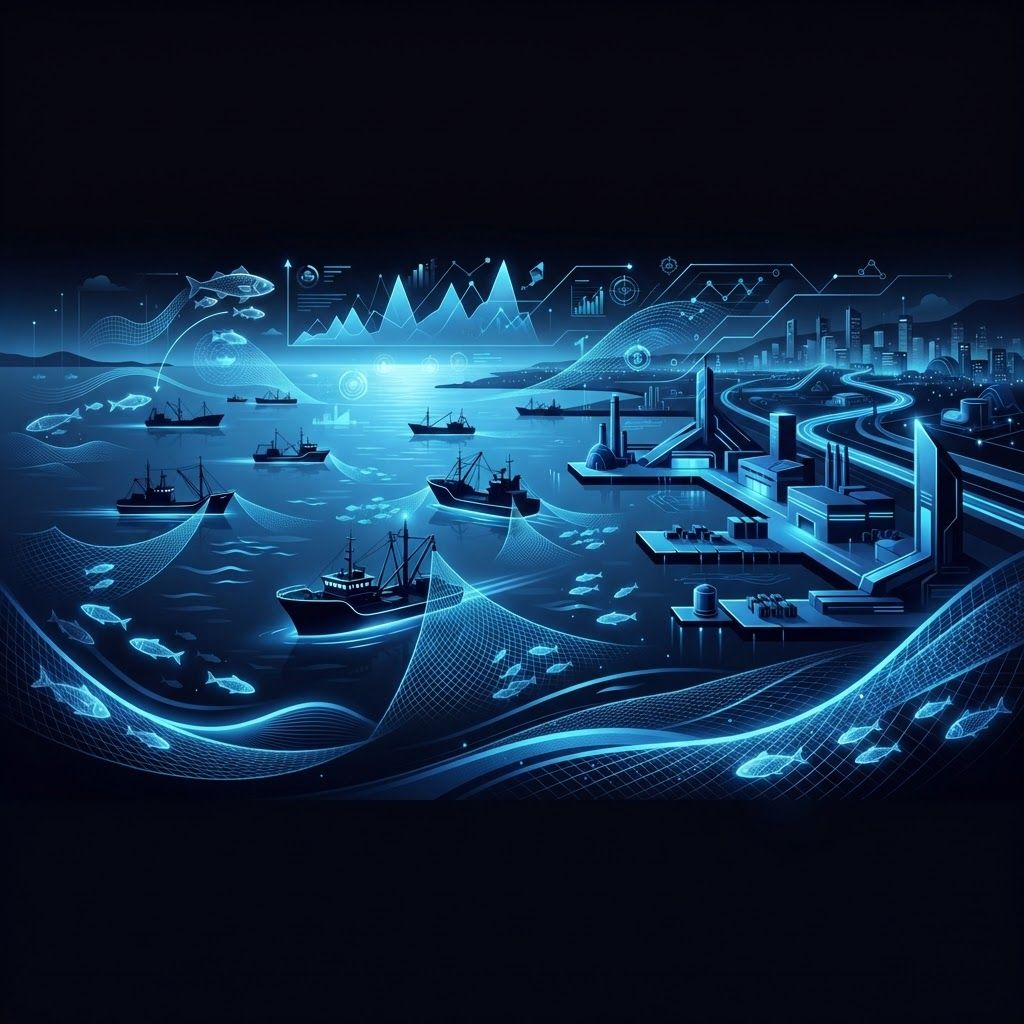
Gloucester and the Severn: A Long Relationship with Fish
The River Severn defines Gloucester geographically and historically, and fishing has been part of the city's identity for over a thousand years. The Severn estuary is one of the most remarkable tidal systems in the world, with a range second only to the Bay of Fundy, and it has supported distinctive fishing traditions including lave netting and putcher ranks for salmon, along with the famous elver runs that once made the river internationally significant.
Today the picture is different but still active. Wild capture is heavily restricted to protect declining stocks, particularly Atlantic salmon and European eel. In its place has grown a sector built on processing, distribution, aquaculture, conservation and recreational fisheries, all of which contribute meaningfully to the local economy.
Leading Fishery Companies Serving Gloucester
Severn Estuary Fisheries works within strict licensing to operate traditional and modern capture methods, with a strong emphasis on stock monitoring and seasonal restraint.
Gloucester Seafood Processing handles filleting, portioning, smoking and packing for wholesale and retail customers, applying full cold chain and traceability controls.
Vale Aquaculture operates land-based recirculating systems producing trout and other freshwater species with tightly managed water quality and low environmental discharge.
Quays Fish Market Supply distributes daily fresh fish and shellfish to restaurants, hotels and fishmongers across Gloucestershire.
Cotswold Trout Farms runs spring-fed trout production for both table market and restocking of angling waters across the region.
Forest Water Fisheries manages coarse fishing lakes and day-ticket waters, supporting the county's large recreational angling community.
Severnside Elver Conservation focuses on glass eel monitoring, restocking programmes and habitat work aimed at supporting European eel recovery.
Barnwood Fish Hatchery produces fry and fingerlings for restocking rivers, lakes and commercial fisheries, working with conservation bodies on native species.
Westgate Shellfish Distribution sources and supplies mussels, cockles and other shellfish, maintaining strict purification and classification compliance.
Docks Angling Supplies and Fishery Services combines tackle supply with fishery management consultancy, lake maintenance and habitat improvement work.
Sustainability and Stock Protection
No discussion of fisheries can avoid sustainability, and the Severn illustrates why. Atlantic salmon populations have declined dramatically across their range, prompting mandatory catch and release and severe restrictions on netting. The European eel is classified as critically endangered, with trade and capture tightly controlled under international agreement.
These restrictions have reshaped the local industry. Where previous generations fished commercially for salmon and elvers, today's operators focus on conservation, monitoring and restocking. Elver conservation work in particular has taken on international importance, with Severn glass eels used in restocking programmes across European river systems.
For seafood businesses, certification has become the main consumer-facing signal. MSC certification for wild capture and ASC for farmed seafood provide independently verified assurance, and Gloucester restaurants and retailers increasingly specify them.
Aquaculture as a Growth Sector
Farmed production now supplies roughly half of all seafood consumed globally, and the UK sector continues to expand. Around Gloucester the opportunity lies mainly in freshwater species, particularly trout, supported by good water availability and established expertise.
Recirculating aquaculture systems represent the technological frontier. By filtering and reusing water, these systems dramatically reduce consumption and discharge while allowing precise control of temperature, oxygen and feed. They can be sited away from natural watercourses entirely, reducing ecological risk.
Feed remains the sustainability pinch point, since traditional aquaculture feed relies on wild-caught fishmeal. Alternative protein sources including insect meal, algae and single-cell proteins are advancing quickly and will determine how sustainable the sector can ultimately become.
Water Quality and the Wider Environment
Fisheries are the clearest indicator of river health, which makes water quality a central concern. Agricultural runoff, storm overflow discharges and diffuse urban pollution all affect the Severn catchment. Elevated nutrients drive algal growth that depletes oxygen, while sediment smothers spawning gravels.
Fishery operators, angling clubs and conservation organisations around Gloucester have become significant voices in catchment management. Practical work includes riparian tree planting to shade and cool water, fencing to keep livestock out of watercourses, gravel restoration for spawning and removal of barriers that block fish migration.
Fish passes and weir modifications on Severn tributaries have opened substantial lengths of river to migratory species, a slow but genuinely effective intervention.
The Recreational Angling Economy
Recreational fishing contributes more to the local economy than many realise. Day ticket waters, syndicate lakes, tackle retail, accommodation and guiding services together support numerous small businesses across Gloucestershire.
Well-managed commercial fisheries invest continuously in stock health, swim maintenance, access, biosecurity and parking. Disease management is a serious responsibility, with strict controls on fish movements to prevent spread of parasites and pathogens between waters.
Angling also delivers social value through youth engagement programmes and documented mental health benefits, which has attracted funding and partnership interest beyond the traditional sport.
Food Safety in Seafood Handling
Seafood is among the most perishable food categories and carries elevated safety risk. Businesses must maintain rigorous cold chain control, apply HACCP systems and handle histamine-forming species with particular care. Shellfish requires harvesting area classification and purification where necessary.
Traceability is a legal requirement, with catch documentation following product through the chain. Buyers in Gloucester should expect complete species, origin and method-of-capture information, which also supports the sustainability claims made at point of sale.
Final Thoughts
Gloucester's fishery sector has transformed from wild commercial capture to a mixed economy of processing, aquaculture, conservation and recreation. The Severn remains central to the city's identity, and the businesses working on and around it now measure success in stock recovery and water quality as much as in landings. That shift, difficult as it has been, offers the best prospect of a fishing future for the river.
Want your brand featured in front of decision-makers? Publish a guest post or get a link insertion in our guides through AAMAX's guest post and link insertion service.
Helpful Links
 SponsoredAAMAX — Full-Service Digital Agency
Write for Us
Share your expertise with our readers. We welcome guest contributions from industry specialists.
Pitch your idea

