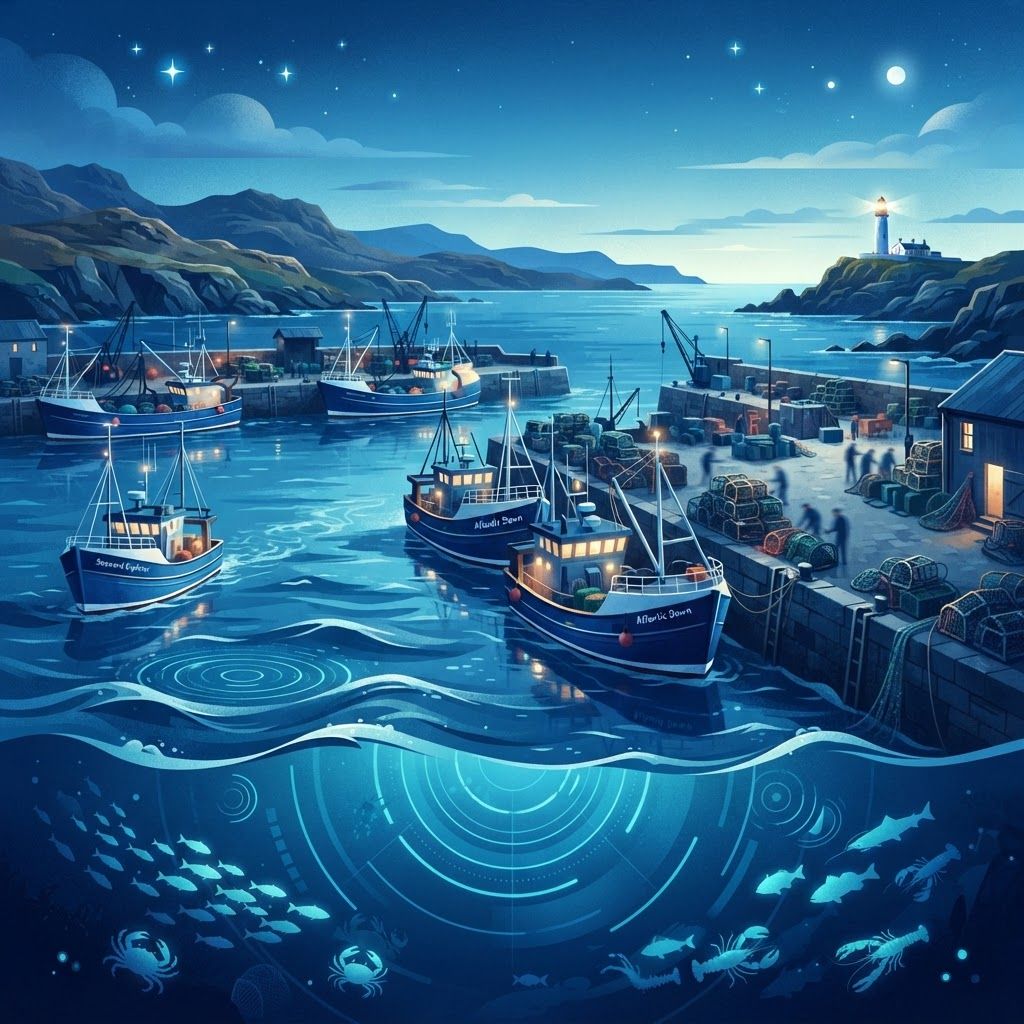
A Working Coastline With Centuries of Fishing Heritage
East Lothian's relationship with the sea is not decorative. Dunbar, Port Seton, Cockenzie and North Berwick have been fishing communities for centuries, and while the fleet is smaller than in its herring-boom heyday, commercial fishing remains a genuine part of the local economy. The Firth of Forth and the waters beyond St Abb's Head support shellfish, white fish and a growing aquaculture and processing sector.
The modern industry looks different from its predecessors. Boats are fewer but better equipped, quota management shapes what can be landed, and traceability requirements mean each catch is documented from net to plate. What has not changed is the dependence on skill, weather judgement and hard physical work carried out in conditions most industries would never accept.
What East Lothian Waters Produce
Shellfish dominate by value. Brown crab, velvet crab, lobster and langoustine are landed consistently and command strong prices, with substantial volumes exported to European and Asian markets. Scallops, both dredged and dived, add further value. White fish including haddock, cod, monkfish and flatfish are landed seasonally, while pelagic species appear intermittently.
Alongside capture fishing sits a processing and merchanting sector that adds value locally through grading, filleting, cooking, packing and distribution. For the county, this shoreside activity often supports more jobs than the boats themselves.
The Top 10 Fishery Companies in East Lothian
1. Dunbar Shellfish Company — A leading crab and lobster operation combining its own vessels with buying from local boats. Live holding tanks maintain condition before dispatch, enabling premium export sales and consistent quality for domestic customers.
2. Port Seton Fishing Cooperative — A cooperative of inshore boats sharing landing facilities, marketing and administration. The model gives small operators collective bargaining strength and shared access to ice, storage and compliance support.
3. Forth Langoustine Fisheries — Specialising in nephrops with careful onboard handling to preserve quality, including creel-caught product that commands premium pricing. Grading discipline and rapid chilling underpin its reputation with chefs.
4. East Coast Seafood Processing — A shoreside processor handling filleting, cooking, packing and cold storage for local landings. Adding value locally keeps margin in the county rather than exporting raw product for processing elsewhere.
5. North Berwick Inshore Fisheries — Operating small day boats targeting shellfish and seasonal white fish close to shore. Low fuel use, minimal bycatch and direct sales to restaurants and fishmongers define its sustainable, small-scale approach.
6. Lothian Scallop Divers — Hand-dived scallops harvested selectively with minimal seabed impact. The method yields larger, cleaner product and appeals strongly to restaurants marketing responsible sourcing.
7. Cockenzie Marine Products — Combining fishing with seaweed harvesting and marine ingredient supply for food and cosmetic manufacturers. Diversification into these emerging markets has broadened the local marine economy.
8. Belhaven Aquaculture Company — Operating shellfish cultivation including mussels and oysters in managed coastal sites. Water quality monitoring and controlled harvesting produce consistent supply less dependent on weather windows.
9. Tyne Estuary Fish Merchants — A merchanting business buying from local and wider Scottish landings to supply restaurants, retailers and wholesalers. Daily market knowledge and honest advice on what is genuinely at its best are valued by chefs.
10. Barns Ness Sustainable Fisheries — Focused on selective gear, accurate catch documentation and participation in stock assessment and habitat monitoring programmes. Its data-sharing work supports evidence-based management across the wider east coast fishery.
Sustainability and Management
Fisheries management shapes everything in this sector. Quotas, minimum landing sizes, closed areas and gear restrictions determine what can be caught and when. Well-run local companies treat these not as obstacles but as the mechanism that keeps the industry viable for the next generation, and several participate actively in stock monitoring and gear trials.
Creel fishing for crab and lobster is inherently selective, allowing undersized and berried females to be returned alive. V-notching programmes protect breeding females further. Hand-diving for scallops avoids seabed disturbance entirely. These methods cost more per kilogram but produce better product and a more defensible story for buyers who increasingly ask how their seafood was caught.
Challenges Facing the Sector
Export administration following changes to trading arrangements added cost and complexity, particularly for live shellfish where hours matter. Fuel prices affect margins directly. Crew recruitment is difficult, as fishing competes with safer, more predictable employment. Climate-driven shifts in species distribution are altering what appears in local waters, requiring adaptability from operators whose licences and gear are configured for historic patterns.
Against this, demand for high-quality Scottish shellfish remains strong, and the growth of direct sales, harbour-side retail and restaurant partnerships has opened routes to market that bypass some of the volatility of commodity trading.
Buying Seafood From Local Fisheries
For chefs and retailers, the advice is straightforward: build a direct relationship and buy what is genuinely good on the day rather than dictating a fixed list. Ask about catch method and landing date. Understand that weather closes the fishery some weeks, and plan menus with flexibility. Pay promptly, because cash flow in fishing is unforgiving and reliable customers get first refusal on the best boxes.
Final Thoughts
East Lothian's fishery companies combine genuine heritage with modern standards of handling, traceability and sustainability. From creel-caught lobster at Dunbar to hand-dived scallops and cultivated shellfish, the county produces seafood of real quality. Supporting these operators keeps a centuries-old working coastline alive and productive.
Want your brand featured in front of decision-makers? Publish a guest post or get a link insertion in our guides through AAMAX's guest post and link insertion service.
Helpful Links
 SponsoredAAMAX — Full-Service Digital Agency
Write for Us
Share your expertise with our readers. We welcome guest contributions from industry specialists.
Pitch your idea