

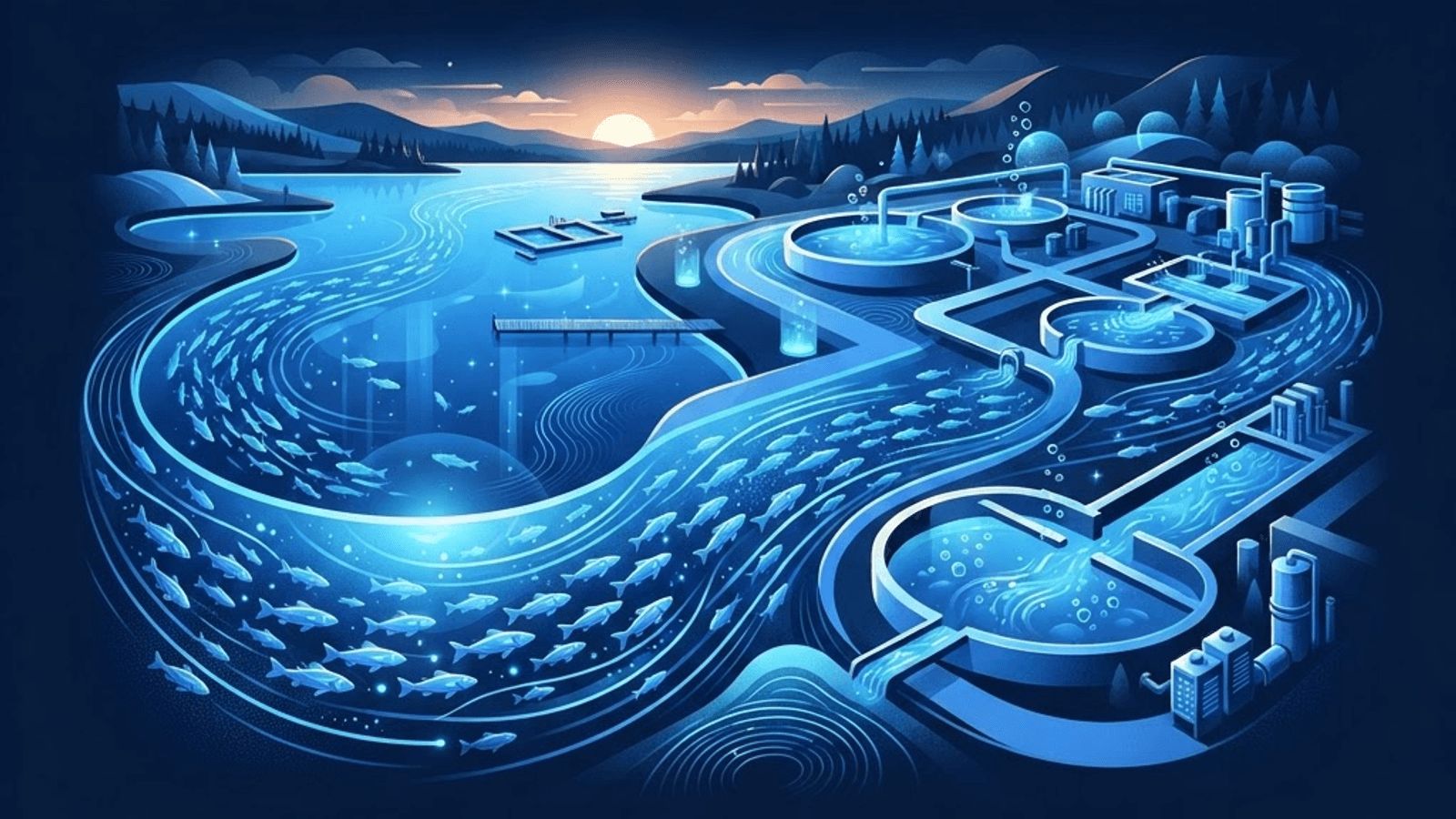
An Inland Fishery Landscape Shaped by Chalk
East Hampshire is not a coastal district, yet it has a fishery sector of real significance. The reason lies underground. Chalk aquifers filter and store rainwater, releasing it through springs at remarkably consistent temperature and exceptional clarity. The resulting chalk streams, including the headwaters feeding the Meon and Rother catchments, are among the rarest freshwater habitats in the world, with the majority of them found in southern England.
These conditions are ideal for salmonid species, which is why trout farming and game angling have flourished here for generations. Alongside them sit stillwater coarse fisheries, ornamental fish suppliers and specialist aquaculture operations serving both food and restocking markets.
How Inland Fisheries Operate
Inland fishery businesses in the district fall broadly into four types. Production aquaculture rears fish for the table, principally rainbow and brown trout. Restocking hatcheries supply fish to angling waters and to conservation programmes. Commercial angling fisheries generate revenue from day tickets, memberships and syndicate rods. Finally, service businesses provide consultancy, habitat works, netting and fish health support.
All of them operate under substantial regulation. Fish movements require authorisation, water abstraction and discharge are licensed, disease control obligations are strict, and invasive species biosecurity is taken extremely seriously. Well-run fisheries treat compliance as a core operational discipline rather than paperwork.
Ten Leading Fishery Enterprises
Meon Valley Trout Farm is among the district's best-known aquaculture operations, rearing rainbow and brown trout in spring-fed raceways. Consistent water temperature and quality produce fish of reliable condition, supplied both to the table market and to angling waters requiring stock.
South Downs Chalk Stream Fisheries manages wild and stocked trout beats along classic chalk stream water. Its approach emphasises habitat quality over stocking density, with gravel cleaning, weed management and bank restoration used to support natural recruitment.
Alton Coarse Fishery Group operates a cluster of stillwater venues holding carp, tench, bream and roach. Well-maintained swims, disabled-accessible platforms and active fish health monitoring have made these waters popular with club anglers across Hampshire and neighbouring counties.
Petersfield Aquaculture Company focuses on hatchery production, supplying fry and fingerlings to fisheries and restoration projects. Broodstock management, egg incubation and disease-free certification form the technical core of the operation.
Hampshire Fish Health Services provides veterinary and diagnostic support to fishery operators, covering parasite screening, water quality analysis and disease investigation. Early detection is critical in aquaculture, where a problem can escalate through a population within days.
Liphook Ornamental Fish Supply serves the aquatic retail and garden pond market with koi, goldfish and ornamental species, alongside pond equipment and filtration. Quarantine discipline and careful acclimatisation protocols distinguish responsible operators in this sector.
Bordon Angling Waters manages mixed coarse and predator fisheries with an emphasis on accessibility for newcomers. Coaching sessions, tackle hire and family-friendly facilities have helped introduce new participants to angling, an important consideration for the sport's long-term health.
Horndean Fishery Consultancy advises landowners on creating and managing water bodies, covering feasibility assessment, licensing, habitat design, stocking plans and ongoing management. Its work spans commercial fisheries, estate lakes and biodiversity-focused projects.
Four Marks Smokehouse and Fish Processing adds value to local aquaculture output through cold and hot smoking, filleting and packing. Supplying farm shops, restaurants and delicatessens, it connects primary production to the district's strong local food economy.
Whitehill River Restoration Partnership works on habitat improvement rather than production, undertaking weir removal, channel re-naturalisation, gravel augmentation and riparian planting. This work benefits fish populations while also improving flood resilience and water quality.
Water Quality and Chalk Stream Conservation
Chalk streams face genuine pressure. Abstraction for public water supply can reduce flows, particularly in dry years. Agricultural runoff carries sediment and nutrients that smother spawning gravels and encourage algal growth. Storm overflow discharges attract considerable public attention and affect both ecology and angling amenity.
Fishery operators have become important advocates on these issues, since their businesses depend directly on water quality. Many participate in catchment partnerships, undertake regular water monitoring and work with farmers upstream to reduce sediment entering watercourses through buffer strips and cover cropping.
Sustainable Stocking and Wild Fish
Attitudes to stocking have evolved considerably. Where heavy stocking was once standard practice, many fisheries now favour lower densities of triploid or native-origin fish to reduce competition with wild populations and limit genetic dilution. Catch-and-release policies, barbless hooks and reduced retention limits are increasingly common on quality waters.
The underlying philosophy has shifted from producing fish to producing habitat. A stream with clean gravels, varied flow, adequate cover and healthy invertebrate populations will sustain fish with far less intervention than one managed purely through stocking.
Biosecurity and Invasive Species
Invasive species including signal crayfish, floating pennywort and killer shrimp pose serious risks to inland waters. Fisheries manage this through disinfection stations, equipment checks, controlled fish movements and angler education. A single contaminated net can transfer an organism between catchments, so vigilance is continuous.
Final Thoughts
East Hampshire's fishery sector combines commercial aquaculture, recreational angling and serious conservation work in a landscape of international ecological importance. The enterprises performing best understand that their commercial future and the health of the chalk stream environment are inseparable, and they manage accordingly.
Want your brand featured in front of decision-makers? Publish a guest post or get a link insertion in our guides through AAMAX's guest post and link insertion service.
Helpful Links
 SponsoredAAMAX — Full-Service Digital Agency
Write for Us
Share your expertise with our readers. We welcome guest contributions from industry specialists.
Pitch your idea

