

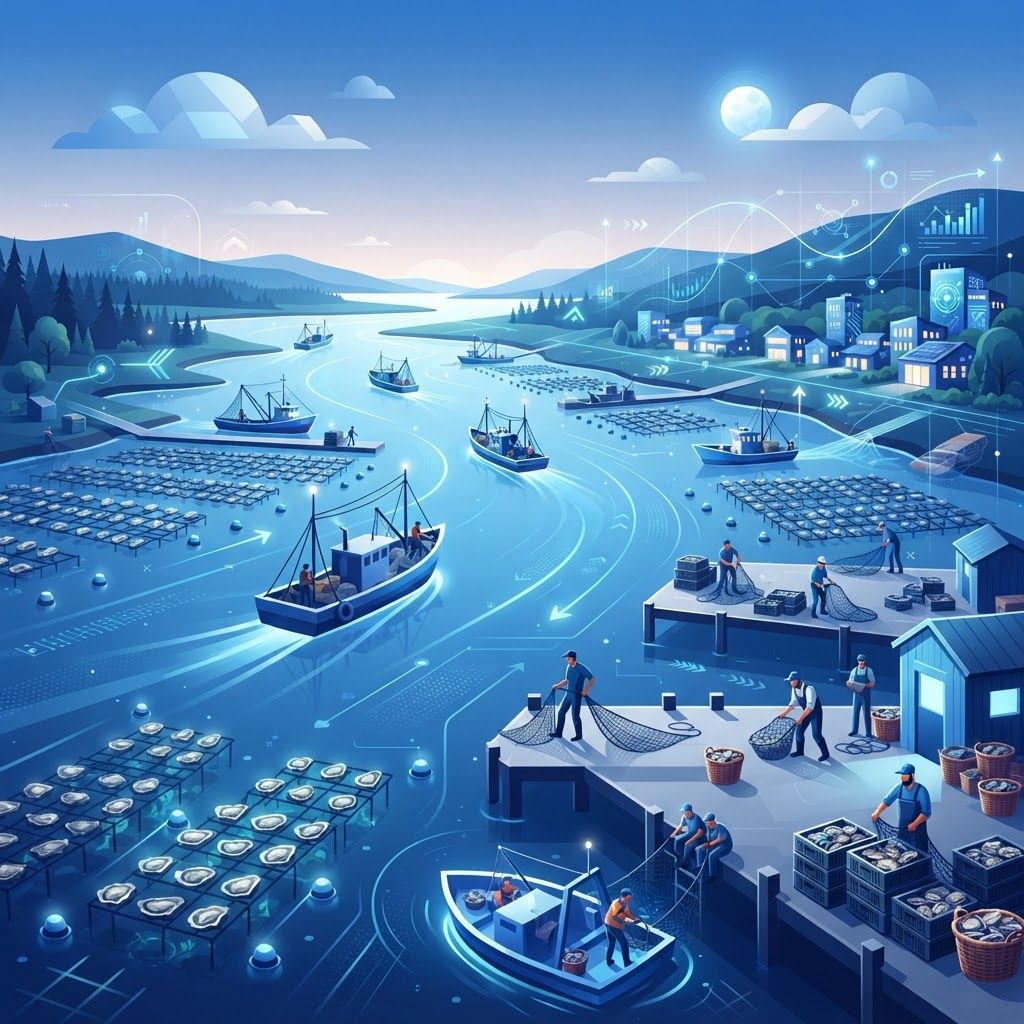
A Fishing Heritage Older Than Most Towns
Few places in Britain can claim a food industry with as much documented continuity as Colchester's oyster trade. The native oyster beds of the Colne estuary and the waters around Mersea Island have been harvested since Roman occupation, and the annual civic oyster ceremonies remain a fixture of the local calendar. This is not heritage marketing bolted onto a modern business; it is a genuinely continuous industry that has survived disease, pollution, overfishing and shifting consumer tastes.
Today the sector around Colchester includes native and rock oyster cultivation, mussel and cockle harvesting, small-scale inshore fishing, wholesale processing and distribution, plus a completely separate freshwater sector of coarse fisheries and trout waters serving anglers across Essex.
How the Local Fishery Sector Works
Shellfish cultivation is closer to farming than to hunting. Beds are laid, stock is graded and relaid as it grows, predators are managed, and harvesting is timed around size, condition and water quality classification. Oysters take three or more years to reach market size, so decisions made today affect income several seasons ahead.
Water quality governs everything. Shellfish harvesting areas are classified by regulators according to microbiological monitoring, and that classification determines whether shellfish can go straight to market or must be purified in tanks first. A single pollution incident upstream can suspend harvesting and cost a business its season, which is why local operators pay close attention to catchment management and water infrastructure.
Ten Notable Fishery Companies in the Colchester Area
1. Colne Estuary Oyster Company
A cultivator of native and rock oysters on leased beds in the estuary, supplying restaurants, fishmongers and export markets. The business combines traditional bed management with modern grading and purification facilities, and its stock is prized for the mineral character the Colne waters produce.
2. Mersea Island Shellfish
One of the best known names in the area, working oysters and mussels alongside a retail and hospitality operation. Selling directly to visitors as well as into wholesale gives the business a resilience that purely wholesale operators lack.
3. Brightlingsea Inshore Fisheries
A small-boat operation targeting sea bass, sole, skate and seasonal species in coastal waters. Day-boat fishing lands very fresh product in small quantities, which suits restaurants prepared to write menus around what actually came in that morning.
4. Wivenhoe Seafood Processing
Handling grading, shucking, packing and chilled distribution for local harvesters. Processing capacity is the bridge between the water and the market, and businesses with proper cold chain control and food safety accreditation add real value to raw landings.
5. Tollesbury Mussel and Cockle Harvesters
Working intertidal beds for mussels and cockles under managed harvesting regimes. Sustainability limits, closed seasons and stock surveys govern activity, and responsible operators support these controls because their livelihood depends on the resource recovering each year.
6. Roman River Trout Fishery
A stocked freshwater fishery offering fly fishing for rainbow and brown trout. Well-managed water quality, sensible stocking density and good bank access make the difference between a fishery anglers return to and one they try once.
7. Layer Lakes Coarse Fishery
Several lakes stocked with carp, tench, bream and roach, catering to match anglers and pleasure fishing. Coarse fisheries are a significant leisure economy in Essex, supporting tackle shops, accommodation and hospitality alongside their own income.
8. Abberton Aquaculture Services
Advisory and technical support for fishery owners, covering water testing, aeration, stock health, netting surveys and habitat improvement. Fish health management has become considerably more scientific, and specialist input prevents expensive stock losses.
9. Hythe Quay Fish Wholesale
A wholesaler buying from local landings and national markets to supply restaurants, hotels and retailers across north Essex. Breadth of species and reliable early-morning delivery are the core of the proposition for professional kitchens.
10. Colchester Sustainable Seafood Collective
A cooperative-style grouping promoting responsibly caught local species, shorter supply chains and better returns for small producers. Initiatives like this help lesser-known species find markets, which reduces pressure on the handful of fish that dominate consumer demand.
Challenges and Opportunities
Water quality remains the sector's greatest vulnerability. Sewage discharge events, agricultural runoff and urban drainage all affect shellfish classification, and the industry has become an unusually well-informed voice in local environmental debates for exactly that reason.
Climate change is altering the picture too. Warmer waters affect spawning, growth rates and disease pressure, and species distributions are shifting. Some changes create opportunity; others threaten established stock. Ocean acidification is a longer-term concern for shell-forming species specifically.
On the positive side, consumer interest in provenance has never been stronger. Diners will pay a premium for oysters from a named bed and fish landed by a named boat, and that willingness supports small operators who cannot compete on volume. Direct sales, restaurant partnerships and food tourism have all grown significantly around Mersea and the Colne.
Advice for Buyers and Visitors
If you are buying commercially, ask about harvesting area classification, purification arrangements and cold chain from bed to delivery. Establish realistic expectations about seasonality; native oysters have a traditional season for good biological reasons, and a supplier promising identical availability year round is probably not selling what you think.
For visitors, timing matters. Late summer and autumn bring the oyster festivals and the best conditions, while winter offers quieter waters and excellent shellfish. For anglers, contact fisheries in advance about permits, stocking and match bookings rather than arriving on spec.
Final Thoughts
Colchester's fishery sector combines a genuinely ancient shellfish industry with modern processing, wholesale distribution and a substantial freshwater angling economy. Its long-term health depends on water quality, sensible harvesting limits and continued consumer appreciation of local provenance. Supporting these businesses keeps a two-thousand-year-old industry working rather than merely remembered.
Want your brand featured in front of decision-makers? Publish a guest post or get a link insertion in our guides through AAMAX's guest post and link insertion service.
Helpful Links
 SponsoredAAMAX — Full-Service Digital Agency
Write for Us
Share your expertise with our readers. We welcome guest contributions from industry specialists.
Pitch your idea

