

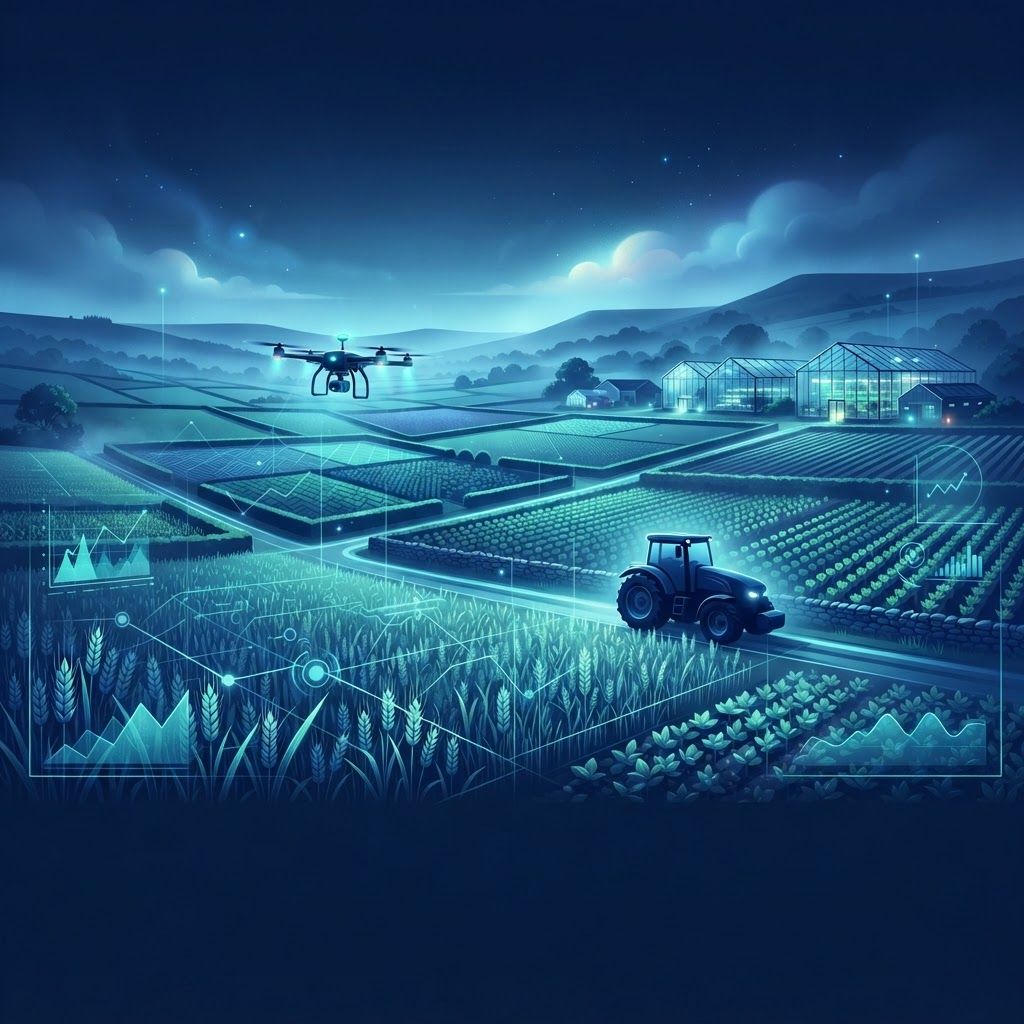
Farming and the Vale of York
Surrounding the city of York lies a broad, low-lying plain of deep alluvial and sandy loam soils that ranks among the most agriculturally productive land in the United Kingdom. The Vale of York has been farmed continuously for millennia, and it remains the economic backbone of the wider district. Wheat, barley, oilseed rape, sugar beet, potatoes and field vegetables dominate the arable rotation, while dairy, beef and sheep enterprises occupy the heavier clays and the fringes rising towards the Wolds and the Moors.
Modern York farming businesses are considerably more sophisticated than the popular image suggests. They are data-driven operations managing volatile input costs, complex environmental schemes, contract obligations with national processors and, increasingly, diversified revenue from energy, tourism and direct sales.
What Distinguishes a Strong Farming Business
Judging farming companies is not simply a matter of acreage. The strongest operations demonstrate soil stewardship, evidenced by organic matter levels and reduced cultivation practices. They show financial resilience, spreading risk across enterprises rather than depending on a single commodity. They invest in people, offering genuine progression rather than seasonal churn. And they engage with the community, recognising that farming near a city of York's profile carries a public-facing responsibility.
Ten Notable Farming Companies Around York
1. Vale of York Arable Group
A large-scale combinable crops business farming across multiple holdings, Vale of York Arable Group is known for precision agronomy. Variable rate application, yield mapping and controlled traffic farming are standard practice, and the company shares trial data with neighbouring farmers through informal knowledge groups.
2. Ouse Meadows Dairy
Operating a substantial year-round calving herd, Ouse Meadows Dairy has invested heavily in cow comfort and herd health monitoring. Robotic milking and rumination sensors reduce intervention while improving welfare outcomes, and the business supplies a national liquid milk contract with strong compliance scores.
3. Howardian Estate Farms
Estate farming brings different priorities, balancing agricultural output with landscape, forestry and heritage obligations. Howardian Estate Farms manages a mixed portfolio of arable, grazing and woodland, with significant areas entered into environmental land management agreements.
4. Yorkshire Root Crops
Specialising in potatoes and sugar beet, Yorkshire Root Crops has built its reputation on storage and grading. Temperature-controlled long-term storage allows the company to supply processors and packers well outside the harvest window, smoothing income and improving negotiating position.
5. Wolds Edge Livestock
A beef and sheep enterprise on the rising ground east of the city, Wolds Edge Livestock finishes native breed cattle on grass and forage crops. The business markets under a provenance-led programme that appeals to butchers and restaurants in York itself.
6. Riverside Regenerative Farming
Among the more experimental operations in the district, Riverside has moved decisively towards regenerative practice. Direct drilling, diverse cover crop mixes, integrated grazing of arable land and reduced synthetic input use have produced measurable improvements in soil structure and water infiltration.
7. Derwent Valley Poultry
Free range egg production at commercial scale requires meticulous biosecurity and welfare management. Derwent Valley Poultry operates multiple ranging units with tree cover and rotational range management, supplying supermarket and independent channels.
8. Tadcaster Road Contract Farming
Contract farming has become central to how land is managed around York, allowing landowners to retain ownership while professionals handle operations. Tadcaster Road Contract Farming manages thousands of acres this way, offering transparent cost accounting and shared risk arrangements.
9. Foss Valley Horticulture
Field-scale vegetable growing near a city creates real logistical advantages. Foss Valley Horticulture produces brassicas, salad crops and squash for regional wholesalers and box schemes, with short transport distances supporting both freshness and lower emissions.
10. Northern Seed and Grain Farming
Combining commercial cropping with certified seed multiplication, this business plays an important role in the regional supply chain. Producing seed to certification standard demands exceptional rotational discipline and varietal purity, and the company has a strong record on both.
Technology Transforming York Agriculture
The pace of technical change in farming has accelerated sharply. Satellite and drone imagery now inform nitrogen decisions field by field and zone by zone. Soil scanning maps texture and nutrient variation at resolutions that were unaffordable a decade ago. Autonomous and semi-autonomous machinery is beginning to appear on larger holdings, addressing both labour availability and soil compaction.
Data management has become a discipline in its own right. Farm management software ties together agronomy records, machinery telematics, grain contracts and environmental scheme compliance. The businesses that handle this well make faster, better decisions, particularly around input purchasing in volatile markets.
Sustainability and Environmental Schemes
The shift in British agricultural policy from area-based payments towards environmental outcomes has fundamentally changed farm business planning. York farmers are now paid for hedgerow management, buffer strips, winter bird food, nectar mixes, soil monitoring and habitat creation. The most commercially astute operations have integrated these payments into whole-farm plans rather than treating them as marginal add-ons.
Flood management is a particular local concern. The Ouse and its tributaries shape land use across the Vale, and farmers are increasingly participating in natural flood management, accepting temporary water storage on lower ground in exchange for support and reduced risk downstream in the city.
Diversification and Local Markets
Proximity to York and its large visitor economy has encouraged diversification. Farm shops, holiday accommodation, wedding venues, pick-your-own enterprises, equine livery and anaerobic digestion all appear across the district. These ventures spread risk and, importantly, connect farming businesses directly with consumers, which builds the public understanding the industry needs.
Final Thoughts
Farming around York is a serious, technically demanding industry operating on excellent land under real pressure from climate variability, market volatility and policy change. The ten businesses profiled here illustrate the range of responses, from precision arable and high-welfare livestock to regenerative experimentation and contract management. Collectively they demonstrate that the Vale of York remains not just productive land, but a genuine centre of agricultural expertise.
Want your brand featured in front of decision-makers? Publish a guest post or get a link insertion in our guides through AAMAX's guest post and link insertion service.
Helpful Links
 SponsoredAAMAX — Full-Service Digital Agency
Write for Us
Share your expertise with our readers. We welcome guest contributions from industry specialists.
Pitch your idea

