

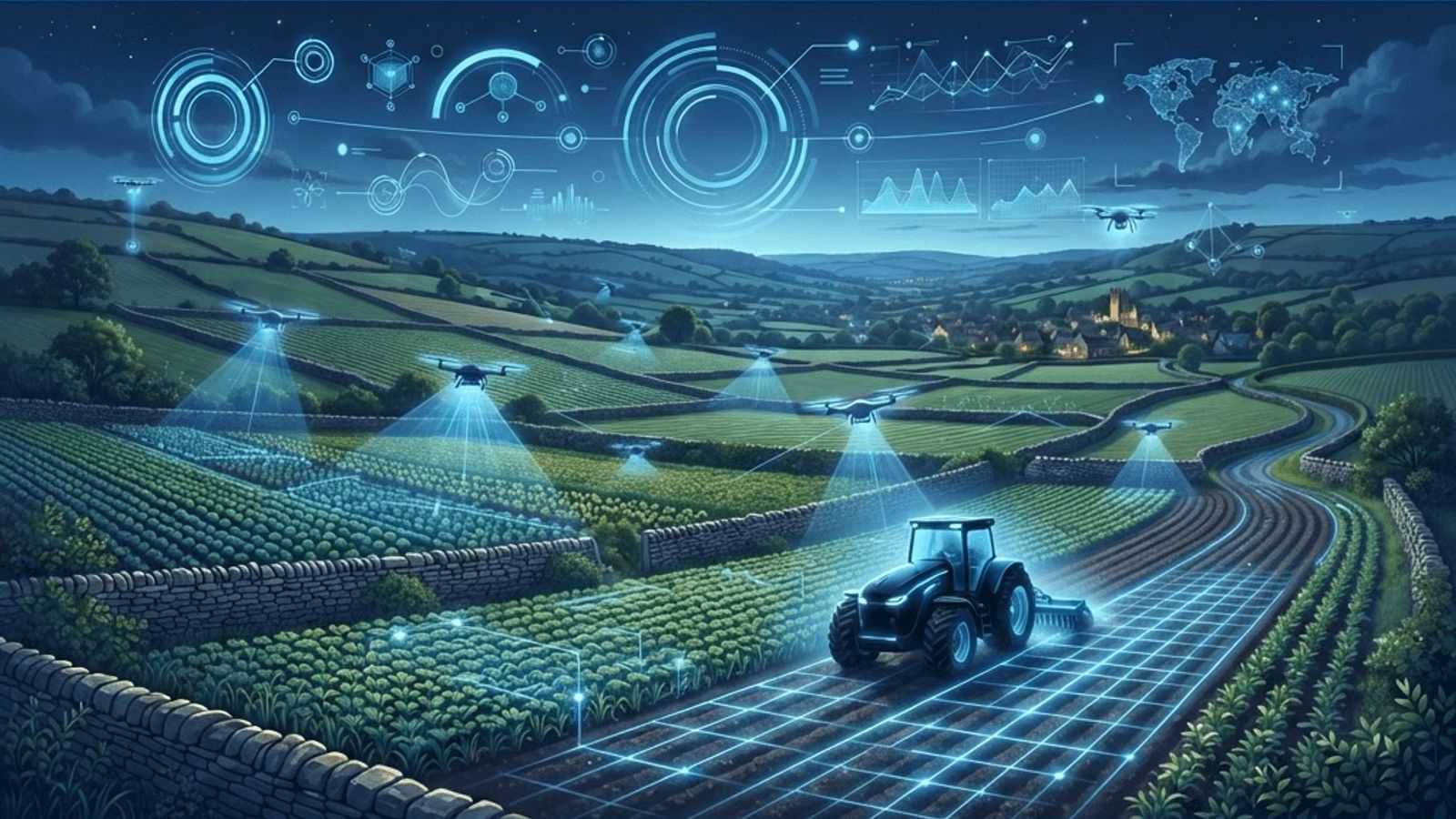
Farming and the West Oxfordshire Landscape
The rolling fields, dry stone walls and wooded valleys that make West Oxfordshire so visually distinctive are not accidental features. They are the product of centuries of agricultural management, and farming continues to shape both the appearance and the economy of the district today. Arable cropping dominates the lighter limestone soils, while livestock grazing occupies the steeper valley sides and permanent pasture along the Windrush and Evenlode river corridors.
Modern farming in the district is considerably more complex than the traditional image suggests. Contemporary farm businesses manage environmental stewardship agreements, renewable energy installations, diversified enterprises, sophisticated machinery fleets and detailed compliance obligations alongside the fundamental business of growing crops and raising livestock.
Trends Transforming Cotswold Agriculture
Regenerative agriculture has gained substantial ground across Oxfordshire. Practices including minimum tillage, cover cropping, diverse rotations, integrated livestock grazing and reduced chemical inputs aim to rebuild soil organic matter and biological activity. Farmers adopting these methods report improved soil structure, better water infiltration during heavy rainfall and reduced fuel and fertiliser costs, though the transition period requires patience and careful management.
Environmental land management has become a meaningful income stream rather than a peripheral consideration. Payments for habitat creation, hedgerow management, species-rich grassland, buffer strips and public access now form a significant part of many farm business plans, encouraging integration of conservation with production.
Precision technology is widely adopted. Satellite guidance, variable rate application, soil mapping, yield monitoring and drone-based crop assessment allow inputs to be matched to field variation rather than applied uniformly. The result is lower cost and reduced environmental impact without yield penalty.
Diversification remains critical to farm viability. Holiday accommodation in converted barns, farm shops, event venues, equestrian facilities, renewable energy and direct-to-consumer meat sales all supplement income from primary production, spreading risk across multiple revenue streams.
The Top 10 Farming Companies in West Oxfordshire
1. Windrush Valley Farms
A substantial mixed farming enterprise combining arable cropping with beef and sheep production across the Windrush valley. The business has invested heavily in soil health, adopting reduced tillage and diverse cover crop mixes, and integrates grazing livestock into arable rotations to build fertility naturally. Their environmental stewardship work includes extensive hedgerow restoration and river buffer planting.
2. Evenlode Estate Farming
An estate-scale operation managing arable land, woodland and permanent pasture with a long-term custodianship philosophy. The estate combines commercial cropping with significant conservation areas, supporting farmland bird populations and pollinator habitat. Woodland management for timber and biodiversity forms an integrated part of the business rather than a separate activity.
3. Cotswold Regenerative Livestock
Focused on pasture-fed beef and lamb, this business practises rotational grazing designed to maximise grass recovery and soil carbon capture. Animals are finished slowly on herbal leys containing deep-rooting species, producing meat sold through direct channels to customers who value provenance and welfare standards. Their grazing model has attracted attention from farmers across the region.
4. Charlbury Arable Partnership
A collaborative farming arrangement pooling land, machinery and expertise across multiple holdings to achieve scale efficiencies unavailable to individual farms. The partnership model spreads capital costs for high-specification equipment while allowing each landowner to retain ownership, and has become an increasingly popular structure across the district.
5. Bampton Dairy Company
One of the district's notable dairy operations, running a high-welfare herd with careful attention to nutrition, health monitoring and grassland management. The business has invested in slurry management infrastructure and renewable energy, reducing both environmental impact and input costs while improving nutrient recycling across the farm.
6. Burford Organic Growers
Certified organic vegetable and salad production supplying local retailers, restaurants and box schemes. Growing without synthetic inputs demands intensive rotation planning, mechanical weed control and composting expertise. Their produce has a strong reputation among Cotswold hospitality businesses that prioritise local, seasonal sourcing.
7. Chipping Norton Agricultural Contractors and Farming
Combining its own farming operation with contracting services, this business provides cultivation, drilling, spraying, silage and harvesting services to neighbouring farms. The contracting model allows expensive machinery to achieve the annual usage hours needed to justify investment, benefiting the wider farming community.
8. Carterton Poultry and Egg Production
A free-range egg producer operating to high welfare standards with extensive ranging areas planted with trees to encourage natural bird behaviour. The business supplies regional retailers and food service customers, and has invested in solar generation to offset the energy demands of packing and climate control.
9. Wychwood Woodland and Agroforestry
Pioneering agroforestry approaches that integrate tree planting with crop and livestock production, this business demonstrates how timber, fruit and farming can share the same land productively. Silvopasture systems provide shelter for stock, additional income streams and meaningful carbon sequestration alongside conventional output.
10. Thames Valley Seed and Grain Enterprises
Specialising in high-quality combinable crops including milling wheat, malting barley and oilseeds, this operation focuses on meeting demanding buyer specifications. Grain storage, drying and marketing expertise allow the business to sell strategically rather than at harvest, materially improving realised prices.
Challenges Facing Local Farmers
West Oxfordshire farmers face genuine pressures. Weather volatility has made establishment and harvest windows less predictable, while input costs for fertiliser, fuel and machinery have risen substantially. Labour availability for seasonal and skilled roles remains difficult, and the transition in agricultural support arrangements has required careful financial planning.
Balancing production with environmental delivery is a continuing negotiation. Farms must remain commercially viable while meeting expectations around water quality, biodiversity, carbon and public access. The most successful businesses treat these as complementary rather than competing objectives.
The Future of Farming in the District
Expect continued adoption of regenerative practices, deeper integration of environmental payments into business planning, and growth in direct-to-consumer sales that capture more value within the farm gate. Technology will continue to reduce input requirements while improving decision quality. Above all, the farms that thrive will be those that understand themselves as managers of a whole landscape system rather than producers of a single commodity, sustaining both the working countryside and the beauty for which West Oxfordshire is known.
Want your brand featured in front of decision-makers? Publish a guest post or get a link insertion in our guides through AAMAX's guest post and link insertion service.
Helpful Links
 SponsoredAAMAX — Full-Service Digital Agency
Write for Us
Share your expertise with our readers. We welcome guest contributions from industry specialists.
Pitch your idea

