Agriculture in the Hertfordshire Green Belt
It is easy to think of Welwyn Hatfield purely in terms of its towns, business parks and aviation heritage, but a substantial proportion of the borough remains agricultural land. Green belt designation has preserved a working countryside of arable fields, pasture, woodland and horticultural holdings within remarkably short distance of Greater London.
This proximity shapes local farming profoundly. Access to an enormous consumer market supports direct sales, farm shops and box schemes that would be unviable in more remote regions. At the same time, land values, development pressure and public access expectations create challenges unfamiliar to farmers in less crowded parts of the country.
The Shape of Local Farming
Arable production dominates by area. Hertfordshire's clay and chalk soils suit combinable crops, and local farms typically grow wheat, barley, oilseed rape and beans in rotation. Yields are respectable, and proximity to milling and processing capacity in the South East supports reasonable market access.
Livestock is present but less dominant, with sheep grazing marginal land and some cattle enterprises. Horticulture occupies a smaller area but a disproportionate share of value, with glasshouse and field vegetable production supplying local retail and food service.
Diversification has become central to farm business models. Equestrian facilities, farm shops, event venues, storage and workshop letting, renewable energy generation and camping enterprises all supplement agricultural income, and for many holdings these now contribute the majority of profit.
Ten Farming Businesses in and Around the Borough
1. Hatfield Estate Farms operates a substantial arable enterprise on a rotational system, combining cereals with break crops and incorporating environmental stewardship areas across the holding.
2. Welwyn Valley Farming runs a mixed arable and sheep operation, using grazing to manage soil health and integrate livestock into an otherwise cropping-focused rotation.
3. Garden City Market Gardens produces field and glasshouse vegetables for local retail, farm shops and box schemes, emphasising short supply chains and seasonal cropping.
4. Comet Way Agricultural Contracting provides contract farming services including cultivation, drilling, spraying and harvesting for landowners who do not farm in hand.
5. Shire Park Regenerative Farming has adopted minimum tillage, cover cropping and diverse rotations, focusing on soil organic matter and reduced input dependency.
6. Herts Equestrian and Livery represents the diversified rural economy, combining grazing management with equestrian facilities and associated land maintenance.
7. Birchall Farm Shop and Produce operates a farm retail business selling its own and neighbouring producers' output directly to consumers, capturing far more value than commodity sale allows.
8. Old Hatfield Orchards maintains traditional and modern orchard plantings, producing fruit for fresh sale and processing into juice and preserves.
9. Panshanger Land Management combines agricultural production with environmental and conservation management, delivering habitat creation alongside cropping.
10. Ellenbrook Agri Services completes the list by supplying agronomy advice, soil testing, machinery servicing and technical support to farms across the borough.
Regenerative Practice and Soil Health
The most significant shift in British arable farming over the past decade has been the move towards soil-focused management. Reduced tillage preserves soil structure and fungal networks, cover crops protect bare ground over winter while capturing nutrients, and diverse rotations break pest and disease cycles that intensive monoculture amplifies.
The commercial logic is compelling as well as environmental. Reduced cultivation cuts fuel and labour costs significantly. Improved soil structure enhances water infiltration, reducing both drought stress and surface run-off. Better nutrient cycling lowers fertiliser requirements, and with input costs volatile, that resilience has real value.
Transition is not without difficulty. Yields can dip during the adjustment period as soil biology re-establishes, and machinery investment in direct drills represents a meaningful capital commitment. Farms that have persisted through the transition generally report improved margins even where yields have not fully returned to previous peaks.
Technology on the Farm
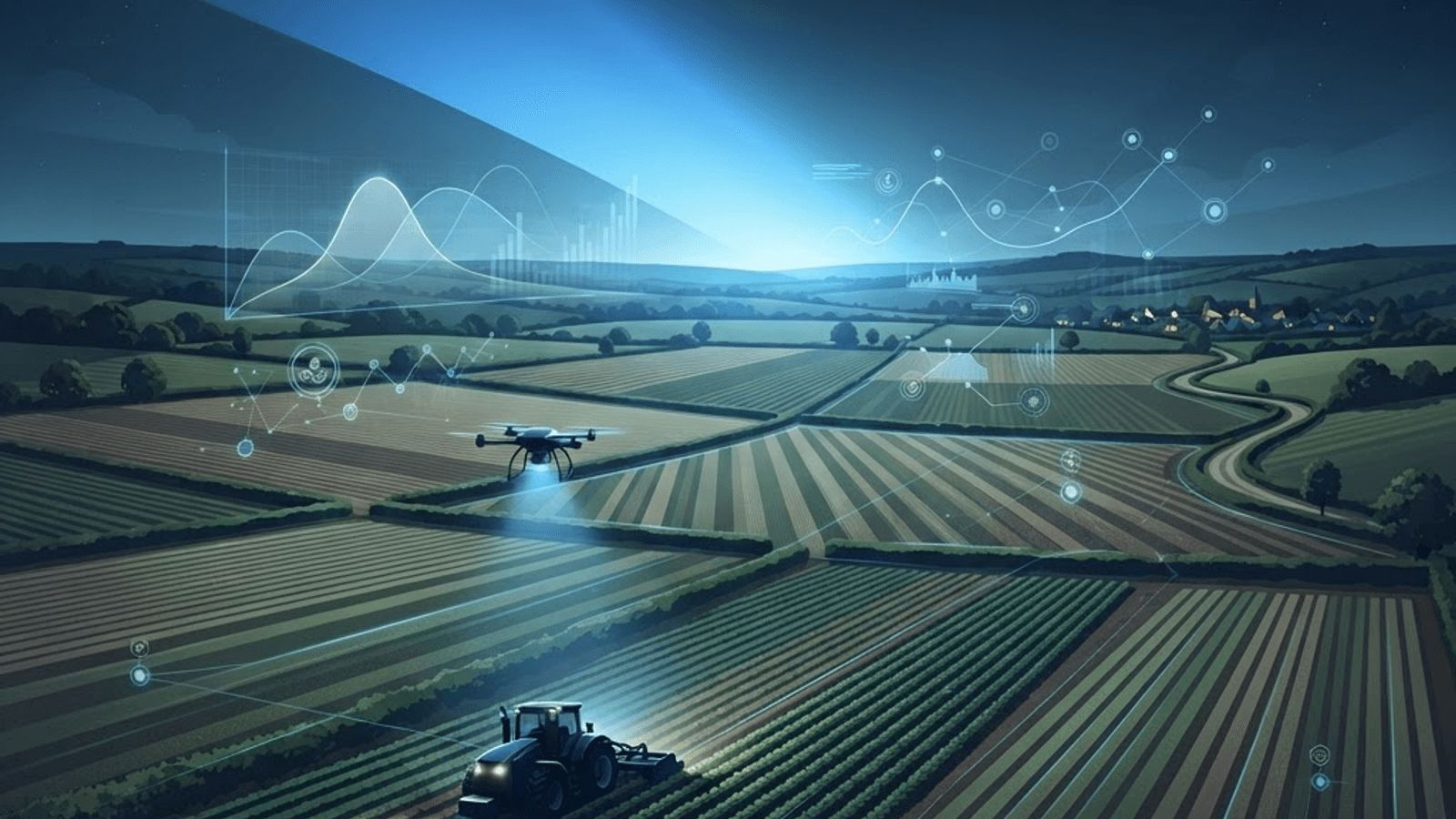
Precision agriculture has moved from novelty to standard practice on larger holdings. Satellite guidance eliminates overlap on cultivation and spraying passes. Variable rate application matches fertiliser and seed rates to within-field soil variation. Yield mapping builds a multi-year picture of field performance that informs future decisions.
Drone and satellite imagery now supports crop monitoring, identifying stress, disease and nutrient deficiency before they are visible from the tractor cab. Soil moisture and weather sensing supports better timing of operations, which in a climate of increasingly unpredictable weather windows has become critical.
Data management underpins all of this. Farms that record and analyse their own performance data make better agronomic and financial decisions, and the tools for doing so have become considerably more accessible.
The Economics of Modern Farming
Farm profitability in the UK has been reshaped by the transition away from area-based support payments towards environmental land management schemes. Income now depends more on delivering measurable environmental outcomes alongside food production, which rewards farms willing to integrate habitat, water quality and carbon objectives into their business planning.
Direct selling remains one of the strongest margin opportunities available to farms near population centres. Welwyn Hatfield's location makes farm shops, box schemes and local supply to independent retailers genuinely viable, capturing retail margin that commodity marketing surrenders entirely.
Final Thoughts
Farming in Welwyn Hatfield demonstrates how agriculture adapts at the urban fringe: productive, increasingly regenerative, technologically capable and commercially diversified. For a borough better known for its towns, the surrounding farmland remains a working, evolving part of the local economy and landscape.
Want your brand featured in front of decision-makers? Publish a guest post or get a link insertion in our guides through AAMAX's guest post and link insertion service.
Helpful Links
 SponsoredAAMAX — Full-Service Digital Agency
Write for Us
Share your expertise with our readers. We welcome guest contributions from industry specialists.
Pitch your idea