

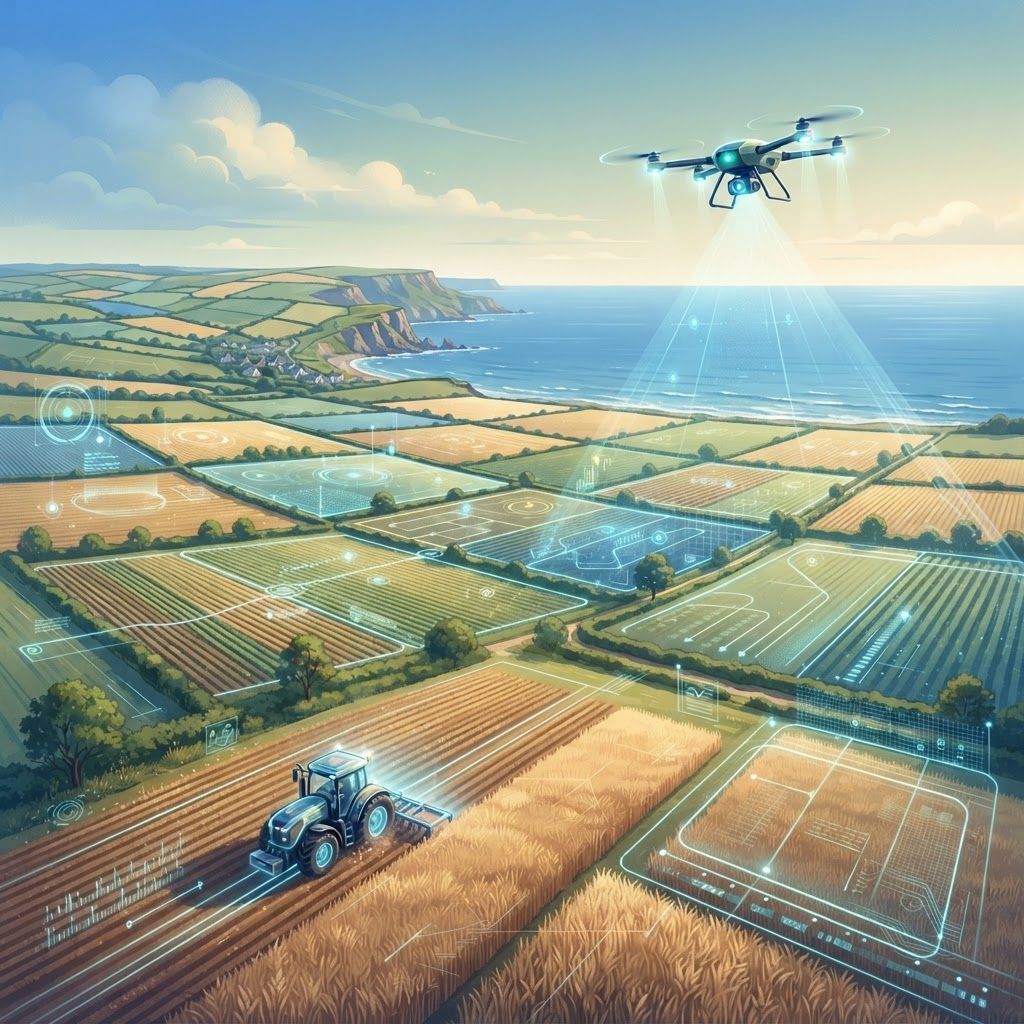
Agriculture in Tendring: A Distinctive Farming Landscape
Away from the seafronts and holiday parks, Tendring is farming country. The district sits within one of the driest parts of the United Kingdom, with high sunshine hours and light to medium soils across much of its area. That combination produces excellent conditions for cereals, oilseeds, sugar beet, field vegetables and outdoor horticulture, provided water can be managed carefully.
Farming here is therefore defined by precision. Irrigation planning, soil moisture management, variety selection and timing decisions matter more than raw acreage. Growers in the Tendring peninsula have long been recognised for high-value vegetable production, and the district's proximity to Harwich and the wider East Anglian food processing network gives produce efficient routes to market.
What Makes a Leading Farming Business
Modern agricultural success rests on several pillars. Agronomic discipline comes first: rotation planning, soil health, integrated pest management and nutrient efficiency determine both yield and cost. Commercial capability follows, including contract negotiation, storage, grading and the ability to meet retailer specifications consistently.
Environmental stewardship has become inseparable from commercial performance. Farms participating in agri-environment schemes, adopting cover crops, reducing cultivation intensity and creating habitat margins are not simply meeting obligations; they are protecting the soil and water resources their businesses depend on. Diversification into energy, storage, events, tourism or farm retail provides further resilience against volatile commodity prices.
Notable Farming Businesses and Organisations in Tendring
1. Barfoots and comparable large-scale field vegetable growers operating in Essex demonstrate the professionalism of modern horticulture, combining tight agronomic control, packing capability and direct retailer relationships to deliver consistent quality at volume.
2. Wilkin and Sons in the neighbouring Tiptree area is an outstanding regional example of vertically integrated farming, growing fruit and manufacturing preserves. Its long-standing commitment to grower relationships and provenance sets a benchmark that Tendring producers frequently reference.
3. Local arable estates across the Tendring peninsula form the backbone of the district's agriculture, farming wheat, barley, oilseed rape, beans and sugar beet at scale. Many now operate sophisticated machinery-sharing and contracting arrangements to spread capital cost across neighbouring holdings.
4. G's Fresh operates widely across East Anglia in salad and vegetable production, and its model of coordinated growing, cooling and packing illustrates how the region supplies national retailers with short-shelf-life produce reliably.
5. Tendring family mixed farms combining cereals with livestock, hay and straw enterprises remain commercially important. Their flexibility allows them to respond to market shifts more quickly than highly specialised operations.
6. Farm contracting businesses serving the district provide drilling, spraying, harvesting, baling and hedge maintenance. As machinery costs rise, contractors deliver access to modern, well-maintained equipment without the capital burden, and their operators accumulate valuable cross-farm experience.
7. Soft fruit and pick-your-own enterprises around the district blend production with visitor income, benefiting from Tendring's tourism flows. These businesses demonstrate how agriculture and leisure can reinforce one another profitably.
8. Essex agricultural cooperatives and buying groups improve members' purchasing power for fertiliser, seed and crop protection while providing agronomic advice and grain marketing services, effectively giving smaller farms the commercial leverage of much larger operations.
9. Farm shops and direct-sale producers across Tendring capture retail margin by selling vegetables, eggs, meat and preserves directly to residents and visitors. Short supply chains have proved commercially attractive as consumers pay more attention to freshness and local provenance.
10. Equine, poultry and specialist livestock enterprises complete the district's agricultural profile, supported by local feed merchants, veterinary practices and agricultural suppliers that together sustain a working rural economy.
Trends Reshaping Tendring Agriculture
Water is the defining issue. In a low-rainfall district, reservoir construction, abstraction licensing, drip irrigation and soil moisture monitoring are central to viability. Farms that have invested in on-farm water storage have materially reduced their exposure to dry summers.
Technology adoption is accelerating. Variable rate application, satellite and drone crop monitoring, controlled traffic farming and yield mapping are now routine on larger holdings. These tools cut input use per tonne produced, improving both margin and environmental performance simultaneously.
Policy transition is the third factor. The move from area-based payments towards support for environmental outcomes has pushed farms to evaluate marginal land differently, integrating habitat creation, carbon storage and natural flood management alongside food production.
Working With Local Farming Businesses
For buyers, the district offers genuine opportunity. Restaurants, holiday parks, schools and retailers in Tendring can source vegetables, cereals and meat with very short food miles, provided they engage early enough to plan volumes around growing seasons. Farmers value predictable commitments far more than opportunistic spot purchases.
For those entering the sector, contracting, agronomy, machinery maintenance and food processing all offer skilled work. Agriculture in the district is increasingly technical, and the demand for people who can operate precision equipment and interpret crop data continues to grow.
Final Thoughts
Farming in Tendring is a modern, technically sophisticated industry operating in a demanding climate. The businesses and organisations described here succeed through agronomic precision, water management, cooperative purchasing, diversification and increasingly serious environmental stewardship. Together they sustain both the district's food production and the working landscape that visitors come to enjoy.
Want your brand featured in front of decision-makers? Publish a guest post or get a link insertion in our guides through AAMAX's guest post and link insertion service.
Helpful Links
 SponsoredAAMAX — Full-Service Digital Agency
Write for Us
Share your expertise with our readers. We welcome guest contributions from industry specialists.
Pitch your idea

