

Agriculture Around the New Town
Although Telford is best known as a planned new town built on an industrial past, the borough is surrounded by genuinely productive farmland. The Weald Moors north of Telford, the fertile ground toward Newport and the rolling countryside around the Wrekin support mixed arable, dairy, beef, sheep and increasingly diversified rural businesses.
Shropshire agriculture has a strong reputation. Good soils, reliable rainfall and a long tradition of livestock husbandry underpin farms that supply grain, milk, meat and vegetables into regional and national supply chains. Many of these businesses have been in the same family for generations while adopting technology that would be unrecognisable to their founders.
The Structure of Local Farming
Arable farms in the borough grow wheat, barley, oilseed rape, field beans and increasingly maize for forage. Dairy units range from moderate herds supplying liquid milk contracts to larger operations feeding cheese and processing markets. Beef and sheep enterprises make use of grassland and rougher ground, often finishing stock bought at local markets. Horticultural growers supply potatoes, root crops and salad. Alongside these sit contract farming businesses, agricultural contractors, and diversified enterprises including farm shops, glamping, equestrian livery and renewable energy.
Top 10 Farming Companies in Telford and Wrekin
1. Weald Moors Arable Farming
A substantial cereal and root crop operation on the drained peat and silt land north of Telford, applying variable rate agronomy and soil mapping to improve yield consistency.
2. Wrekin Valley Dairy
A grass based dairy herd supplying a regional processor, with careful attention to herd health, forage quality and slurry management as a nutrient resource rather than a waste.
3. Shropshire Pedigree Livestock
Breeding and finishing beef cattle and sheep, including pedigree bloodlines sold to other producers, with full farm assurance and traceability throughout.
4. Newport Mixed Farming Enterprise
A classic mixed farm combining cereals, forage and livestock, using rotation and manure to maintain soil fertility and spread market risk across enterprises.
5. Severn Valley Potatoes and Root Crops
Specialist potato and vegetable production with grading, storage and packing, supplying both wholesale and regional retail customers.
6. Lilleshall Agricultural Contracting
Contract cultivation, drilling, spraying, harvesting and silage services, allowing smaller farms to access modern machinery without the capital cost of ownership.
7. Ironbridge Regenerative Farming Project
A farm focused on minimum tillage, cover cropping, diverse rotations and rebuilding soil organic matter, with measured improvements in water infiltration and input reduction.
8. Hortonwood Poultry and Egg Production
Free range egg and poultry production supplying regional packers and local retailers, with strong biosecurity protocols and welfare accreditation.
9. Priorslee Farm Diversification Group
A farming business combining food production with a farm shop, holiday accommodation and educational visits, spreading income across seasons and building direct customer relationships.
10. Wellington Renewable Energy Farm
An agricultural business integrating anaerobic digestion, solar generation and biomass alongside cropping, using farm waste streams to produce energy and digestate fertiliser.
Pressures and Opportunities
British farming is navigating substantial change. Support payment reform has shifted public funding away from area based subsidy toward environmental outcomes, which rewards habitat creation, soil health, water quality improvement and carbon storage. Farms that engage early with these schemes have found a genuine income stream, while those that delayed have felt the loss of previous support keenly.
Input costs remain volatile. Fertiliser, fuel and feed prices have swung dramatically, making efficiency and nutrient planning far more valuable than they once were. Many local farms have responded by increasing home grown protein, improving slurry utilisation and using precision application to cut waste.
Labour availability continues to constrain horticulture and livestock enterprises, accelerating investment in automation, from robotic milking to automated grading lines.
Technology on Shropshire Farms
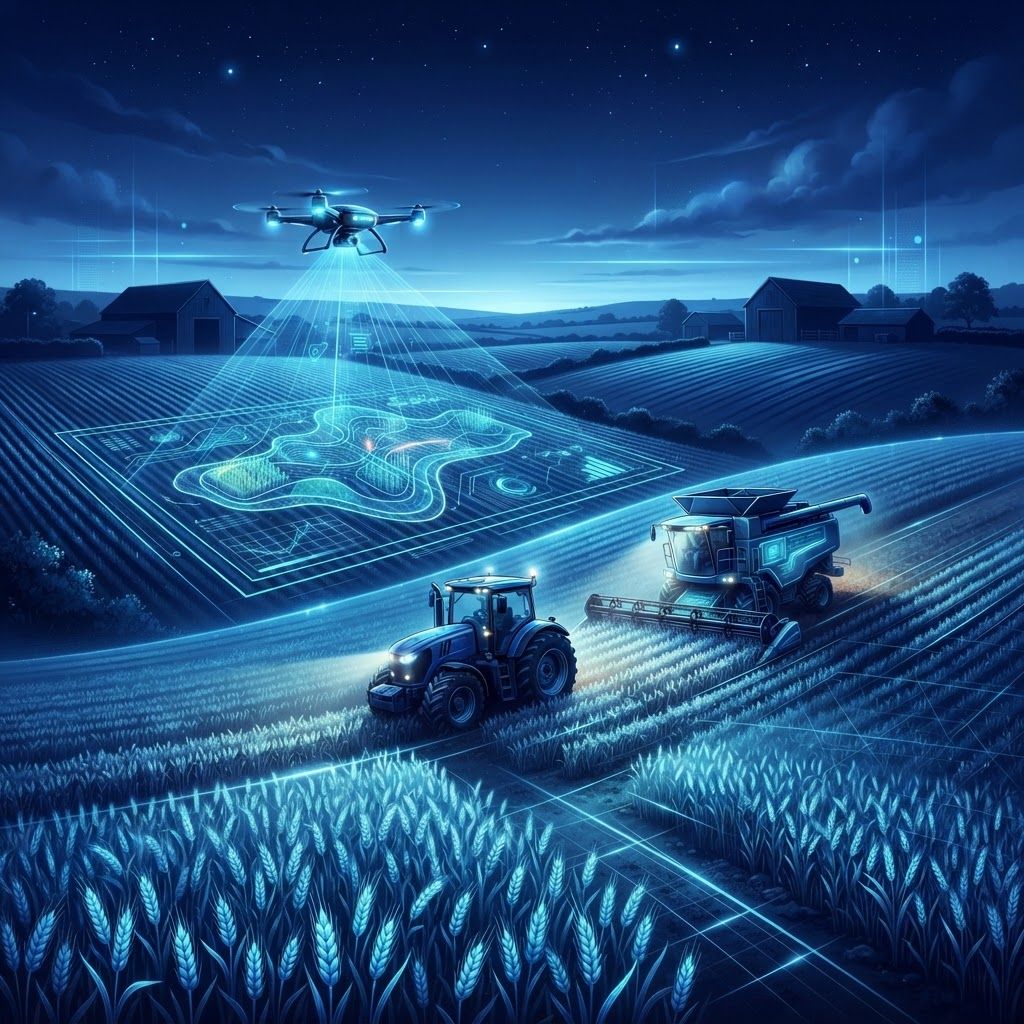
Precision agriculture is now routine rather than experimental. Satellite guidance, yield mapping, variable rate application and soil sampling allow inputs to be targeted field by field and even metre by metre. Livestock producers use electronic identification, activity monitoring and automated weighing to improve health outcomes and finishing performance. Farm management software ties records together for assurance audits and carbon reporting.
Drones and remote sensing are increasingly used for crop assessment, and the data generated is beginning to influence real agronomic decisions rather than simply producing attractive maps.
The Local Food Connection
One of the most encouraging developments in Telford and Wrekin is the strengthening link between farms and local consumers. Farm shops, box schemes, farmers markets and direct supply to restaurants allow producers to capture more value while giving customers genuine provenance. Visitor traffic to the Ironbridge Gorge and the wider countryside supports this, since food with a local story sells well to people already engaged with the area heritage.
For anyone assessing farming in the borough, the picture is one of adaptation rather than decline. The most successful businesses combine traditional husbandry knowledge with modern data, diversified income and a clear environmental strategy.
Want your brand featured in front of decision-makers? Publish a guest post or get a link insertion in our guides through AAMAX's guest post and link insertion service.
Helpful Links
 SponsoredAAMAX — Full-Service Digital Agency
Write for Us
Share your expertise with our readers. We welcome guest contributions from industry specialists.
Pitch your idea

