

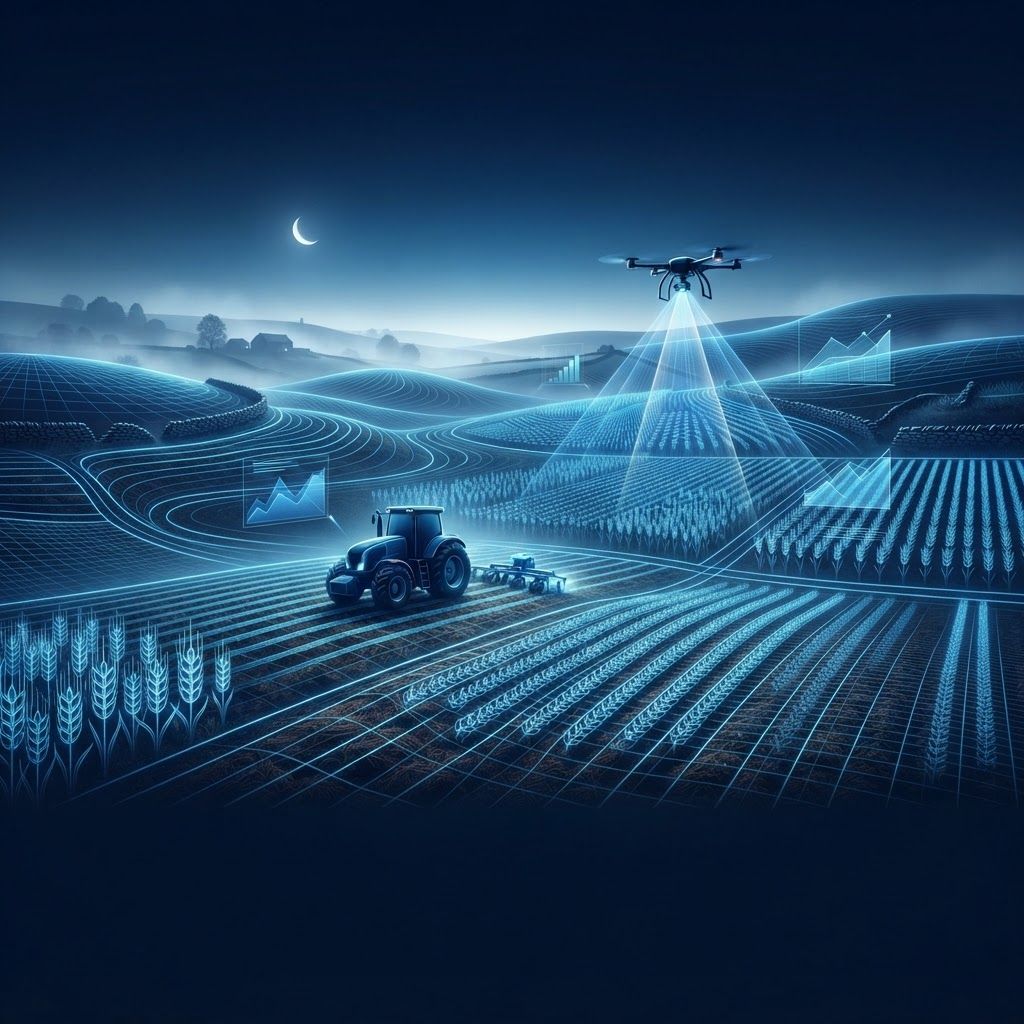
Agriculture in the Stockton-on-Tees Borough
It is easy to associate Teesside solely with chemicals and heavy engineering, but the Stockton-on-Tees borough extends well beyond its urban core into genuinely productive countryside. Villages such as Carlton, Redmarshall, Bishopton, Long Newton, Elton and Kirklevington sit within a landscape of arable fields, grassland and mixed holdings. The soils of the lower Tees valley — often deep, fertile alluvial and clay loams — support strong cereal and combinable crop yields, while heavier land and river-margin grassland suit livestock and forage production.
Proximity to a large urban population is a defining feature of farming here. Local farms sell into regional processors and supermarket supply chains, but many also operate farm shops, box schemes, livery, contracting services and events, diversifying income and building direct relationships with Teesside consumers.
How These Farming Businesses Were Assessed
Selection considered scale and productivity, quality of land management, environmental stewardship, innovation in technology and practice, diversification, contribution to the local food economy and standing within the regional farming community. Assurance scheme participation and animal welfare standards were also factored in.
1. Tees Valley Arable Farms
Operating a substantial cereals and oilseeds enterprise across the lower Tees plain, this business is recognised for disciplined agronomy and consistent grain quality. Precision practices — variable-rate fertiliser application, soil mapping, controlled traffic and yield monitoring — allow inputs to be matched to field variation rather than applied uniformly. On-farm grain storage and drying provide marketing flexibility, letting the business sell into stronger windows rather than at harvest pressure.
2. Carlton Livestock Company
A well-established beef and sheep enterprise, Carlton Livestock Company focuses on grassland productivity and efficient forage conversion. Rotational grazing, careful genetic selection and detailed performance recording underpin its reputation for consistent finished stock. Participation in farm assurance schemes gives buyers confidence in welfare and traceability, and the business is a regular presence at regional livestock markets.
3. Bishopton Mixed Farming Enterprise
Mixed farming has regained credibility as soil health returned to the centre of agronomic thinking, and this enterprise demonstrates why. Integrating arable rotations with livestock allows manure to replace a portion of purchased fertiliser, breaks pest and disease cycles, and builds soil organic matter. The result is a resilient system less exposed to input price volatility than specialised alternatives.
4. Long Newton Dairy Holdings
Dairying demands relentless attention to detail, and Long Newton Dairy Holdings has invested in cow comfort, herd health monitoring and forage quality to support consistent yields and milk composition. Automated data collection on individual animals enables earlier intervention on health issues, improving welfare outcomes while reducing veterinary costs. Slurry storage and nutrient planning are managed to protect local watercourses.
5. Elton Grange Potatoes and Root Crops
Root crops suit the deeper soils of parts of the borough, and this business specialises in potatoes and field vegetables for processing and fresh markets. Cold storage, careful grading and rigorous rotation planning protect against soil-borne disease and allow supply across an extended season. Irrigation management and water efficiency have become central concerns as summer rainfall patterns become less reliable.
6. Redmarshall Regenerative Agriculture
This business has built its identity around regenerative principles: minimum tillage, cover cropping, diverse rotations, integrated livestock grazing and reduced synthetic input dependency. Early years of transition are demanding, but improvements in soil structure, water infiltration and reduced fuel use have delivered measurable benefits. The farm also hosts knowledge-sharing events, contributing to wider adoption across the Tees Valley.
7. Kirklevington Farm Contracting
Machinery costs are a major burden for smaller holdings, and contracting businesses like this one spread that capital across many customers. Services span cultivation, drilling, spraying, harvesting, silage and hedge maintenance, giving smaller farms access to modern, well-maintained equipment and skilled operators without ownership costs. Timeliness during narrow weather windows is the measure of quality here, and the business is well regarded for it.
8. Thorpe Thewles Poultry and Egg Production
Free-range egg production serves strong regional demand, and this enterprise emphasises flock health, ranging quality and biosecurity. Tree planting and shelter provision on range areas improve bird welfare and encourage natural behaviour while providing landscape and biodiversity benefits. Local packing and short delivery distances give an advantage in freshness for regional retailers.
9. Stockton Horticulture and Protected Cropping
Glasshouse and polytunnel production allows salad crops, soft fruit and plants to be grown for local markets with extended seasons. Heat, light and irrigation management are the key variables, and investment in efficiency has reduced energy intensity per unit of output. Selling into farm shops, independent greengrocers and hospitality businesses across Teesside shortens the supply chain considerably.
10. Tees Farm Diversification Group
Completing the list is a business built as much on diversification as on primary production, combining farming with a farm shop, café, livery, storage lets and event space. Diversified income smooths the volatility of commodity markets and creates direct connections with local consumers. It also demonstrates a broader truth: many farms now succeed through a portfolio of related enterprises rather than production alone.
Trends Reshaping Tees Valley Farming
The shift from area-based subsidy to environmental land management payments has been the single largest structural change in a generation, rewarding farms for soil health, habitat creation, water quality and carbon storage alongside food production. Technology adoption continues rapidly — satellite and drone imagery, variable-rate application, livestock sensors and farm management software are increasingly standard. Input cost volatility has pushed farms toward nutrient efficiency, home-grown protein and reduced fuel use. Climate variability, with wetter autumns and drier summers, is influencing crop choice, drainage investment and machinery specification. Finally, consumer interest in local, traceable food gives farms near a large population a genuine commercial advantage.
Considerations for Working With Local Farms
Buyers sourcing regionally should look for assurance scheme membership, clear traceability, realistic supply volumes and honest conversations about seasonality. For those seeking farm services, contracting capacity and equipment condition matter more than headline rates. Anyone entering agricultural supply should understand that farming decisions are made against narrow weather windows, so reliability and responsiveness outweigh marginal price differences.
Final Thoughts
Farming in Stockton-on-Tees is more varied and more technically advanced than its industrial neighbours might suggest. Arable precision, livestock efficiency, regenerative soil management, protected horticulture and diversified rural enterprise all coexist within a compact area. As environmental payments, technology and local food demand continue to reshape the sector, the borough's farms are well placed to combine productive agriculture with genuine environmental improvement.
Want your brand featured in front of decision-makers? Publish a guest post or get a link insertion in our guides through AAMAX's guest post and link insertion service.
Helpful Links
 SponsoredAAMAX — Full-Service Digital Agency
Write for Us
Share your expertise with our readers. We welcome guest contributions from industry specialists.
Pitch your idea

