

Agriculture on the Edge of the Capital
It is easy to underestimate how much working farmland surrounds St Albans. Despite lying within commuting distance of central London and sitting inside a heavily developed county, the district retains substantial agricultural land protected by Green Belt designation. The gently undulating landscape between St Albans, Redbourn, Wheathampstead, Sandridge and London Colney supports productive arable farming on good-quality soils, alongside livestock, equestrian enterprises, horticulture and an increasingly diversified rural economy.
Hertfordshire agriculture has a distinct character shaped by its location. Land values are extraordinarily high, driven by development pressure and amenity demand, which makes purely commodity-based farming difficult to justify on returns alone. The consequence is that successful farming businesses in the area tend to be either highly efficient at scale, or diversified into activities that capture value from proximity to a large, affluent population.
The Agricultural Profile of the District
Arable cropping dominates the local farmed area. Wheat, barley, oilseed rape and field beans form the backbone of rotations, with soils generally free-draining chalky loams over clay that perform well in most seasons but can suffer in prolonged dry summers. Combinable crops suit the labour economics of the area, where finding agricultural staff competes against much higher-paying employment nearby.
Livestock is present but secondary, with beef cattle and sheep grazing land unsuitable for cultivation, including parkland, floodplain meadows and steeper banks. Horticulture and market gardening occupy a smaller footprint but generate disproportionate value, supplying farm shops, farmers markets and restaurants that pay premium prices for genuinely local produce. Equestrian land use is significant across Hertfordshire, reflecting both recreational demand and the returns available from liveries.
Leading Farming Companies and Rural Businesses in the St Albans Area
Hammonds End Farm near Harpenden operates as a substantial arable enterprise in the district, representative of the well-managed mixed arable businesses that characterise productive Hertfordshire farming. Operations of this scale invest in modern machinery, precision agronomy and grain storage to compete effectively in commodity markets.
Willows Farm at London Colney has become one of the best-known rural businesses in the district, combining farming with a major visitor attraction. It demonstrates the diversification model with unusual clarity, converting proximity to a large urban population into a revenue stream that pure crop production could not match on the same acreage.
Hill End Farm and similar family-run holdings around the district represent the traditional core of local agriculture. These businesses typically combine arable cropping with contracting work, land letting or small-scale livestock, spreading risk across several income sources rather than relying on a single enterprise.
Rothamsted Research at nearby Harpenden deserves particular mention as one of the world's oldest agricultural research institutions. Its long-term field experiments have shaped global understanding of soil fertility, crop nutrition and pest management. For local farmers the practical benefit is unusually close access to applied research, field trials and agronomic expertise.
Church Farm at Ardeley, within reach of the district, is widely cited as a model of mixed regenerative farming combined with direct retail and education. Its integration of livestock, horticulture, farm shop and visitor engagement illustrates how smaller acreages can generate viable returns through value capture rather than volume.
Bowmans Farm at London Colney combines agricultural land with commercial diversification, a pattern increasingly common where farm buildings can be converted to light industrial or storage use. This model provides stable income that cushions the volatility of crop returns.
Cheverells Farm and comparable estates near Markyate manage arable land alongside environmental stewardship agreements, reflecting the growing importance of public payments for environmental outcomes in farm business planning.
Local contract farming operators across Hertfordshire form an essential and often overlooked part of the sector. Many landowners in the district no longer farm directly, instead engaging contractors who bring machinery, expertise and labour. This structure allows efficient use of expensive equipment across larger areas than any single holding could justify.
Farm shops and direct-sale producers around Redbourn, Sandridge and Wheathampstead capture retail margin on their own produce. Selling eggs, vegetables, meat and preserves directly to consumers at premium prices transforms the economics of small-scale production and builds genuine customer loyalty.
Equestrian and livery enterprises throughout the district generate substantial rural income from grassland that would otherwise produce modest returns. Given Hertfordshire's affluent population and strong riding culture, well-run livery yards represent one of the more dependable rural business models locally.
Regenerative Practice and Soil Health
The most significant technical shift in local farming concerns soil. Years of intensive cultivation reduced organic matter and damaged soil structure across much of lowland England, and farmers in the district have responded by adopting reduced tillage, cover cropping, more diverse rotations and controlled traffic to limit compaction.
The commercial logic is straightforward. Healthier soils hold more water, which matters increasingly given drier summers, and they require less purchased fertiliser, which matters greatly given input costs. Direct drilling reduces fuel and labour requirements substantially. Farmers report that transition periods can be difficult, with yields sometimes dipping before soil biology recovers, but established practitioners generally describe improved resilience and better margins.
Environmental Payments and Changing Support
The replacement of area-based subsidies with schemes paying for environmental outcomes has fundamentally altered farm business planning. Payments now attach to specific actions such as establishing flower-rich margins, improving hedgerow management, planting cover crops, creating habitat and improving nutrient management.
For farmers around St Albans this shift has particular relevance. Land close to a large population has high public-access and amenity value, and schemes rewarding permissive paths, biodiversity and landscape improvement align well with what this land can deliver. Businesses that engage seriously with these schemes have found they can support marginal land productively while genuinely improving habitat.
Technology on Hertfordshire Farms
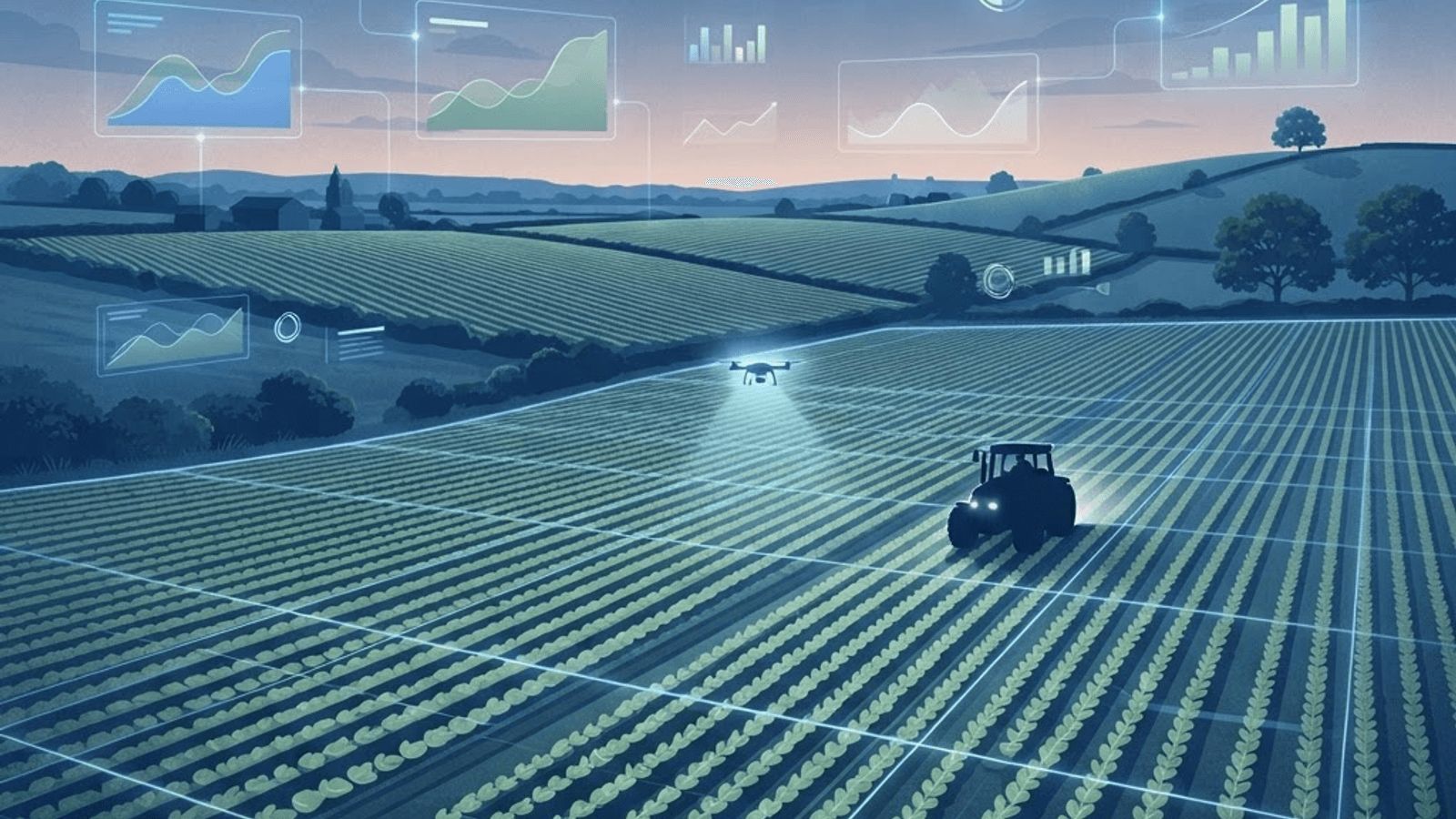
Precision agriculture is now standard on larger local holdings. GPS-guided machinery reduces overlap and input waste. Variable-rate application matches fertiliser and seed to measured soil conditions across a field rather than treating it uniformly. Drone and satellite imagery identify crop stress before it is visible from ground level, allowing targeted intervention.
Farm management software has become equally important, tracking field records, input use, compliance documentation and gross margins by field. With environmental schemes and assurance standards demanding detailed evidence, robust record keeping has moved from good practice to commercial necessity.
Pressures and Opportunities
The central challenge for farming around St Albans remains development pressure. Land with any prospect of planning consent carries value far beyond its agricultural worth, creating persistent uncertainty about long-term tenure. Rising input costs, unpredictable weather and labour scarcity compound the difficulty.
Yet the opportunities are equally real. A large, affluent, food-conscious population sits on the doorstep, willing to pay premium prices for local produce with a credible story. Demand for rural experiences, farm education, camping, weddings and leisure continues to grow. Renewable energy generation, particularly solar and anaerobic digestion, offers stable long-term income on suitable sites. Natural capital markets for carbon and biodiversity credits are emerging as a genuinely new revenue category.
Final Thoughts
Farming around St Albans is a resilient and increasingly sophisticated sector operating under unusual pressures. The businesses succeeding are those combining technical efficiency with commercial creativity, whether through direct retail, visitor enterprises, environmental schemes or diversified property income. For a district often characterised by its commuter identity, the working countryside surrounding it remains productive, innovative and economically significant.
Want your brand featured in front of decision-makers? Publish a guest post or get a link insertion in our guides through AAMAX's guest post and link insertion service.
Helpful Links
 SponsoredAAMAX — Full-Service Digital Agency
Write for Us
Share your expertise with our readers. We welcome guest contributions from industry specialists.
Pitch your idea

