Farming in the National Forest Landscape
Agriculture remains a defining feature of South Derbyshire. The district's gently undulating land between the Trent valley and the fringes of the Peak supports a productive mix of arable cropping, dairy, beef, sheep and increasingly diversified enterprises. Overlaid on this is the National Forest, an ambitious landscape scale planting programme that has reshaped land use across the area and encouraged farmers to integrate woodland, hedgerow and habitat work into commercial operations.
The result is a farming community that is both traditional and notably innovative. Family farms that have worked the same land for generations now run precision drills guided by satellite positioning, sell beef directly to consumers, host weddings in converted barns and generate renewable energy from slurry. Understanding the district's agriculture means recognising that modern farming businesses are rarely doing only one thing.
The Top 10 Farming Companies in South Derbyshire
1. Trent Valley Farms. A substantial arable enterprise growing wheat, barley, oilseed rape and pulses across the river valley's productive soils. Investment in variable rate application, soil mapping and controlled traffic farming has improved yields while reducing input use, and the business is widely regarded as a local benchmark for technical arable management.
2. National Forest Dairy Company. A progressive dairy operation combining grass based production with high welfare housing and detailed herd health monitoring. Milk is supplied under contract to regional processors, and the farm has invested in slurry management and renewable energy to reduce both emissions and running costs.
3. Swadlincote Livestock Partnership. Running beef and sheep across permanent pasture and rotational grazing, this business focuses on native breeds suited to the local landscape. Grassland management, forage quality and careful genetics selection underpin consistent finishing performance.
4. Melbourne Estate Farming. A mixed estate combining arable cropping, livestock, woodland and let property. Long term land stewardship, extensive hedgerow restoration and environmental scheme participation sit alongside commercial production, demonstrating how the two can reinforce rather than compete with each other.
5. Repton Organic Growers. A certified organic enterprise producing vegetables, salads and soft fruit for local retailers, box schemes and restaurants. Rotation planning, composting and biological pest management replace conventional inputs, and the business has built a strong reputation for quality among chefs in the district.
6. Hilton Poultry Enterprises. A free range egg and poultry business supplying regional packers and local outlets. Attention to bird welfare, range management with tree cover, and biosecurity discipline have supported steady growth in a competitive sector.
7. Etwall Arable and Contracting. Combining its own cropping with a contracting service offering drilling, spraying, harvesting and baling to neighbouring farms. Shared use of high specification machinery across multiple holdings improves utilisation and gives smaller farms access to technology they could not justify alone.
8. Willington Regenerative Farming. Practising minimum tillage, cover cropping, diverse rotations and integrated livestock grazing to build soil organic matter. The business openly shares its data and hosts farm walks, making it an influential voice in the district's growing regenerative movement.
9. Hartshorne Farm Diversification Group. A farming business that has expanded into farm shop retail, a cafe and holiday accommodation alongside its agricultural core. Diversification income now supports the farm through volatile commodity cycles while connecting the public with local food production.
10. Ticknall Woodland and Agroforestry Farm. Integrating tree planting with grazing and cropping in an agroforestry system aligned with National Forest objectives. Timber, shelter, carbon storage and biodiversity benefits accumulate alongside conventional output, offering a model increasingly studied by others.
Technology Transforming the Fields
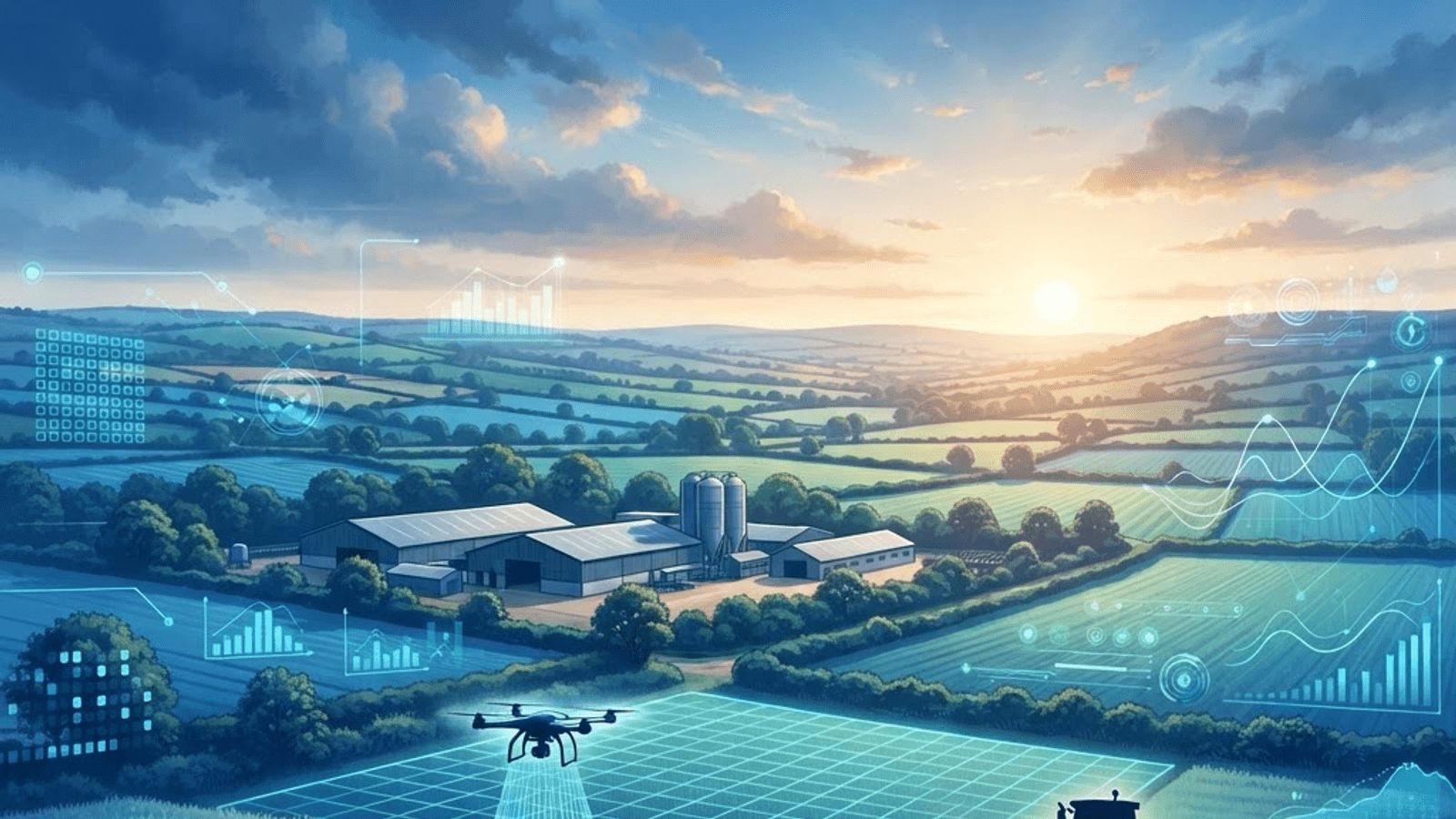
Precision agriculture has moved well beyond novelty. Satellite guided steering reduces overlap and fuel use. Soil scanning and yield mapping allow variable rate seed and fertiliser application, placing inputs where they generate return. Drones and satellite imagery identify crop stress before it is visible from the cab. Collectively these tools improve margin and reduce environmental impact simultaneously, which is why adoption has accelerated.
Livestock technology has advanced equally quickly. Electronic identification, automatic weighing, health sensors and robotic milking generate data that supports earlier intervention and better breeding decisions. For dairy in particular, the shift from intuition to measurement has produced measurable gains in both productivity and animal welfare.
Environmental Land Management and Policy
Agricultural policy has shifted decisively towards paying for environmental outcomes rather than area farmed. Schemes rewarding soil health, habitat creation, water quality improvement and public access have changed farm business planning considerably. In South Derbyshire, where National Forest objectives align closely with these aims, many farms have found the transition more natural than in purely arable regions.
Carbon is emerging as a further consideration. Farms are beginning to measure emissions and sequestration, driven partly by supply chain requirements from processors and retailers. Woodland, hedgerows and improved soil organic matter all contribute, and some businesses are exploring carbon markets as a supplementary income stream.
The Outlook for South Derbyshire Agriculture
The district's farming future looks resilient but demanding. Volatile input costs, changing weather patterns and evolving policy require businesses to be adaptable and well informed. Those succeeding tend to share certain traits: they measure performance carefully, diversify income sensibly, invest in soil as their primary asset, and engage with the wider community rather than operating in isolation.
Succession remains a challenge, as it does nationally, but the district benefits from active young farmer networks and a culture of knowledge sharing through discussion groups and farm walks. Combined with the distinctive National Forest context, which has given local farmers early experience of integrating environmental and commercial objectives, South Derbyshire agriculture is unusually well positioned for the decades ahead.
Want your brand featured in front of decision-makers? Publish a guest post or get a link insertion in our guides through AAMAX's guest post and link insertion service.
Helpful Links
 SponsoredAAMAX — Full-Service Digital Agency
Write for Us
Share your expertise with our readers. We welcome guest contributions from industry specialists.
Pitch your idea