Farming in the Warwickshire Countryside
Beyond Rugby's industrial estates and residential streets lies a working agricultural landscape that has shaped the area for centuries. The land around the town is typically heavy clay in places and lighter loam in others, supporting a mix of arable cropping, permanent pasture and mixed enterprises. Field patterns reflect centuries of enclosure, and many farms have been held by the same families across multiple generations.
Modern farming here looks quite different from even twenty years ago. Precision technology, environmental stewardship schemes, diversification into non-farming income and tighter attention to soil health have all changed how land is managed. What has not changed is the fundamental challenge: producing food profitably while contending with weather, markets and policy that all move independently of one another.
The Main Farming Enterprises Around Rugby
Arable cropping dominates much of the area, with winter wheat, barley, oilseed rape and beans forming typical rotations. Livestock farming includes beef suckler herds, sheep on permanent pasture and some dairy production. Mixed farms combine both, using livestock manure to build soil fertility and grazing to manage grassland that is unsuitable for cropping.
Increasingly, farms also operate non-agricultural enterprises. Converted buildings provide commercial units and holiday accommodation. Solar arrays and anaerobic digestion generate energy income. Farm shops, camping sites and educational visits bring the public onto working farms. These income streams have become essential to the viability of many businesses.
The Top 10 Farming Companies in Rugby
1. Avon Valley Arable Farms
A substantial combinable crop operation running wheat, barley, oilseed rape and pulses across rotations designed around soil health. Variable rate application, GPS-guided machinery and detailed yield mapping allow inputs to be matched precisely to field performance.
2. Rugby Mixed Farming Partnership
Combining arable cropping with a beef suckler herd, using livestock to utilise grassland and return organic matter to arable soils. The integrated approach spreads market risk and supports a more resilient rotation than cropping alone.
3. Clifton Dairy Enterprises
Operating a dairy herd with an emphasis on forage quality, cow comfort and herd health. Grass and maize silage production is managed intensively, since home-grown forage is the single largest determinant of profitability in milk production.
4. Newbold Livestock and Grazing
Running sheep and cattle across permanent pasture, including grassland managed under environmental agreements. Rotational grazing systems improve sward productivity while supporting soil carbon and biodiversity outcomes.
5. Warwickshire Regenerative Agriculture Group
A collaborative operation focused on minimum tillage, cover cropping, diverse rotations and reduced synthetic input use. Soil biology, water infiltration and long-term resilience are the measures of success, alongside conventional yield and margin.
6. Brownsover Farm Diversification Estates
A land-based business combining agriculture with commercial property, renewable energy and rural tourism. Converted barns provide workspace for small businesses, while solar generation supplies both the farm and the grid.
7. Dunchurch Horticultural Growers
Producing field vegetables, salads and protected crops for regional markets, farm shops and box schemes. Shorter supply chains give the business a direct relationship with consumers and reduce dependence on national buyer pricing.
8. Hillmorton Organic Farming
Certified organic production across cropping and livestock, using legume-rich leys, composted manure and mechanical weed control in place of synthetic inputs. Premium pricing compensates for lower yields, and demand has remained steady among committed consumers.
9. Rugby Contract Farming Services
Providing cultivation, drilling, spraying, harvesting and baling services to landowners who no longer farm directly. Shared use of modern machinery across multiple holdings improves efficiency and keeps capital costs manageable for everyone involved.
10. Swift Valley Agricultural Holdings
A long-established family farming business managing arable land alongside substantial environmental stewardship areas, including hedgerow restoration, field margins and wild bird cover. Balancing production with habitat creation is central to the management approach.
Technology Changing the Field
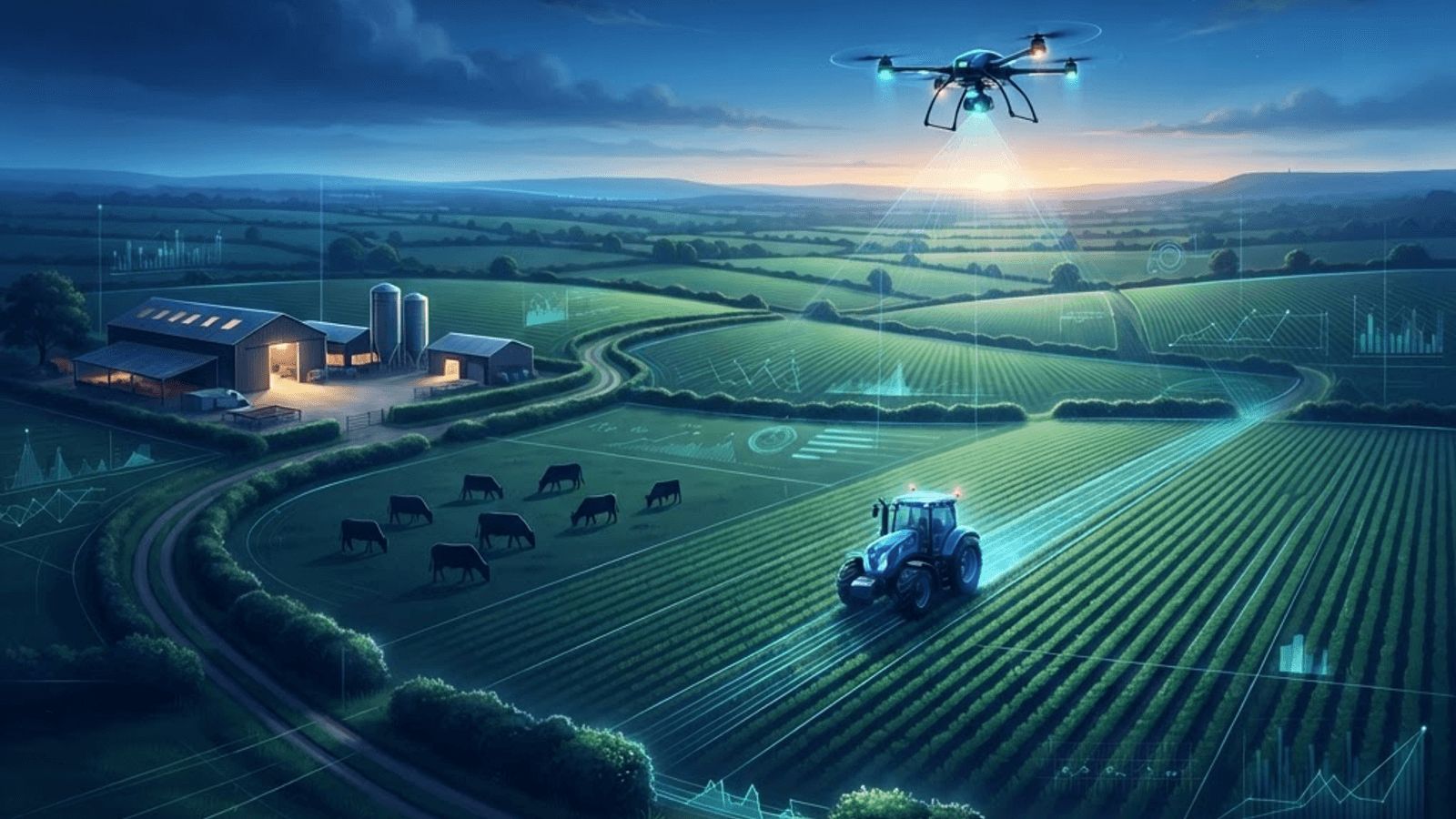
Precision agriculture has moved from novelty to standard practice. Satellite guidance reduces overlap on every pass, saving fuel and inputs. Soil sampling combined with variable rate spreading applies nutrients where they are needed rather than uniformly. Drone imagery identifies crop stress before it is visible from the ground. Farm management software links field records, compliance documentation and financial performance in one place.
Robotics and autonomous machinery are advancing quickly, particularly for weeding and crop monitoring, offering a possible answer to persistent labour shortages. Genetics continue to improve, with varieties bred for disease resistance and climate resilience reducing reliance on chemical protection.
Environmental Stewardship and Policy
Agricultural policy has shifted decisively towards paying for environmental outcomes rather than land area. Farms around Rugby are responding by entering schemes that fund hedgerow management, species-rich margins, cover cropping, water quality protection and habitat creation. For many businesses these payments now represent a meaningful share of income and require genuine management attention rather than being treated as a formality.
Carbon is becoming a further consideration. Soil carbon measurement, emissions reporting and the potential for verified carbon markets are all developing, though farmers understandably want clarity before committing to long-term agreements.
Final Thoughts
Farming around Rugby combines deep continuity with rapid change. The businesses thriving are those blending traditional understanding of their land with modern data, diversified income and a serious approach to environmental management. Supporting them through local produce purchasing and farm shops keeps value circulating within the Warwickshire rural economy.
Want your brand featured in front of decision-makers? Publish a guest post or get a link insertion in our guides through AAMAX's guest post and link insertion service.
Helpful Links
 SponsoredAAMAX — Full-Service Digital Agency
Write for Us
Share your expertise with our readers. We welcome guest contributions from industry specialists.
Pitch your idea