

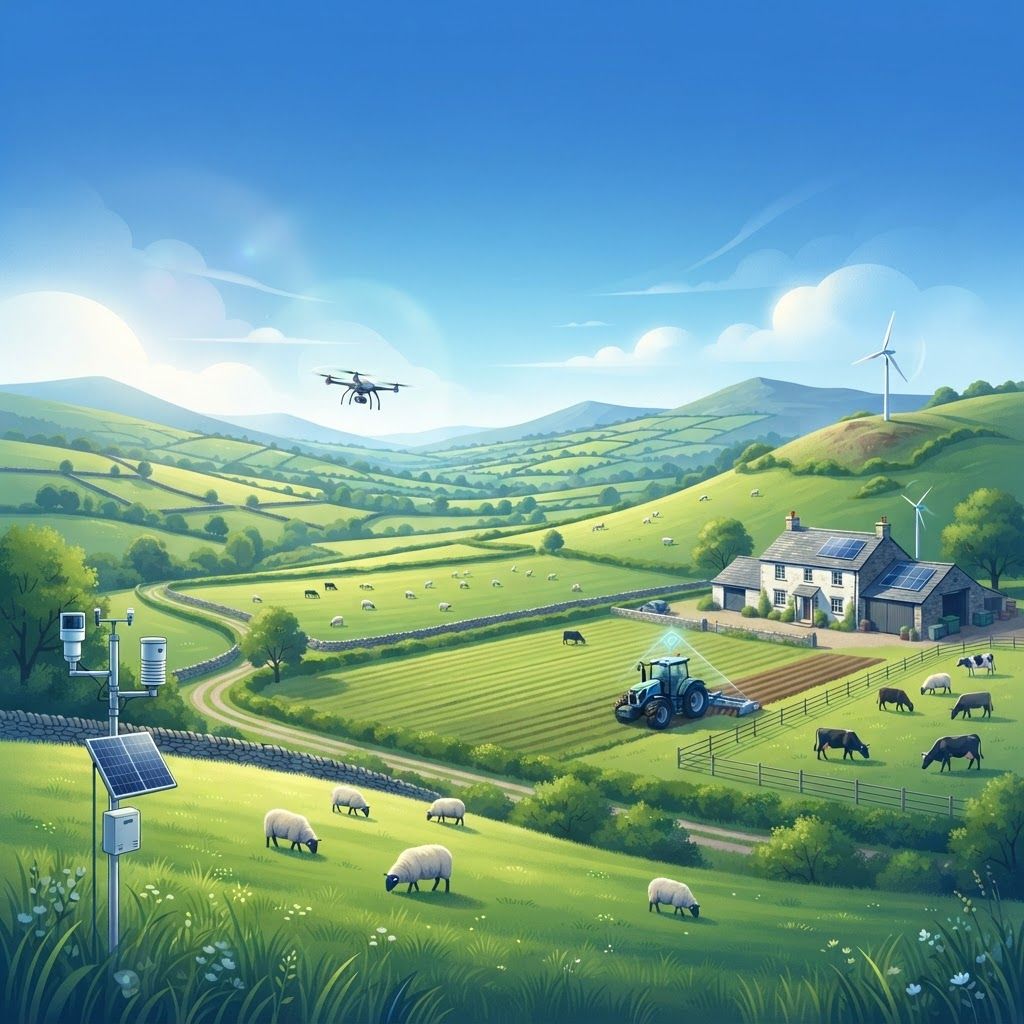
Agriculture at the Heart of Powys
No industry shapes Powys more than farming. Around eighty percent of the county land area is agricultural, and the landscape most visitors admire is the direct product of centuries of grazing, hedging and land management. Sheep dominate, with Powys holding one of the largest flocks of any UK county, alongside substantial beef and dairy enterprises and arable ground in the more sheltered valleys.
Modern Powys farming companies are considerably more sophisticated than the pastoral image suggests. Precision grassland management, genomic breeding selection, renewable energy generation, contract farming arrangements and direct to consumer sales all feature. Many businesses now combine food production with tourism, energy and environmental services.
The Top 10 Farming Companies in Powys
1. Severn Valley Farms
A mixed farming enterprise combining arable cropping with beef finishing across the fertile Severn floodplain near Welshpool. Rotational planning, soil health monitoring and precision nutrient application characterise the operation, with cover cropping used to protect soil over winter.
2. Radnor Hill Sheep Company
Managing extensive upland flocks across Radnorshire, producing Welsh lamb for domestic and export markets. Hardy breeds suited to exposed conditions, careful grazing management and participation in environmental schemes define the business.
3. Brecon Dairy Enterprises
Operating dairy herds in the south of the county with grass based production systems. Robotic milking, herd health monitoring and slurry management technology have transformed efficiency while improving animal welfare and reducing environmental impact.
4. Montgomery Arable Group
Growing cereals, oilseeds and forage crops across the county lower ground. Variable rate application, soil mapping and controlled traffic farming reduce input costs and compaction while maintaining yields.
5. Llandrindod Organic Farms
Certified organic production covering livestock, vegetables and cereals. Organic systems suit parts of Powys well, and premium markets for organic Welsh lamb and beef reward the additional management complexity involved.
6. Wye Valley Livestock
A beef and sheep operation with a strong emphasis on pedigree breeding and genetics. Supplying breeding stock to other farms across Wales and the borders, the business contributes to genetic improvement in the national herd and flock.
7. Powys Poultry Producers
Free range egg and poultry meat production supplying regional and national customers. Biosecurity management has become critical following avian influenza pressures, and range management supports both bird welfare and pasture condition.
8. Ystradgynlais Upland Farming
Managing common grazing and upland holdings in the southern part of the county. These farms deliver substantial public benefits alongside food production, including carbon storage in peat soils, water regulation and habitat for upland birds.
9. Mid Wales Agricultural Contracting
Providing silage making, baling, muck spreading, hedge cutting and cultivation services to farms across the county. Contracting allows smaller holdings to access modern machinery without the capital burden of ownership.
10. Powys Diversified Estates
Combining traditional farming with holiday accommodation, renewable energy generation, farm shop retail and educational visits. Diversification has become central to rural business resilience, spreading risk across multiple income streams.
Policy Change and the Sustainable Farming Scheme
Welsh agriculture is undergoing its most significant policy transition in decades. The move away from area based direct payments towards schemes rewarding environmental outcomes fundamentally changes farm business planning. Payments increasingly depend on habitat maintenance, tree cover, soil health, water quality and carbon management alongside food production.
This creates both challenge and opportunity. Farms that integrate environmental delivery into productive systems can access new income while improving long term land capability. Those dependent on historical payment levels face harder adjustment. Business planning, benchmarking and professional advice have never mattered more.
Technology in Welsh Farming
Adoption is accelerating. Electronic identification for sheep enables individual performance tracking across large flocks. Drones assist with stock checking and pasture assessment on difficult terrain. Soil scanning informs variable rate lime and nutrient application. Weather stations and grass measurement tools support rotational grazing decisions that significantly increase grass utilisation.
Connectivity remains a constraint in parts of Powys, though improving rural broadband and mobile coverage are gradually removing that barrier. Where connectivity exists, farm management software linking field records, livestock data and financial performance gives managers visibility that transforms decision making.
Sustainability, Carbon and Nature
Welsh farming faces genuine environmental expectations around water quality, ammonia emissions and carbon. Slurry storage regulations, nutrient management planning and buffer strips along watercourses are now routine compliance matters, particularly in sensitive catchments like the Wye.
Many Powys farms are also exploring carbon accounting, tree planting, hedgerow restoration and species rich grassland creation. Well managed grassland stores substantial carbon, and grazing livestock on land unsuitable for cropping remains one of the most efficient ways to produce protein from marginal terrain.
Supporting Powys Agriculture
Consumers can support local farming directly by buying Welsh lamb and beef, choosing Welsh dairy products, visiting farm shops and farmers markets, and staying in farm accommodation. Provenance labelling makes this easier than it once was, and the premium reaching producers through short supply chains is far greater than through commodity routes.
Final Thoughts
Farming companies in Powys are navigating substantial change while continuing to produce food, maintain landscapes and sustain rural communities. Their combination of traditional stockmanship, modern technology and environmental stewardship makes the county agriculture a genuine strength of the Welsh economy.
Want your brand featured in front of decision-makers? Publish a guest post or get a link insertion in our guides through AAMAX's guest post and link insertion service.
Helpful Links
 SponsoredAAMAX — Full-Service Digital Agency
Write for Us
Share your expertise with our readers. We welcome guest contributions from industry specialists.
Pitch your idea

