Farming in North West Leicestershire
It is easy to characterise North West Leicestershire by its industrial landmarks, the quarries at Bardon, the brickworks around Ibstock, the vast distribution sheds near Castle Donington. Yet drive five minutes from any of them and you are in open countryside. The district covers a substantial rural area taking in villages such as Breedon on the Hill, Long Whatton, Appleby Magna, Heather, Packington, Newbold and Staunton Harold, where farming remains a working industry rather than a picturesque backdrop.
The land here supports genuinely mixed agriculture. Heavier clay soils toward the west favour grassland and livestock, while lighter, better-drained ground supports combinable crops. The result is a patchwork of arable enterprises growing wheat, barley, oilseed rape and beans, dairy and beef units, sheep flocks grazing rougher land, and an expanding number of diversified businesses combining farming with tourism, events, renewable energy and direct food sales.
The Modern Farming Business
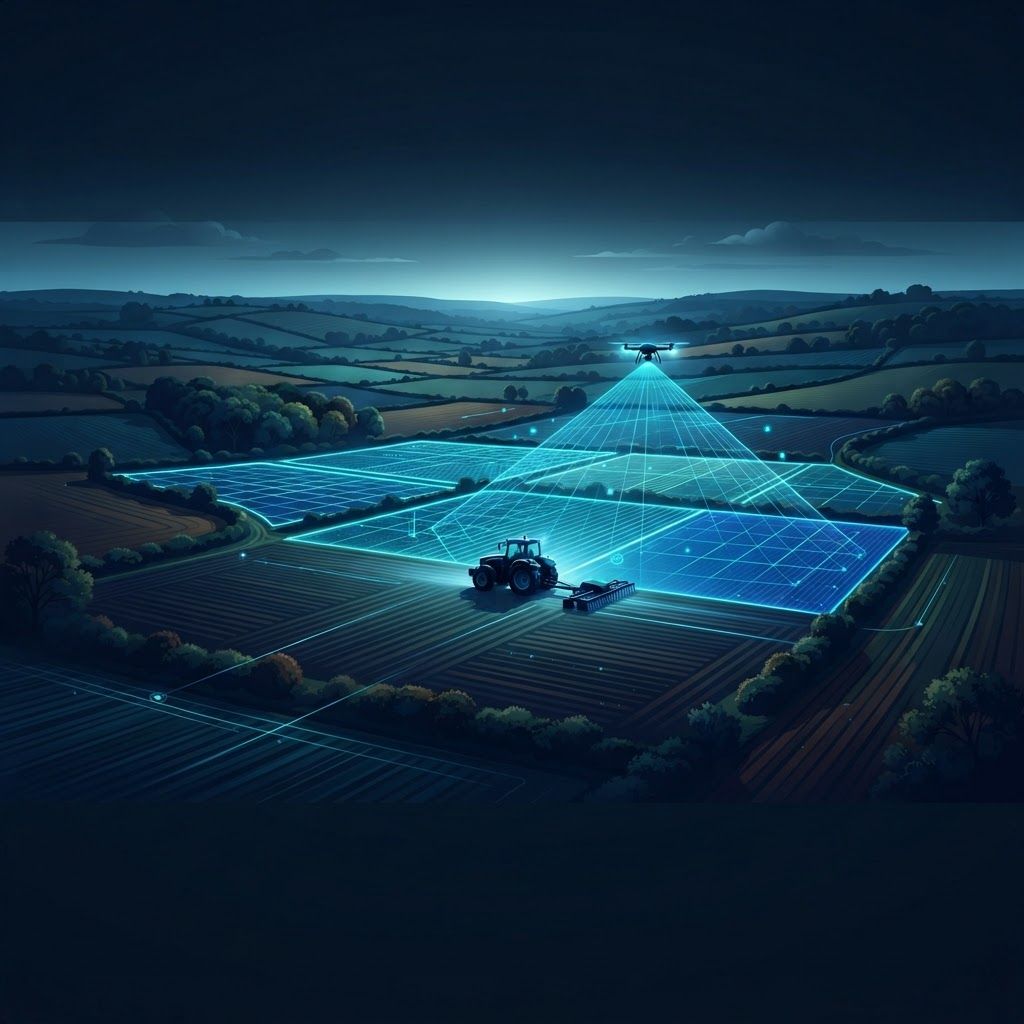
Farming today bears limited resemblance to the popular image. A medium-sized arable enterprise operates machinery guided by satellite positioning to centimetre accuracy, applies fertiliser at variable rates mapped from soil sampling and yield data, and markets grain through forward contracts and futures positions. Livestock businesses track individual animal performance, manage genetics through recorded breeding programmes, and operate to strict traceability and welfare assurance standards.
Financially, the sector has undergone profound change. The replacement of area-based subsidy with environmental land management payments has fundamentally altered the economics of marginal land and rewarded farms that deliver public benefits alongside food production. Volatility in input costs, particularly fertiliser and fuel, has made business resilience and diversification more important than ever.
Ten Notable Farming Enterprises in the District
1. Breedon Hill Arable Farms. A combinable crops business growing wheat, barley and oilseed rape across land near Breedon on the Hill, using precision application and controlled traffic to protect soil structure. Their investment in on-farm grain storage gives marketing flexibility that improves realised prices.
2. Charnwood Dairy Partnership. A dairy enterprise operating a high-welfare herd with recorded breeding, robotic milking and a strong focus on forage quality. Grass and maize silage management underpins the whole system, and their attention to cow comfort and health is reflected in longevity figures well above average.
3. Ashby Vale Livestock. A beef and sheep business finishing cattle and lambs on grassland and forage crops, supplying regional processors and local butchers. Rotational grazing and careful pasture management have improved output per hectare without additional bought-in feed.
4. Measham Mixed Farming Co. Combining arable rotations with an outdoor pig enterprise, using livestock manures to build organic matter and reduce bought fertiliser. Integrated systems like this have attracted renewed interest as input costs and soil health concerns have risen together.
5. National Forest Agroforestry. A farming business integrating tree planting with productive agriculture, in keeping with the wider National Forest transformation of this former coalfield landscape. Silvopasture and shelter belts deliver livestock welfare benefits, carbon storage and diversified long-term income.
6. Kegworth Vale Growers. A horticultural enterprise producing field vegetables and salad crops for regional wholesalers and farm shops. Proximity to large urban markets in Derby, Nottingham and Leicester supports short supply chains with genuine freshness advantages.
7. Whitwick Farm Diversification Group. A family farm combining agriculture with holiday accommodation, a farm shop and educational visits. Diversification of this kind has become central to rural business viability and connects the public with food production in a way that benefits the whole sector.
8. Ravenstone Organic Farms. Certified organic production across arable and livestock, using extended rotations, legume leys and natural fertility building. Organic systems require patience and skill but access premium markets and typically show strong soil health metrics.
9. Donington Estate Farming. A larger estate-scale operation managing arable land alongside woodland, environmental stewardship areas and let property. Estates often lead on landscape-scale conservation because their scale allows habitat connectivity that individual fields cannot achieve.
10. Packington Poultry Enterprises. An egg and poultry business operating free-range systems with high welfare standards and local supply relationships. Range management, including tree planting to encourage birds outdoors, improves both welfare outcomes and flock performance.
Environmental Schemes and Land Management
Environmental land management has become a core revenue stream rather than a peripheral activity. Payments for soil health actions, hedgerow management, buffer strips, winter bird food, nectar mixes and integrated pest management now form a meaningful part of many farm incomes in the district.
North West Leicestershire has a particular environmental story through the National Forest, which since the 1990s has transformed former mining land across parts of Leicestershire, Derbyshire and Staffordshire with millions of trees. Many local farms have participated, integrating woodland creation with continued agricultural production and, in doing so, reshaping the landscape their grandparents worked.
Challenges Facing Local Farmers
Several pressures are widely felt. Input cost volatility makes budgeting difficult. Labour availability, particularly for seasonal and skilled livestock roles, remains constrained. Weather extremes have made both harvest and establishment windows less predictable, requiring greater machinery capacity or more flexible systems.
Development pressure is a specifically local issue. The district's excellent transport links make it attractive for large logistics and housing schemes, and while this brings employment, it also removes productive land and can complicate farm access and field operations.
The Outlook for Leicestershire Farming
Despite the pressures, the outlook contains real opportunity. Consumer interest in local, traceable food continues to grow, and farms positioned to supply it directly capture far more value than commodity selling allows. Renewable energy, from solar arrays to anaerobic digestion, provides diversified income. Carbon and biodiversity markets are developing into genuine revenue streams for farms that can evidence outcomes.
Most encouragingly, technology is becoming accessible at smaller scale. Soil scanning, drone monitoring and data-led decision making are no longer confined to the largest operations, allowing family farms across the district to improve efficiency and reduce environmental impact simultaneously.
Final Thoughts
Farming in North West Leicestershire is a modern, technically sophisticated industry operating in a landscape shaped by both agriculture and industry. The district's farming businesses combine productive food output with environmental stewardship and commercial diversification, and they remain an essential part of what makes this part of Leicestershire work.
Want your brand featured in front of decision-makers? Publish a guest post or get a link insertion in our guides through AAMAX's guest post and link insertion service.
Helpful Links
 SponsoredAAMAX — Full-Service Digital Agency
Write for Us
Share your expertise with our readers. We welcome guest contributions from industry specialists.
Pitch your idea