

Farming in North Hertfordshire
Agriculture remains a defining feature of North Hertfordshire despite the district's proximity to London. Beyond the market towns of Hitchin, Letchworth Garden City, Baldock and Royston lies a landscape of open arable fields, chalk downland and scattered villages that has been farmed continuously for millennia. The Chiltern escarpment and the chalk soils of the north produce excellent conditions for cereals, while heavier clay areas suit different rotations.
The district's farming businesses are predominantly arable, growing wheat, barley, oilseed rape, beans and increasingly a wider range of break crops. Mixed farms with livestock exist, particularly where grassland and conservation grazing make sense, and there is a notable presence of horticulture, equestrian enterprises and diversified rural businesses.
Trends Reshaping Local Agriculture
The transition away from area-based subsidy toward payment for environmental outcomes has been the most significant policy change in a generation. Farming businesses in the district are now integrating habitat creation, soil health measures, buffer strips and reduced input regimes into their commercial planning rather than treating conservation as separate from production.
Regenerative practice has moved rapidly from the margins to mainstream discussion. Direct drilling, cover cropping, reduced cultivation and diverse rotations are being adopted across the district, motivated by soil structure improvement, reduced fuel and labour costs, and resilience to increasingly unpredictable weather. Results vary by soil type, and many farms run trial areas before committing whole blocks.
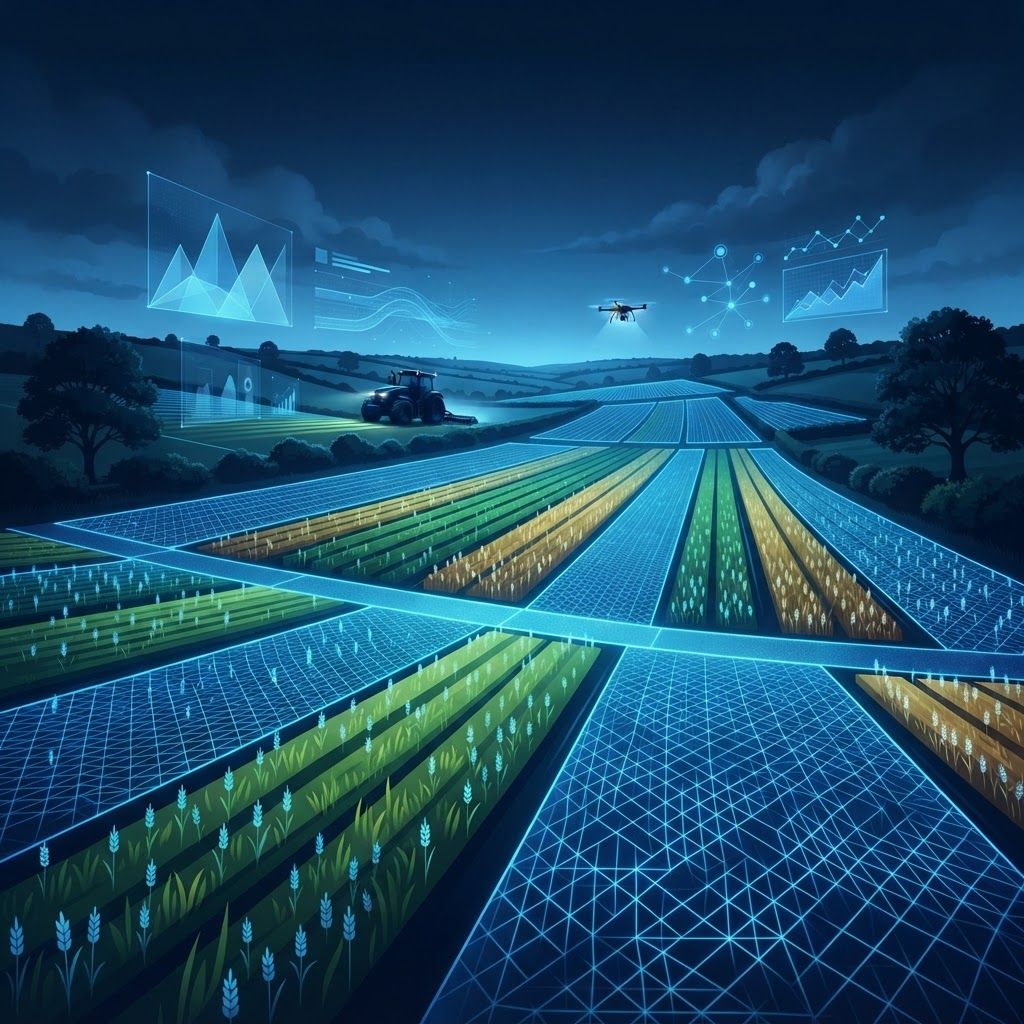
Precision technology is now routine on larger holdings. GPS guidance, variable rate application, yield mapping and soil scanning allow inputs to be matched to field variation, reducing waste while maintaining output. Drone imagery and satellite crop monitoring have made in-season decision-making considerably more informed.
Diversification continues to broaden farm income. Across North Hertfordshire, farms have developed storage and light industrial lets, farm shops, equestrian facilities, camping and glamping, renewable energy generation and educational visits. For many, these enterprises now contribute a substantial share of profit.
Top 10 Best Farming Companies in North Hertfordshire
1. Icknield Arable Farms
A substantial arable business working chalk soils across the northern part of the district, growing milling wheat, malting barley and break crops. The company has invested heavily in soil health monitoring and controlled traffic farming to limit compaction, and its yield consistency reflects that long-term approach.
2. Hitchin Hill Farming Company
A mixed enterprise combining arable cropping with grassland and livestock. The business runs an integrated rotation where grazing and manure contribute to soil fertility, reducing dependence on purchased nitrogen — an approach that has proven increasingly valuable as fertiliser prices have fluctuated.
3. Baldock Estate Farming
Managing a traditional estate combining commercial cropping with woodland, let land and environmental schemes. Long-term stewardship shapes decision-making, with hedgerow restoration and habitat corridors integrated across the holding alongside productive farming.
4. Letchworth Countryside Agriculture
Farming land close to the garden city, this business balances production with strong public access and educational engagement. School visits, open days and clear countryside interpretation have made it a recognised link between the district's urban population and its farmland.
5. Ashwell Grain Growers
A specialist cereal producer with on-farm storage and drying capability, allowing marketing decisions to be made independently of harvest-time prices. Grain quality management and sampling discipline support supply to milling and malting markets rather than feed.
6. Stotfold Vegetable Growers
Producing field vegetables and salad crops for wholesale and local retail. Horticulture is labour-intensive and margin-sensitive, and the business has invested in irrigation efficiency and mechanised harvesting to remain competitive.
7. Knebworth Regenerative Farming
Committed to a full regenerative system including no-till establishment, multi-species cover crops and integrated livestock grazing. The business monitors soil organic matter and biology closely, and shares its data openly with other farmers through discussion groups.
8. Weston Organic Farm
A certified organic producer growing cereals, pulses and vegetables without synthetic inputs. Organic farming requires longer rotations and greater mechanical weed management, and the business supplies both wholesale organic markets and direct-to-consumer boxes.
9. Therfield Downland Farming
Farming the chalk downland at the district's northern edge, this business combines arable production with conservation grazing that maintains rare chalk grassland habitat. Balancing commercial output with designated habitat management requires considerable technical skill.
10. North Herts Contract Farming Services
Providing full contract farming, cultivation, drilling, spraying and harvesting services to landowners who do not farm themselves. As machinery costs rise and skilled operators become scarcer, contracting arrangements have grown steadily across the district.
Challenges Facing the Sector
Volatility is the central difficulty. Grain prices, fertiliser costs, fuel and interest rates all move sharply and often independently, making forward planning difficult. Farms with storage, flexible marketing and diversified income absorb those swings far better than those selling everything at harvest.
Labour availability remains constrained, particularly for skilled machinery operators and seasonal horticultural work. Automation helps in some areas but cannot replace experienced judgement during critical operations.
Weather variability has become a planning assumption rather than an occasional disruption. Wetter autumns compressing drilling windows and dry springs affecting establishment have pushed farms toward more flexible rotations and greater cultivation capacity.
Looking Ahead
North Hertfordshire farming looks likely to continue combining high-output arable production with substantially increased environmental delivery. The businesses positioned best are those treating soil as their primary asset, maintaining diverse income streams and engaging constructively with a local population that values the countryside but does not always understand how it is managed. On both counts, the district's leading farms compare well with anywhere in the country.
Want your brand featured in front of decision-makers? Publish a guest post or get a link insertion in our guides through AAMAX's guest post and link insertion service.
Helpful Links
 SponsoredAAMAX — Full-Service Digital Agency
Write for Us
Share your expertise with our readers. We welcome guest contributions from industry specialists.
Pitch your idea

