

Farming in North Ayrshire: Land, Climate and Character
North Ayrshire's agricultural land is shaped by a mild, wet maritime climate and a landscape that rises from coastal plain to upland moor within a short distance. The result is a grass-dominated farming system. Dairy and beef production thrive on the lowland pastures around Irvine, Kilwinning, Dalry and Beith, while sheep farming occupies the higher ground of the Garnock Valley and the hills of Arran. Arable cropping exists but is largely supporting: cereals, silage and forage grown to feed livestock rather than for direct sale.
Ayrshire has given its name to one of the world's recognised dairy breeds, and that heritage still matters. The county's dairy sector remains significant within Scotland, supplying liquid milk, cheese and cream processing, and supporting a network of hauliers, vets, feed merchants and machinery dealers that gives the rural economy real depth.
Pressures and Opportunities in Scottish Agriculture
Farming in the region faces a demanding period. Input costs for fertiliser, fuel and feed have been volatile, labour availability is constrained, and the transition in agricultural support arrangements has shifted emphasis toward environmental outcomes alongside food production. Farms are increasingly expected to evidence carbon performance, biodiversity management, water quality protection and soil health.
At the same time there are real opportunities. Demand for provenance-led Scottish food is strong, direct-to-consumer selling has matured into a reliable additional income stream for many farms, renewable energy generation provides diversified revenue, and agri-tourism performs well in a region with substantial visitor numbers. Farms that combine efficient core production with one or two well-chosen diversifications tend to be the most resilient.
The Top 10 Farming Companies in North Ayrshire
1. Garnock Valley Dairy Farms
A well-run dairy enterprise built around high-genetic-merit herds and grass-based production, Garnock Valley Dairy Farms exemplifies the modern Ayrshire dairy model. Rotational grazing, careful attention to milk solids and investment in robotic milking and herd monitoring technology allow strong output per cow without sacrificing animal welfare standards.
2. Arran Hill Livestock
Managing hardy sheep and native-breed cattle across exposed island grazing, Arran Hill Livestock demonstrates how upland farming can combine commercial production with conservation. Extensive grazing supports habitat diversity, and the farm's stock is well regarded at regional markets for its hardiness and finishing quality.
3. Ayrshire Coastal Beef Company
Specialising in grass-finished beef from the coastal plain, this business emphasises breed selection, forage quality and slow finishing to produce consistent carcass grades. Direct relationships with butchers and restaurants across the west of Scotland allow it to capture more value than a purely commodity supply route would return.
4. Beith Mixed Farming Enterprises
Operating a genuinely mixed system of dairy, beef, cereals and forage, this enterprise spreads risk across several income streams. Home-grown feed reduces exposure to bought-in ration price swings, and integrating arable rotation with livestock manure improves soil organic matter over time.
5. Dalry Organic Pastures
Certified organic production takes patience and discipline, and Dalry Organic Pastures has built a reputation for both. Clover-rich swards reduce reliance on synthetic nitrogen, rotational grazing maintains sward quality, and premium organic milk and meat contracts justify the lower stocking density the system requires.
6. Kilwinning Arable and Forage
Focused on cereals, silage and specialist forage crops, this business supplies neighbouring livestock farms as well as its own operation. Precision application of inputs, variable rate technology and careful attention to drainage on heavier soils are central to its productivity in a region with high rainfall.
7. West Kilbride Sheep Farming Group
A collaborative operation covering several holdings, this group pools expertise in breeding, lambing management and flock health. Shared use of handling facilities and machinery reduces individual capital burden, and coordinated marketing improves the prices achieved for finished lambs.
8. Largs Agri Diversified
This business represents the diversification trend well, combining conventional livestock farming with farm shop retail, holiday accommodation and educational visits. Visitor income smooths the seasonality of farm cash flow and creates a direct connection between local consumers and food production.
9. Cumbrae Smallholding Network
Island smallholders producing eggs, vegetables, honey, soft fruit and small quantities of meat operate on a scale that would be uneconomic on the mainland but works well serving a contained local market and a strong summer visitor population. The network's cooperative approach to distribution and marketing is its main strength.
10. North Ayrshire Regenerative Farming Collective
Applying regenerative principles including minimum tillage, diverse cover cropping, herbal leys and integrated grazing, this collective shares data and practical learning among member farms. Its emphasis on soil biology, carbon sequestration and reduced input dependency aligns closely with the direction of Scottish agricultural policy.
Technology on Ayrshire Farms
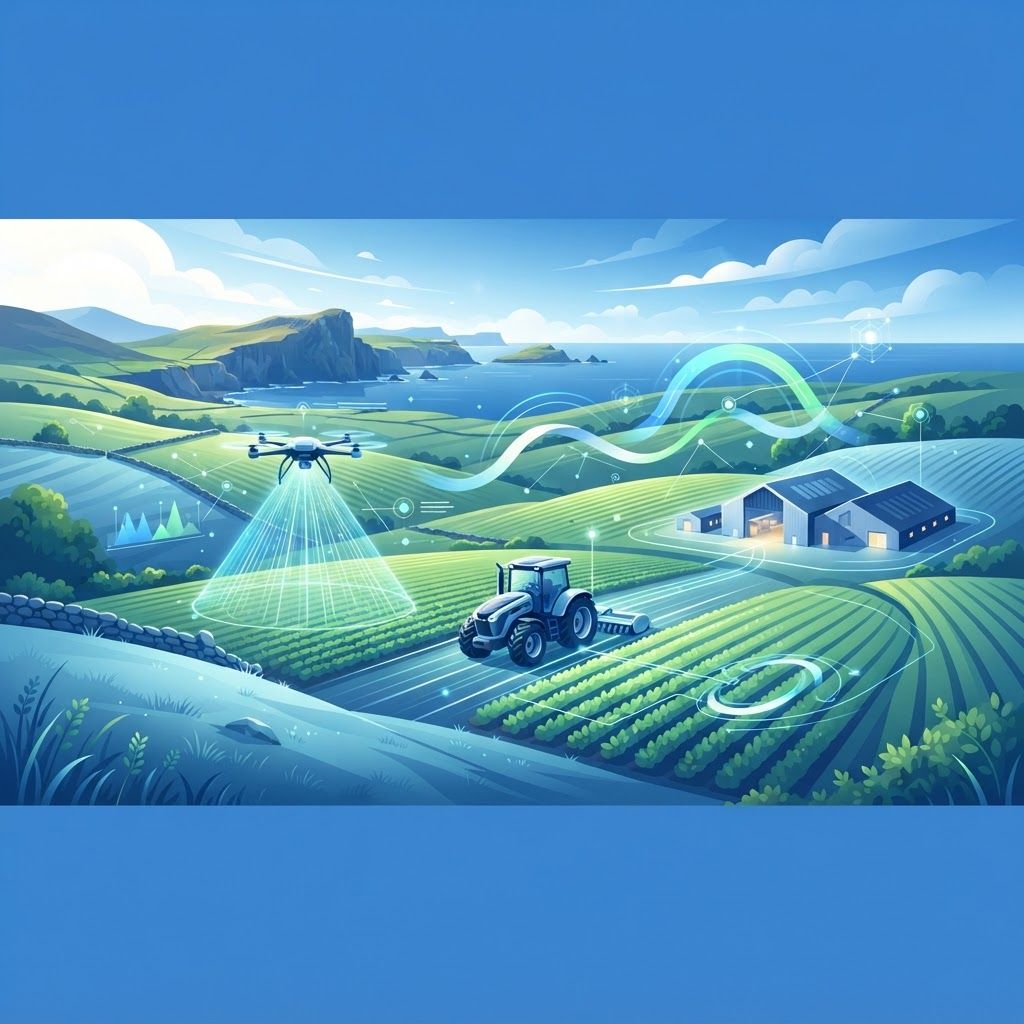
The technology adoption curve in the region has steepened. Robotic milking systems are now common on larger dairy units. Electronic identification and automated weighing improve livestock management precision. Soil sampling with GPS mapping allows variable-rate nutrient application, cutting fertiliser cost and runoff simultaneously. Drone imagery supports crop and grassland assessment, and farm management software has replaced paper records for compliance and planning.
Renewable energy deserves particular mention. Wind, solar and anaerobic digestion installations across Ayrshire farms provide income, reduce on-farm energy costs and help meet emissions targets. For many holdings, energy has become a genuine third enterprise alongside livestock and cropping.
Supporting Local Agriculture
Consumers can support the sector meaningfully by buying Scottish-labelled dairy and meat, visiting farm shops and farmers' markets, and choosing local produce in restaurants. For businesses, sourcing regionally shortens supply chains and supports rural employment.
For farmers themselves, the strategic priorities are clear: manage input costs tightly, build soil and grassland productivity as the cheapest form of feed, document environmental performance properly, and develop at least one diversified income stream that suits the farm's location and the family's skills.
Outlook
North Ayrshire farming will remain grass and livestock focused, but the definition of a successful farm is broadening. Efficiency of production still matters, yet increasingly so do carbon footprint, biodiversity outcomes and the ability to tell a credible provenance story. The farms profiled here share a common trait: they treat these as commercial opportunities rather than regulatory burdens, and that outlook is likely to define the next generation of Ayrshire agriculture.
Want your brand featured in front of decision-makers? Publish a guest post or get a link insertion in our guides through AAMAX's guest post and link insertion service.
Helpful Links
 SponsoredAAMAX — Full-Service Digital Agency
Write for Us
Share your expertise with our readers. We welcome guest contributions from industry specialists.
Pitch your idea

