

Agriculture in the Heart of Devon
Devon is one of England's most agricultural counties, and Exeter sits at its centre as the commercial hub through which much of that activity flows. The land surrounding the city is productive and varied, from the rich red soils of the Exe valley and mid Devon to the grassland systems that support the county's renowned dairy and livestock sectors, with the fringes of Dartmoor and the Blackdown Hills adding upland grazing.
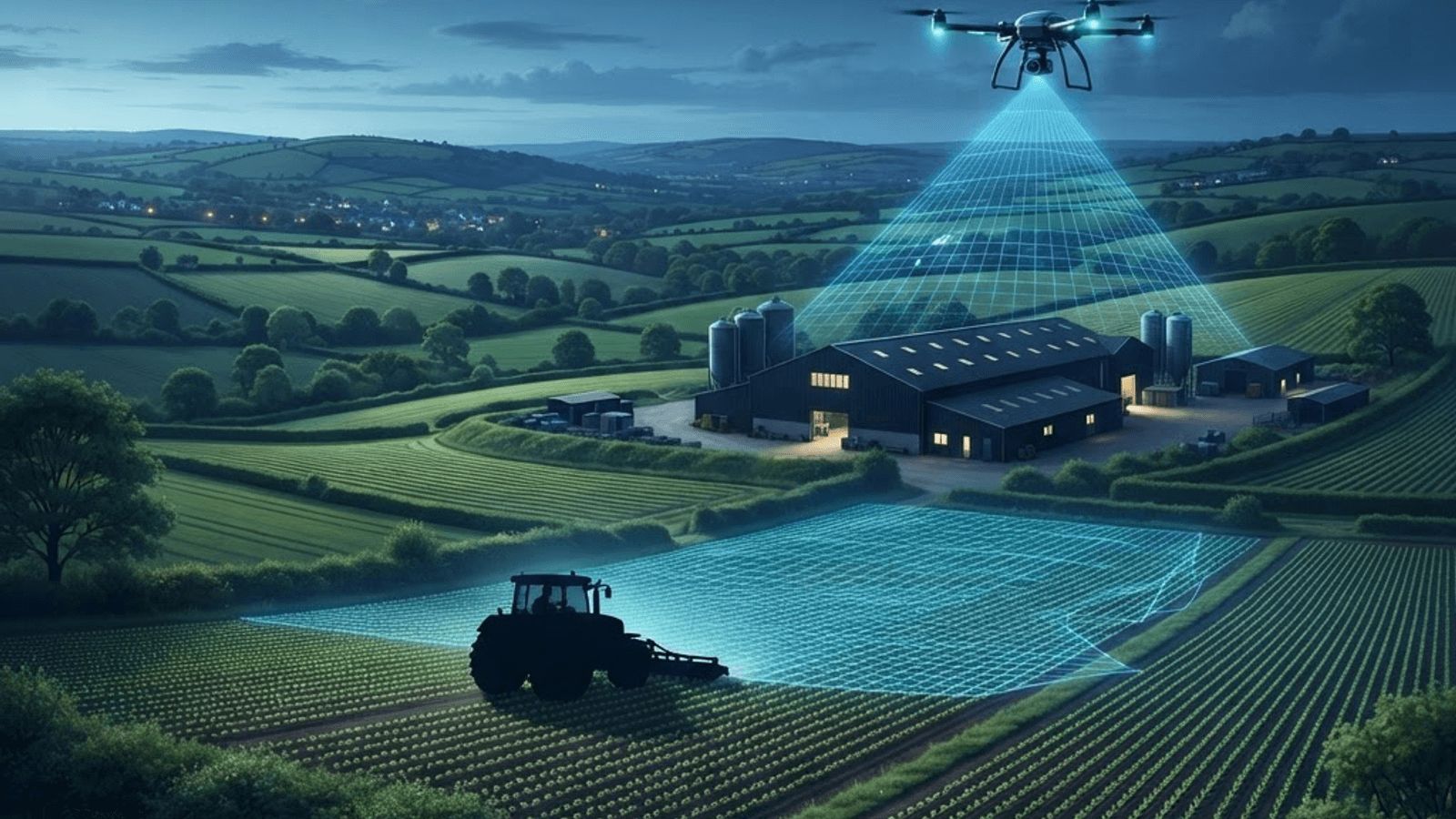
Farming here is not a museum piece. The businesses operating around Exeter combine traditional knowledge with satellite guidance, soil mapping, robotic milking, precision nutrient application and detailed carbon accounting. The sector has also diversified extensively, with farm shops, camping, renewable energy, food processing and tourism now contributing significantly to farm incomes across the county.
The Forces Shaping Devon Farming
The shift in agricultural policy has been the single biggest change in a generation. Area-based payments have been replaced by schemes rewarding environmental outcomes, soil health, habitat creation and public access. This has pushed farms to think differently about marginal land and to value natural capital alongside production.
Regenerative agriculture has gained substantial traction. Minimum tillage, cover cropping, diverse leys, rotational grazing and reduced chemical inputs are being adopted widely, driven by both environmental logic and the practical benefits of improved soil structure and lower input costs. Devon's high rainfall makes soil health and water infiltration particularly important.
Water quality is a defining regional issue. Runoff, soil erosion and nutrient management affect the Exe, Culm and Clyst catchments directly, and farms are investing in buffer strips, improved slurry storage and precision application to reduce losses.
Diversification continues to grow. Farm shops and box schemes shorten supply chains and capture more value. Glamping and holiday accommodation exploit Devon's tourism demand. Anaerobic digestion, solar arrays and small hydro schemes generate income and reduce emissions. On-farm processing, particularly dairy into cheese and ice cream and orchards into cider, adds substantial margin.
The Leading Farming Companies Around Exeter
1. Exe Valley Dairy Farms operates modern dairy units in the fertile valley north of the city, combining high-welfare herd management with robotic milking and detailed grassland measurement. Its investment in slurry management and nutrient planning demonstrates how intensive dairy can reduce environmental impact while maintaining productivity.
2. Devon Heritage Livestock specialises in native breeds including South Devon and Ruby Red cattle, raising them on grass-based systems. The resulting meat quality supports premium marketing, and the breeds' hardiness suits the county's conditions with lower input requirements.
3. Clyst Arable Enterprises farms cereals, oilseeds and break crops across the lower-lying land east of Exeter using precision agriculture. Variable rate application, soil mapping and controlled traffic farming reduce input use while maintaining yields, and its cover cropping programme has measurably improved soil organic matter.
4. Topsham Market Gardens produces vegetables, salads and soft fruit for local retailers, restaurants and box schemes. Its short supply chain means produce reaches Exeter kitchens within hours of harvest, and its succession planting maintains continuity through the season.
5. Blackdown Hills Sheep Company runs extensive sheep systems on the higher ground, managing flocks across mixed grassland and moorland margins. Its rotational grazing approach supports both livestock productivity and grassland biodiversity.
6. Culm Valley Organic Farms operates certified organic mixed farming with cattle, sheep and arable rotation. Its integrated system, using livestock manure and clover leys to maintain fertility without synthetic inputs, is a practical demonstration of closed-loop farming at commercial scale.
7. Exeter Agricultural Contracting provides silage, harvesting, cultivation, slurry spreading and hedge management services to farms across the county. Contracting allows smaller farms to access modern machinery without the capital burden, improving timeliness and work quality considerably.
8. Dartmoor Edge Farming Estate combines livestock production with environmental stewardship, habitat management and public access on land bordering the national park. It illustrates the emerging model where conservation delivery sits alongside food production as a genuine income stream.
9. Woodbury Fruit and Cider Orchards manages traditional and modern orchards producing apples for cider and juice. Devon's cider heritage is commercially significant, and traditional orchards also provide valuable habitat, making this a rare example of production and biodiversity aligning naturally.
10. Science Park Agri-Technology Farms works with research partners on precision agriculture, soil monitoring, livestock sensing and data-driven farm management. Its trials help translate university research into practices that working Devon farms can actually adopt.
Practical Considerations for the Sector
Soil health should be the starting point for any farm improvement plan. Regular soil testing, organic matter monitoring and attention to structure and compaction deliver returns across yield, resilience and input cost. In Devon's wet climate, good infiltration also reduces runoff and protects watercourses.
Environmental scheme participation deserves careful analysis rather than automatic acceptance or rejection. Payment rates, management requirements and the interaction with productive capacity vary considerably, and professional advice usually pays for itself.
Diversification should build on genuine strengths. A farm near a popular walking route may suit camping; one with a strong dairy may suit processing. Diversification that ignores the farm's actual advantages rarely succeeds.
Succession planning is frequently postponed and should not be. Clear arrangements protect both the business and family relationships, and they enable long-term investment decisions that uncertainty otherwise prevents.
Finally, collaboration is increasingly valuable. Machinery sharing, joint marketing, catchment-scale environmental projects and farmer discussion groups spread cost, reduce risk and accelerate the adoption of practices that work.
The Future of Farming Around Exeter
Devon agriculture faces real pressures from climate variability, policy transition, labour availability and market volatility. Yet the fundamentals remain strong: productive land, an excellent grass-growing climate, a strong food and drink reputation, and a nearby population that values local provenance. Farms that combine sound agronomy, environmental delivery and direct connection with customers are finding a durable position. For Exeter and the wider county, the farming sector remains central not only to the economy but to the landscape and character that define the region.
Want your brand featured in front of decision-makers? Publish a guest post or get a link insertion in our guides through AAMAX's guest post and link insertion service.
Helpful Links
 SponsoredAAMAX — Full-Service Digital Agency
Write for Us
Share your expertise with our readers. We welcome guest contributions from industry specialists.
Pitch your idea

