

Farming on Eastleigh's Doorstep
Eastleigh is often described as a railway town, but drive a few minutes beyond its residential edges and the landscape changes quickly. The borough is bordered by the Itchen Valley, the chalk downland running north towards Winchester, and the mixed farmland stretching west towards the Test. This is productive, well-managed countryside supporting arable rotations, livestock grazing, horticulture and an expanding cluster of diversified rural enterprises.
What makes agriculture around Eastleigh distinctive is proximity. Farms here sit within minutes of a large urban population, a major port at Southampton and a dense network of independent retailers, restaurants and farm shops. That closeness shapes business models. Rather than competing purely on commodity volume, many local farming companies have built their strategy around direct sales, provenance, food-service supply and environmental stewardship.
The Agricultural Character of the Area
Soils around the borough vary considerably. The chalk downland to the north suits combinable crops such as winter wheat, barley and oilseed rape, while the river valleys provide grassland ideal for dairy and beef systems. Lighter soils nearer the coast support field vegetables and salad production, and the wooded fringes towards the New Forest sustain smaller mixed holdings and equine businesses.
Water is a defining local issue. The Itchen and Test are internationally significant chalk streams, and farms within their catchments operate under close scrutiny regarding nutrient management and run-off. Nutrient neutrality requirements across the Solent region have made nitrate and phosphate management a central business concern rather than a peripheral compliance task, and the most forward-thinking operators have turned that constraint into a competitive advantage.
Leading Farming Companies and Agricultural Businesses
1. Manor Farm and the Hampshire estate model represents the traditional backbone of the area. Mixed estate farming across arable and livestock, often combined with heritage, education and visitor activity, demonstrates how land holdings near a large town can generate income from more than crop yield alone. Estates of this type are typically the largest single land managers in the borough's rural fringe.
2. Velcourt is one of the UK's leading farm management companies and operates across southern England on behalf of landowners. Its value proposition is professionalised agronomy, machinery efficiency and data-driven decision-making applied at scale, which allows smaller estates around Hampshire to access expertise they could not justify employing directly.
3. Barfoots has become a recognised name in southern England horticulture, growing and packing field vegetables and sweetcorn for major retailers. Businesses of this scale matter to the Eastleigh area because they anchor seasonal employment, cold-chain logistics and grower networks across the wider region.
4. Hampshire Farm Meats and comparable livestock specialists supply beef and lamb into local butchery and food service. Their differentiator is traceability, with animals often finished on named farms and sold with clear provenance, which local restaurants increasingly demand as a condition of listing a supplier.
5. Laverstoke Park Farm is widely cited in Hampshire as a pioneer of organic and biodiversity-led production. Its approach to soil biology, diverse pasture leys and buffalo dairying has influenced how many smaller producers in the county think about inputs and animal health.
6. Hill Farm Juice and similar orchard-based producers illustrate the value-added route. By pressing, bottling and branding on-farm, these companies capture retail margin rather than selling raw fruit into commodity markets, and they have found strong demand among Hampshire farm shops and delicatessens.
7. Frith Farm and the local direct-sales growers supply vegetable boxes, eggs and seasonal produce directly to households across the borough. The model depends on reliability and customer relationships rather than scale, and it has proved notably resilient because it removes intermediaries entirely.
8. Meon Valley farming partnerships east of Eastleigh combine arable rotations with contract farming agreements. These arrangements have grown in popularity because they let landowners retain ownership and tax status while handing operational risk and machinery investment to a specialist operator.
9. Equine and grassland enterprises across the borough's rural edge form a genuine agricultural sector in their own right. Livery yards, hay and haylage production and paddock management support a substantial rural economy that is easy to overlook in conventional farming statistics.
10. Regenerative smallholdings and community farms represent the newest layer. Operating on relatively small acreages, these enterprises focus on soil carbon, no-till cultivation, agroforestry and mixed grazing, often supplementing income through education, volunteering programmes and on-site sales. Their influence on local agricultural thinking far exceeds their share of land area.
Key Trends Shaping Hampshire Agriculture
The most significant structural change is the shift in agricultural support. As area-based payments have been phased out in England and replaced by schemes rewarding environmental outcomes, farm business plans have been rewritten. Hedgerow management, cover cropping, buffer strips, species-rich grassland and integrated pest management have all moved from optional to financially material.
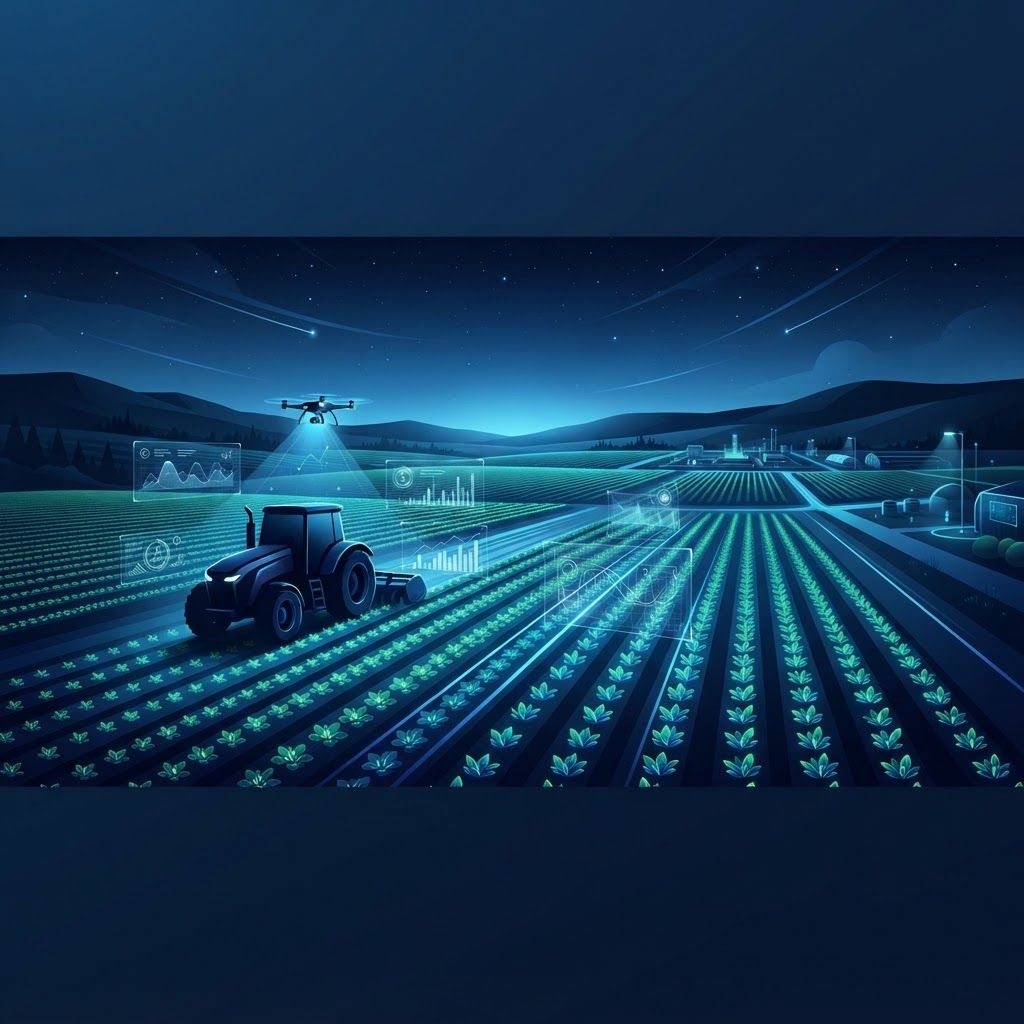
Precision agriculture has spread rapidly. GPS-guided machinery, variable-rate fertiliser application, soil scanning and satellite-derived crop monitoring are now common on medium and large holdings around the county. The driver is partly environmental compliance and partly economics, since input costs have risen sharply enough to make every wasted kilogram of fertiliser visible on the balance sheet.
Diversification continues to expand. Farm shops, glamping, wedding venues, equestrian facilities, solar arrays and light-industrial conversion of redundant buildings all appear across the Eastleigh rural fringe. Given the proximity to a substantial urban population, non-agricultural income streams often underpin the viability of the farming operation itself.
Labour remains a persistent challenge, particularly for horticulture, where seasonal workforce availability determines what can realistically be planted. Growers have responded with mechanisation, extended-season varieties and closer partnership with packing operations.
What Local Buyers Should Look For
Restaurants, retailers and households buying from farming companies around Eastleigh benefit from asking a few practical questions. Where exactly was the produce grown, and is the holding named rather than described only by region? What assurance schemes apply, and can certification be produced on request? How is seasonality handled, and will the supplier be honest about gaps rather than substituting imported product without notice?
For commercial buyers, delivery consistency usually matters more than headline price. A grower who can commit to a fixed weekly volume and a reliable delivery window is worth more than one offering a lower rate with unpredictable supply.
The Outlook for Farming Around Eastleigh
Pressure on land near a growing town is real, and development competes directly with agricultural use. Yet the businesses thriving locally are those that have accepted proximity as an asset. Selling into a dense local market, supplying chefs who want named provenance, hosting visitors who want to understand where food comes from and delivering measurable environmental improvement in a sensitive chalk stream catchment all depend on being close to people rather than remote from them.
The farming companies operating around Eastleigh are, in that sense, a useful preview of where much of English agriculture is heading: smaller margins on commodity output, greater reward for environmental delivery, and steadily rising value in a credible, transparent connection between the field and the customer.
Want your brand featured in front of decision-makers? Publish a guest post or get a link insertion in our guides through AAMAX's guest post and link insertion service.
Helpful Links
 SponsoredAAMAX — Full-Service Digital Agency
Write for Us
Share your expertise with our readers. We welcome guest contributions from industry specialists.
Pitch your idea

