

Farming in One of England's Great Growing Districts
Agriculture is not simply an industry in East Lindsey, it is the shape of the place. The rolling chalk of the Lincolnshire Wolds gives way to the rich silts of the marsh and the deep soils of the fen edge, and between them these landscapes produce cereals, oilseeds, potatoes, sugar beet, brassicas, salad crops and livestock in quantities that feed a substantial share of the country.
The farming businesses operating here have evolved considerably. Many are still family enterprises spanning several generations, but they now operate with agronomic precision, sophisticated machinery, detailed environmental compliance and increasingly diversified income. The modern Lincolnshire farm is as much a data-driven business as a working landscape.
Ten Farming Companies in East Lindsey
1. Wolds Arable Farming Group. A large-scale combinable crops enterprise growing wheat, barley, oilseed rape and pulses across the Wolds, using variable rate application and controlled traffic techniques to protect soil structure and reduce input use.
2. Marsh Root Crops Company. Specialising in potatoes and sugar beet on the fertile silt soils, this business operates cold storage and grading facilities, supplying processors and retailers to exacting specifications.
3. Lindsey Vegetable Growers. A field vegetable producer growing brassicas, leeks and salad crops for the fresh market, managing sequential plantings to deliver continuous supply through long harvest windows.
4. Louth Livestock Farms. Running beef and sheep enterprises across permanent pasture and rotational grazing, with attention to grassland management, animal health planning and traceable local supply to butchers.
5. Horncastle Mixed Farming Estate. Combining arable rotation with livestock and woodland, this estate demonstrates the soil health benefits of mixed farming, using grazing and organic matter return to reduce reliance on purchased inputs.
6. Coastal Poultry Producers. Operating free range and housed poultry units producing eggs and table birds, with biosecurity systems, welfare monitoring and full traceability into regional food supply chains.
7. Spilsby Organic Farming Company. Certified organic across arable and horticultural land, this business relies on rotation, cover cropping and mechanical weed control, supplying premium markets that reward the approach.
8. Alford Horticultural Nurseries. Producing plants, bulbs and protected crops under glass and polythene, serving garden retail, landscaping and the flower trade for which Lincolnshire has long been known.
9. Bolingbroke Farming and Renewables. Combining conventional cropping with solar generation, anaerobic digestion and biomass, this diversified business demonstrates how energy production can complement rather than replace food production.
10. Skegness Coastal Grazing and Conservation Farms. Managing grazing marsh and coastal habitat alongside livestock production, delivering environmental outcomes for saltmarsh and wading bird populations while producing quality meat.
Technology on the Modern Lincolnshire Farm
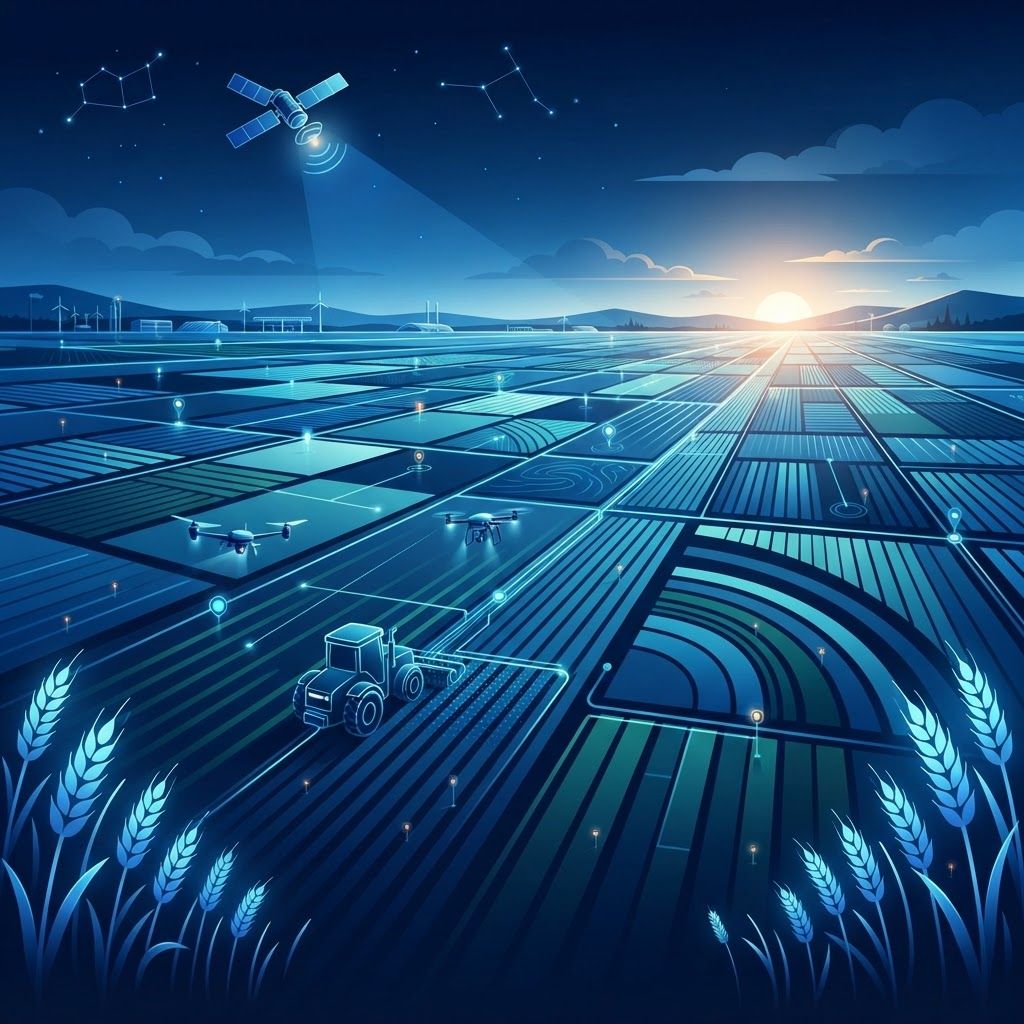
Precision agriculture has moved from novelty to normality. Satellite guidance steers machinery to centimetre accuracy, reducing overlap and saving fuel and inputs. Yield mapping identifies underperforming areas so that treatment can be targeted rather than applied uniformly. Variable rate application adjusts seed and fertiliser continuously across a field according to soil and historic performance.
Soil health has become a central preoccupation. Reduced tillage, cover cropping, organic matter addition and controlled traffic all aim to rebuild structure and biology after decades of intensive cultivation. Farmers in East Lindsey report improved water infiltration and resilience during both wet winters and dry summers as a result.
Data management underpins all of this. Field records, input applications, assurance scheme documentation and environmental scheme evidence are increasingly handled digitally, which improves compliance and, more importantly, allows farmers to analyse what actually works on their own land.
Environment, Policy and Diversification
Agricultural policy has shifted decisively toward paying for environmental outcomes alongside food production. Schemes supporting habitat creation, hedgerow management, water quality protection and reduced input use now form a meaningful part of farm income planning in Lincolnshire.
Water is a defining issue in this district. Much of the land depends on managed drainage, while summer irrigation is essential for horticultural crops. Balancing abstraction, storage, flood risk and water quality has become one of the most complex challenges facing local farming businesses, and many have invested in reservoirs and efficient irrigation systems.
Diversification is widespread. Holiday accommodation, farm shops, contracting services, renewable energy, storage letting and equestrian facilities all appear across the district. For farms near the coast, tourism-related enterprises are particularly attractive given the visitor volumes passing nearby.
Challenges Facing Farming Businesses
Volatility is the dominant theme. Commodity prices, fertiliser costs, fuel and energy prices and weather all move sharply and often unpredictably. Businesses manage this through forward selling, input purchasing strategies, cost control and maintaining financial headroom.
Labour availability remains difficult, especially for horticultural harvesting, which has driven investment in mechanisation and automation wherever crops allow it.
Succession is a quieter but significant issue. Bringing the next generation into a capital-intensive business requires planning, and farms that address it early tend to invest more confidently.
The Future of Farming in East Lindsey
The fundamentals are strong. The district has excellent soils, established infrastructure, proximity to processing and a deep base of agricultural knowledge. Domestic food security has returned as a policy priority, which supports the case for productive farmland.
The direction of travel is toward farming that is simultaneously more productive and more environmentally careful, using technology to apply less input to greater effect. The businesses leading this transition in East Lindsey are demonstrating that the two goals reinforce each other far more often than they conflict.
Want your brand featured in front of decision-makers? Publish a guest post or get a link insertion in our guides through AAMAX's guest post and link insertion service.
Helpful Links
 SponsoredAAMAX — Full-Service Digital Agency
Write for Us
Share your expertise with our readers. We welcome guest contributions from industry specialists.
Pitch your idea

