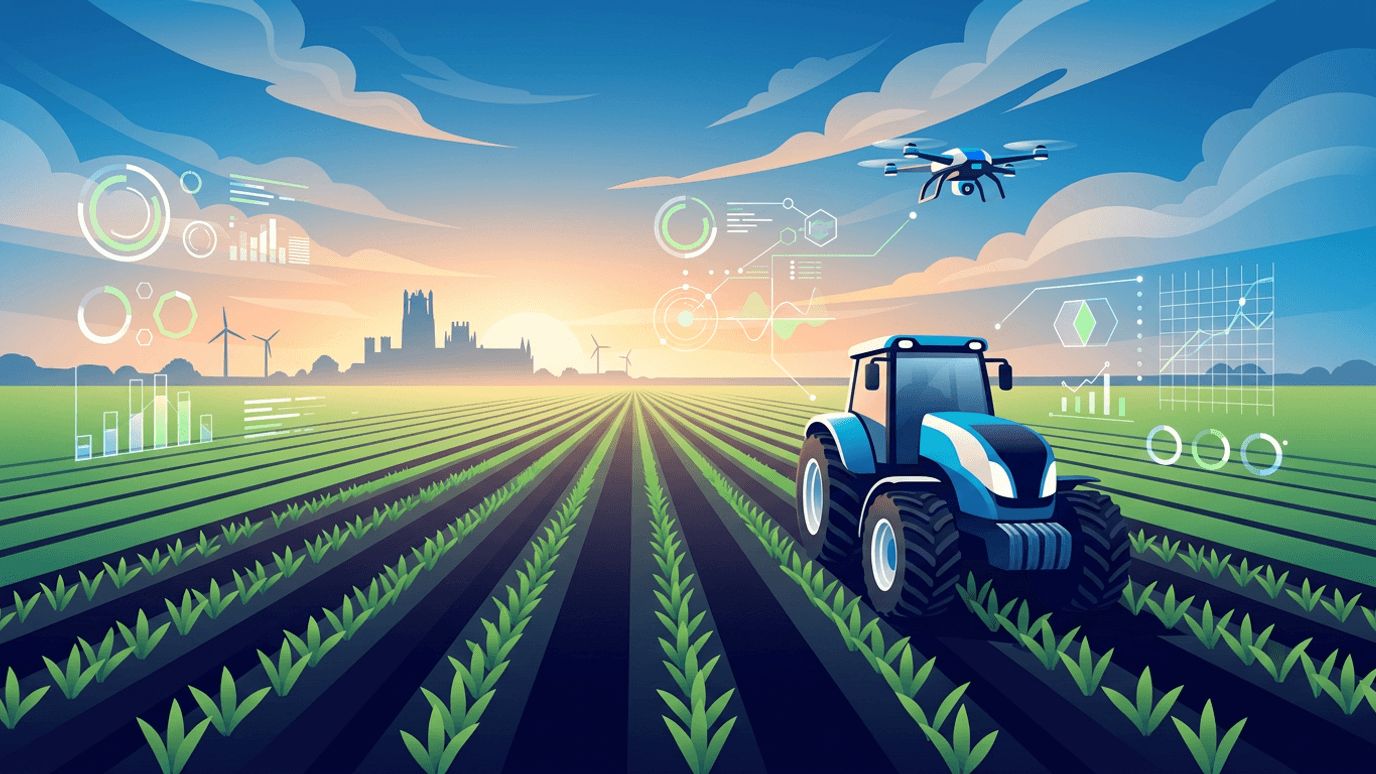
The Agricultural Heart of the Fens
Few places in Britain are as closely defined by farming as East Cambridgeshire. Once a landscape of marshes and meres, the Fens were drained over centuries to create some of the most fertile land in the country. Today, the dark peat soils around Ely, Littleport and Soham, along with the chalk and clay land towards Burwell and Bottisham, produce vegetables, salads, cereals, sugar beet and potatoes on a remarkable scale. Grade one agricultural land is common here, and the district plays a major role in national food security.
Farming in East Cambridgeshire ranges from family-run holdings that have worked the same land for generations to large integrated businesses that grow, pack and supply major retailers. This guide highlights ten farming companies and agricultural businesses that make a significant contribution to the district and the wider region.
What Makes Fen Farming Unique
Fen soils are exceptionally fertile but also fragile. Peat shrinks as it dries and oxidises, which has lowered land levels over time and contributes to carbon emissions. Farmers must balance productivity with soil conservation, water management and environmental care. The flat, open landscape also means exposure to wind erosion, so many growers use cover crops, shelter belts and careful cultivation practices.
The Top 10 Farming Companies in and Around East Cambridgeshire
1. G's Growers
G's Growers, based at Barway near Ely, is one of Europe's leading producers of salads and vegetables. Founded as a family farm, it has grown into an international business supplying lettuce, celery, beetroot and other crops to major retailers. Its presence makes it one of the most important agricultural employers in the district.
2. Greenvale
Greenvale is one of the UK's largest suppliers of fresh potatoes, with significant operations in the Fens. It works with growers across the region to supply washed and packed potatoes to supermarkets.
3. Produce World
Produce World is a major grower and supplier of root vegetables, including carrots, parsnips and onions. Its operations in the East of England work closely with Fen growers to deliver consistent quality to retailers.
4. Branston
Branston is a leading potato supplier that packs and prepares potatoes for retail and food service. It sources from growers across the eastern counties and invests heavily in storage and packing technology.
5. Camgrain
Camgrain is a farmer-owned cooperative that stores and markets grain for members across Cambridgeshire and neighbouring counties. Its quality control and collective marketing help local farmers achieve better prices.
6. Sentry
Sentry is a large farm management and contracting business operating across East Anglia. It manages land on behalf of owners, applying modern techniques to improve productivity and environmental outcomes.
7. Elveden Estate
Elveden Estate, just across the border in Suffolk, is one of the largest arable farms in England. It grows potatoes, onions, cereals and other crops, and is known for its investment in conservation and diversification.
8. Albanwise
Albanwise manages extensive farmland across East Anglia and is recognised for its commitment to sustainable farming and conservation. Its practices offer valuable lessons for farmers across the region.
9. Strutt and Parker Farms
Strutt and Parker Farms operates large arable and livestock enterprises in the East of England. Its long history and professional management make it a respected name in British agriculture.
10. Frontier Agriculture
Frontier Agriculture supports farmers with agronomy, crop inputs and grain marketing. While not a farm itself, its expertise and services are deeply embedded in the arable farming economy of East Cambridgeshire.
Trends Shaping Farming in the District
Sustainability is now central to farming strategy. Many Fen growers are adopting regenerative practices, such as reduced tillage, cover cropping and diverse rotations, to protect soil and reduce emissions. Water management is another priority, with farms investing in reservoirs and efficient irrigation to cope with drier summers.
Technology is transforming farm operations too. GPS-guided machinery, drones, soil sensors and data analytics help farmers apply inputs precisely and monitor crop health. Labour shortages have accelerated interest in robotic harvesting and automated packing. Government environmental schemes are also encouraging farmers to create wildlife habitats and restore wetlands, including projects that complement nature reserves such as Wicken Fen.
Farming and the Local Community
Agriculture remains a major employer in East Cambridgeshire, providing jobs in growing, packing, logistics and engineering. Farm shops, pick-your-own fields and seasonal events also connect residents with local food. The district's farming heritage is visible in its landscape, villages and traditions, and it continues to shape local identity.
How to Engage With Local Farming Businesses
For landowners, choosing a farm management partner involves assessing experience, environmental commitment and financial transparency. For suppliers and service providers, understanding the seasonal rhythms and pressures of Fen farming is essential. For consumers, buying local produce from farm shops and markets supports the regional economy and reduces food miles.
Conclusion
East Cambridgeshire is one of Britain's most important farming districts, and the companies above demonstrate the scale, innovation and dedication that define agriculture in the Fens. By combining productivity with sustainability, these businesses are helping to secure the future of food production in the region.
Want your brand featured in front of decision-makers? Publish a guest post or get a link insertion in our guides through AAMAX's guest post and link insertion service.
Helpful Links
 SponsoredAAMAX — Full-Service Digital Agency
Write for Us
Share your expertise with our readers. We welcome guest contributions from industry specialists.
Pitch your idea