

Agriculture at the Heart of the Borough
Drive inland from the dramatic coastline of Causeway Coast and Glens and the landscape quickly becomes agricultural. Dairy herds graze the Roe Valley, beef and sheep enterprises work the higher ground of the Antrim glens, and arable land around Coleraine and the Bann corridor produces barley, potatoes and forage crops. Farming here is not a heritage activity; it is a substantial, modern industry that employs thousands directly and supports food processing, transport, veterinary services, machinery dealerships and rural retail.
The borough's geography creates genuine diversity. Coastal lowlands with mild temperatures and good rainfall suit intensive grassland systems, while the uplands support extensive sheep farming and, increasingly, environmental stewardship schemes. That mix makes the local agricultural sector more resilient than single-enterprise regions.
Ten Leading Farming Companies and Cooperatives
1. Dale Farm is one of the largest dairy cooperatives in Northern Ireland, collecting milk from farms across the region and processing it into cheese, butter, milk powders and liquid milk. For dairy farmers in the borough, a strong cooperative provides market access, price stability and investment in processing capacity that no individual farm could achieve alone.
2. Fane Valley operates across agri-supply, feed milling and food processing, serving farmers with inputs while also providing routes to market. Integrated cooperatives of this kind reduce the number of intermediaries between the farm gate and the consumer, improving the share of value retained by producers.
3. Glenshane Beef and Sheep Enterprises represents the substantial livestock farming base of the upland areas. Beef and sheep production in Northern Ireland is grass-based and extensive, producing meat with strong provenance credentials that increasingly command premium positioning in export markets.
4. Roe Valley Dairy Group reflects the concentration of high-performing dairy units around Limavady. Modern dairying is technologically intensive, with robotic milking, automated feeding, herd health monitoring and precise grassland measurement now commonplace on progressive units.
5. Bann Valley Arable Farms covers the crop production side of the local economy. Spring barley for the distilling and brewing sectors, potatoes for the fresh market, and forage maize and wholecrop for livestock feed all feature. The link between local barley and the region's distilling heritage is a particularly compelling regional story.
6. Causeway Free Range Poultry operates in a sector that has grown considerably. Poultry production, both meat and eggs, offers a route into farming with lower land requirements than grazing livestock, and free range systems align well with consumer welfare expectations.
7. Glens Organic Producers brings together farms certified for organic production. Organic systems command price premiums and suit the extensive grassland of the glens, though they require careful management of soil fertility and animal health without conventional inputs.
8. Antrim Coast Horticulture works in a smaller but growing category, supplying vegetables, salads and soft fruit to local retailers, restaurants and box schemes. Short supply chains and genuine freshness are the competitive advantages here, and demand for local produce has strengthened markedly.
9. Limavady Agricultural Contractors provides the machinery capacity that many farms cannot justify owning. Silage harvesting, slurry spreading, reseeding and hedge cutting are increasingly delivered by specialist contractors with modern, high-capacity equipment, improving timeliness and reducing individual farm capital burden.
10. Causeway Farm Supplies Cooperative serves the input side, supplying feed, fertiliser, seed, animal health products and fencing materials. Local cooperative supply keeps input costs competitive and ensures availability during the intense seasonal peaks of spring and silage time.
Technology Transforming the Farm
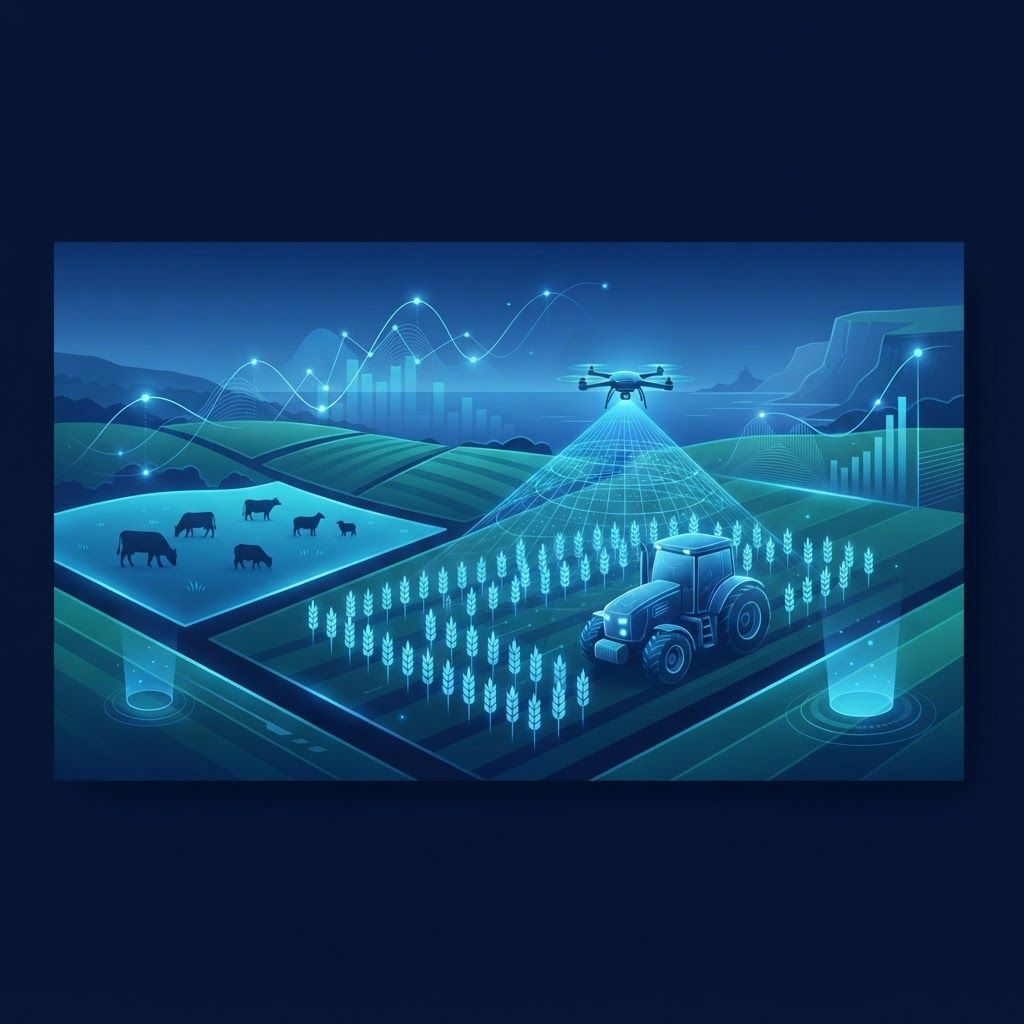
Precision agriculture has moved from experimental to practical. GPS-guided machinery reduces overlap and input waste, soil sampling with variable rate application places fertiliser exactly where it is needed, and drone imagery identifies crop stress before it is visible from ground level. On livestock farms, electronic identification, automated weighing and health sensors allow individual animal management within large herds.
Grassland measurement deserves particular mention in a region where grazed grass is the cheapest feed available. Regular sward measurement and rotational grazing planning can substantially increase the proportion of a cow's diet coming from grass rather than purchased concentrate, directly improving margin.
Data integration is the next frontier. Farms now generate information from milking parlours, machinery, weather stations and soil sensors, and the challenge is turning that volume into actionable decisions rather than simply accumulating records.
Sustainability and Environmental Stewardship
Agriculture in Northern Ireland faces serious scrutiny over ammonia emissions, water quality and greenhouse gas output. The borough contains sensitive designated habitats along the coast and in the glens, and farming practice has direct consequences for them. Leading producers are responding with low-emission slurry spreading, improved nutrient management planning, protected urea fertilisers and better slurry storage.
Carbon sequestration through hedgerow planting, agroforestry and soil organic matter improvement offers farmers a constructive role in climate mitigation rather than a purely defensive one. Several producers in the region have begun measuring farm carbon footprints, which is a prerequisite for any credible improvement.
Biodiversity measures, including field margins, wildflower areas and wader habitat management, are increasingly supported through environmental schemes. In upland glens areas, these payments can represent a meaningful share of farm income.
Market Pressures and Opportunities
Input cost volatility, particularly in fertiliser and energy, has squeezed margins across all sectors. Farms with efficient systems and lower reliance on purchased inputs have proved more resilient. Meanwhile, changing trade arrangements have altered export routes for Northern Irish produce, requiring adaptability from processors and producers alike.
The opportunities are real, though. Provenance sells: grass-fed beef and lamb, local dairy and heritage grain all carry stories that consumers value. Farm diversification into tourism accommodation, farm shops and food experiences suits a borough that already attracts substantial visitor numbers along the Causeway Coastal Route.
Looking Ahead
Succession remains the sector's most pressing structural question. Attracting younger entrants requires viable incomes, manageable workloads and access to land, none of which are simple. Yet the combination of strong natural resources, established cooperative structures and growing consumer interest in local, traceable food gives farming in Causeway Coast and Glens a genuinely positive foundation on which to build.
Want your brand featured in front of decision-makers? Publish a guest post or get a link insertion in our guides through AAMAX's guest post and link insertion service.
Helpful Links
 SponsoredAAMAX — Full-Service Digital Agency
Write for Us
Share your expertise with our readers. We welcome guest contributions from industry specialists.
Pitch your idea

