

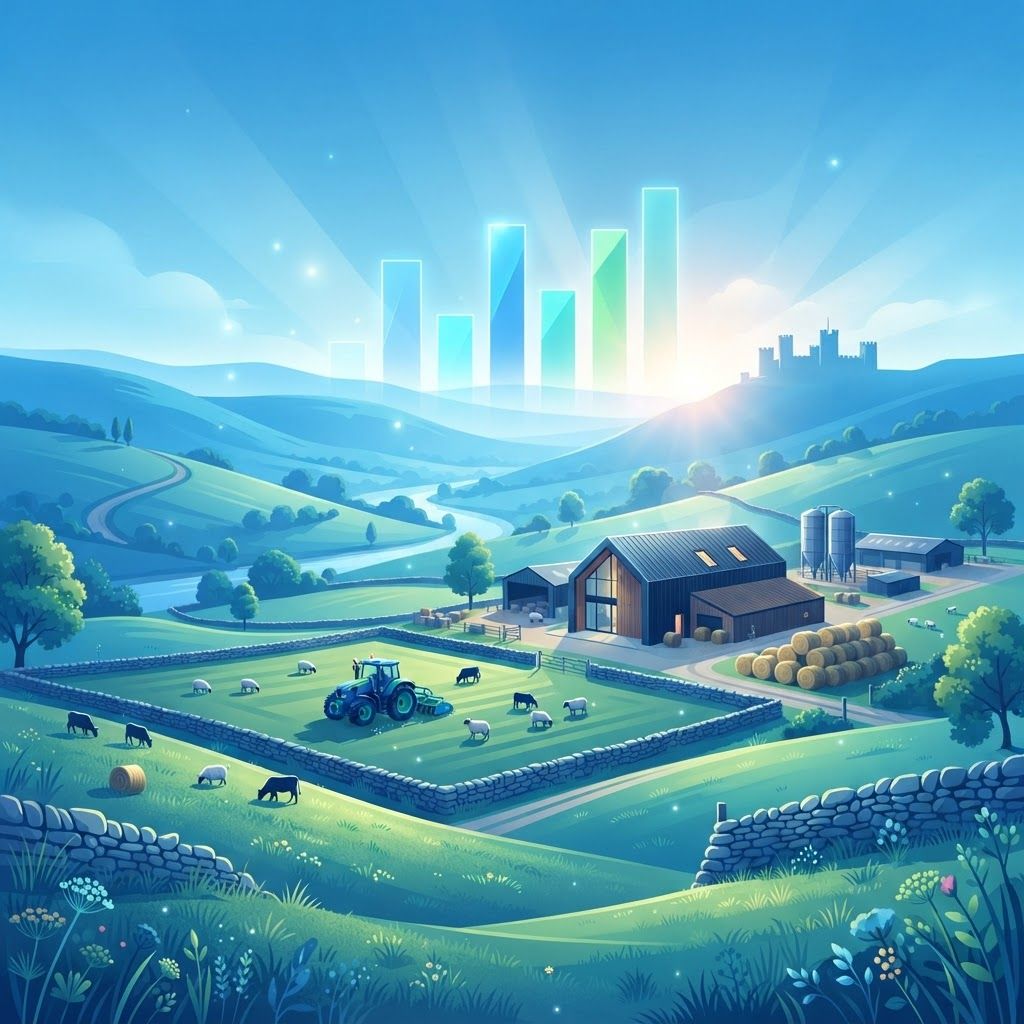
Farming in Caerphilly County Borough
Beyond its industrial towns, Caerphilly County Borough is a landscape of upland pasture, hill farms and wooded valleys. The Mynydd Eglwysilan and Mynydd Maen ridges, the slopes above the Rhymney and Sirhowy valleys and the countryside around Gelligaer, Deri and Manmoel have supported livestock farming for centuries. Today, farming businesses here range from traditional family hill farms to diversified enterprises embracing tourism, renewable energy and direct sales. Agriculture also underpins Caerphilly's famous cheese heritage and the wider Welsh food story.
The ten farming companies and farm business types profiled below were selected for their contribution to the local economy, land stewardship, innovation and reputation within the agricultural community.
1. Upland Sheep Farming Enterprises
Sheep farming dominates the higher ground of the county borough. Hill farms on the commons and enclosed uplands run hardy Welsh Mountain flocks and crossbred ewes, producing lambs marketed through livestock markets and cooperative groups. Their management of common land and upland habitats delivers environmental benefits alongside food production.
2. Beef Cattle Producers
Suckler herds and finishing enterprises on the lower slopes and valley floors produce Welsh beef under quality assurance schemes. Grass-based systems suited to the wet climate deliver high-quality beef with strong provenance credentials valued by retailers and restaurants.
3. Dairy Farming Businesses
A smaller number of dairy farms operate in the county borough, supplying milk to processors and, in some cases, producing farmhouse cheese. Their connection to Caerphilly's cheese-making heritage gives them a special place in the local food identity.
4. Mixed and Diversified Family Farms
Many family farms have diversified into holiday accommodation, farm shops, glamping, wedding venues and equestrian services. Proximity to Cardiff and popular attractions such as Caerphilly Castle and Cwmcarn Forest Drive creates opportunities for agri-tourism that supports farm incomes.
5. Agricultural Contractors
Contractors provide silage making, hedge cutting, fencing, drainage and slurry management services to farms across the valleys. Their investment in modern machinery allows smaller farms to access technology that would be uneconomic to own individually.
6. Equestrian and Livery Businesses
Equestrian enterprises, from livery yards to riding schools, are significant rural businesses in Caerphilly. The bridleways and open hills of the county borough attract riders from across South Wales, sustaining demand for grazing, stabling and related services.
7. Horticultural and Market Garden Enterprises
Small-scale growers and market gardens supply vegetables, salads, plants and cut flowers to farm shops, restaurants and community-supported agriculture schemes. Their growth reflects consumer interest in local, seasonal produce.
8. Farm Shops and Direct Sales Businesses
Farm shops and direct-to-consumer meat box businesses shorten the supply chain between Caerphilly's farmers and local households. Online ordering and home delivery have expanded their reach since the pandemic.
9. Forestry and Woodland Management Companies
Woodland covers substantial areas of the county borough, including Cwmcarn and Sirhowy Valley forests. Forestry contractors and woodland managers harvest timber, plant new woodland and manage habitats, increasingly supported by carbon and biodiversity funding.
10. Renewable Energy and Land-Based Diversification Ventures
Farm-based solar arrays, small wind turbines, anaerobic digestion and battery storage projects provide additional income while contributing to Wales' net-zero ambitions. Landowners partnering with energy developers have become an established feature of the rural economy.
Trends Shaping Agriculture in Caerphilly
The Sustainable Farming Scheme in Wales is redefining support for farmers, rewarding environmental outcomes such as habitat management, tree planting and soil health alongside food production. Climate resilience is a growing concern, with wetter winters and drier summers affecting grazing and forage. Technology adoption, from electronic identification and precision grazing tools to farm management software, is gradually reaching hill farms. Succession and generational renewal remain pressing issues, while diversification and direct sales continue to strengthen farm resilience.
Supporting Caerphilly's Farming Community
Consumers can support local agriculture by buying Welsh lamb, beef and dairy products, visiting farm shops and choosing farm-based accommodation. Businesses can source local produce for catering and corporate gifts. Landowners and farmers benefit from engaging with advisory services, cooperative marketing groups and the growing network of environmental and renewable energy partnerships available in Wales.
Common Land, Grazing Rights and Community Heritage
Common land is a defining feature of farming in Caerphilly County Borough. Gelligaer and Merthyr Common, Mynydd Eglwysilan and other upland commons are grazed by farmers holding traditional rights, and their management requires cooperation between graziers, commoners' associations and public bodies. These shared landscapes support hardy sheep flocks and ponies while providing open access for walkers, riders and cyclists, making them valuable both economically and culturally.
Farming families in the valleys often trace their connection to the land back many generations, and agricultural shows, young farmers' clubs and livestock markets remain important social institutions. This heritage supports a strong sense of stewardship, with many farms combining traditional practices with new approaches to habitat management, carbon sequestration and biodiversity that align with the direction of Welsh agricultural policy.
Conclusion
Farming in Caerphilly County Borough combines centuries of upland tradition with modern diversification and environmental stewardship. The farms, contractors and rural enterprises profiled here maintain the landscape, sustain rural communities and supply high-quality Welsh food. As agricultural policy and climate pressures evolve, the adaptability of Caerphilly's farming businesses will remain central to the county borough's rural future.
Want your brand featured in front of decision-makers? Publish a guest post or get a link insertion in our guides through AAMAX's guest post and link insertion service.
Helpful Links
 SponsoredAAMAX — Full-Service Digital Agency
Write for Us
Share your expertise with our readers. We welcome guest contributions from industry specialists.
Pitch your idea

