

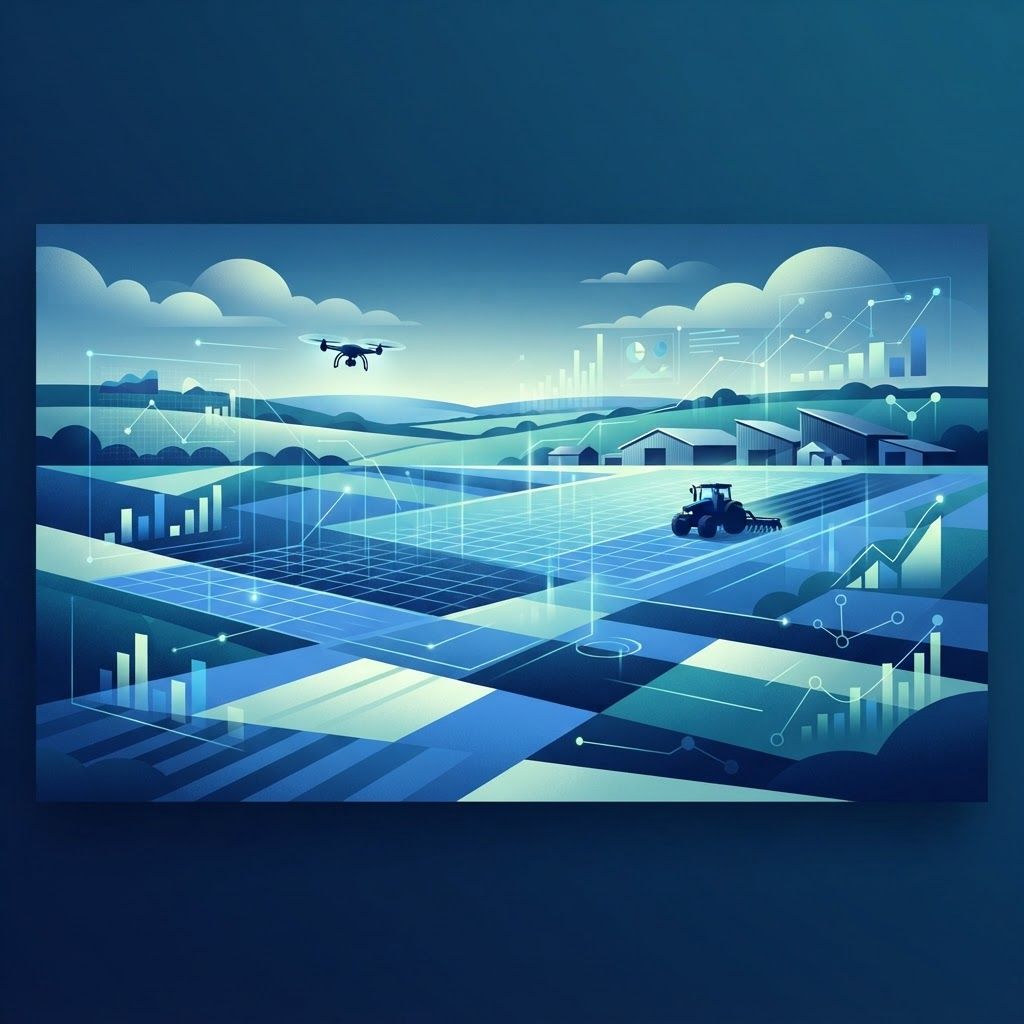
Farming at the Heart of the Broadland Landscape
Agriculture defines Broadland more than any other industry. The district takes its name from the Norfolk Broads, and the relationship between farming and that landscape is intimate and complex. Grade one and two arable land on the higher ground produces cereals, sugar beet, potatoes and vegetables at yields among the best in the country, while the grazing marshes of the Bure, Yare and Ant valleys support livestock on land that has been managed by drainage and grazing for centuries.
This dual character makes farming in Broadland distinctive. Producers here operate in a genuinely commercial arable economy while also acting as custodians of internationally protected wetland habitat. The most successful farming companies in the district have learned to make those two roles reinforce each other rather than conflict.
The Main Types of Farming Enterprise
Combinable crop arable farms form the largest category, growing wheat, barley, oilseed rape and beans across the district's lighter and medium soils. Scale and machinery efficiency drive profitability, and many operate through contracting arrangements or machinery sharing to spread capital cost.
Root crop and vegetable producers represent a high-value second category. Sugar beet remains significant given processing capacity in the region, while potatoes, onions, carrots and brassicas are grown on contract for processors and retailers. These crops demand irrigation, specialist storage and rigorous quality management.
Livestock and grazing marsh enterprises form a third distinctive category. Beef cattle and sheep grazing the Broads marshes deliver both meat production and essential conservation grazing that maintains habitat for wading birds and marshland plants. Dairy has declined nationally but retains a presence in parts of the region.
Poultry and pig production is a major Norfolk strength, with substantial free-range egg, broiler and outdoor pig enterprises. These sectors provide income diversity that is less exposed to arable price volatility.
Other significant categories include soft fruit and horticulture under protection, seed and specialist crop production, contract farming and agricultural contracting businesses, mixed farms combining arable and livestock, organic and regenerative producers, and diversified farming companies where tourism, energy or property income now sits alongside agriculture.
Environmental Land Management and Conservation
The shift in agricultural policy from area-based subsidy to payment for environmental outcomes has changed farm business planning fundamentally. Broadland farms are particularly engaged with these schemes because so much of the district holds environmental designations.
Practical measures adopted widely include buffer strips alongside watercourses to reduce nutrient run-off into the Broads, cover cropping to protect soil over winter, hedgerow restoration, wildflower margins supporting pollinators, and carefully managed water levels on grazing marshes to benefit breeding waders.
Water management is an area where Broadland farming is genuinely distinctive. Internal drainage boards maintain the network of dykes and pumps that keep low-lying land productive, and farmers work within that system while increasingly managing water for environmental benefit as well as drainage. Higher water levels in winter and controlled summer levels can support both grazing and biodiversity when managed skilfully.
Nutrient management has come under particular scrutiny given the sensitivity of Broads water quality. Precision application, soil testing, cover crops and buffer zones all reduce losses, and farms demonstrating good practice protect both the environment and their own input costs.
Technology and Precision Agriculture
Broadland arable businesses are among the more technologically advanced in the country. GPS guidance and automatic steering reduce overlap and operator fatigue. Variable rate application adjusts seed and fertiliser according to soil mapping and yield history, improving efficiency and reducing waste.
Drone and satellite imagery allow crop monitoring at field scale, identifying stress, disease and nutrient deficiency early enough to act. Soil moisture sensors inform irrigation scheduling on vegetable crops, conserving water and energy.
Farm management software consolidates field records, compliance documentation, input usage and financial performance, which has become essential given assurance scheme requirements and the data demands of environmental schemes.
Autonomous and robotic equipment is at an earlier stage but developing quickly, with mechanical weeding robots offering a route to reduced herbicide dependence, particularly relevant as the number of approved active ingredients continues to decline.
Diversification and Business Resilience
Few Broadland farming companies now rely on crop and livestock sales alone. Diversification has become a core resilience strategy. Holiday accommodation in converted barns capitalises on Broads tourism. Farm shops and box schemes capture retail margin directly. Renewable energy from solar arrays, anaerobic digestion and wind provides stable long-term income.
Storage and contracting services generate revenue from assets that would otherwise sit idle for much of the year. Equestrian facilities, wedding venues, glamping sites and commercial workshop lettings all appear across the district.
The strongest diversified businesses treat these enterprises with the same commercial rigour as farming, with separate accounting, proper marketing and clear management. Diversification undertaken casually often absorbs capital and attention without generating proportionate return.
Challenges Facing Broadland Farming
The sector faces real pressures. Input cost volatility in fertiliser, fuel and crop protection squeezes margins unpredictably. Labour availability, particularly seasonal labour for vegetable and fruit harvesting, remains a persistent constraint. Weather volatility has increased, with both drought stress and waterlogged harvests affecting recent seasons.
Regulatory complexity has grown, with environmental compliance, assurance schemes and record-keeping consuming substantial management time. Succession is a quieter but serious issue, with an ageing farming population and high barriers to entry for new farmers.
Against these pressures, Broadland retains substantial advantages: excellent soils, established processing and market infrastructure, a skilled workforce and strong agricultural supply networks.
The Future of Farming in Broadland
The direction is towards farming systems that produce food profitably while delivering measurable environmental outcomes. Regenerative practices focused on soil health, reduced cultivation, diverse rotations and integrated livestock are gaining ground because they improve resilience as well as satisfying policy.
Carbon measurement and natural capital assessment are becoming part of routine farm management, potentially opening new income streams. For a district where farming and an internationally significant wetland landscape are so closely intertwined, Broadland is well placed to demonstrate that productive agriculture and environmental stewardship can genuinely operate together.
Want your brand featured in front of decision-makers? Publish a guest post or get a link insertion in our guides through AAMAX's guest post and link insertion service.
Helpful Links
 SponsoredAAMAX — Full-Service Digital Agency
Write for Us
Share your expertise with our readers. We welcome guest contributions from industry specialists.
Pitch your idea

