

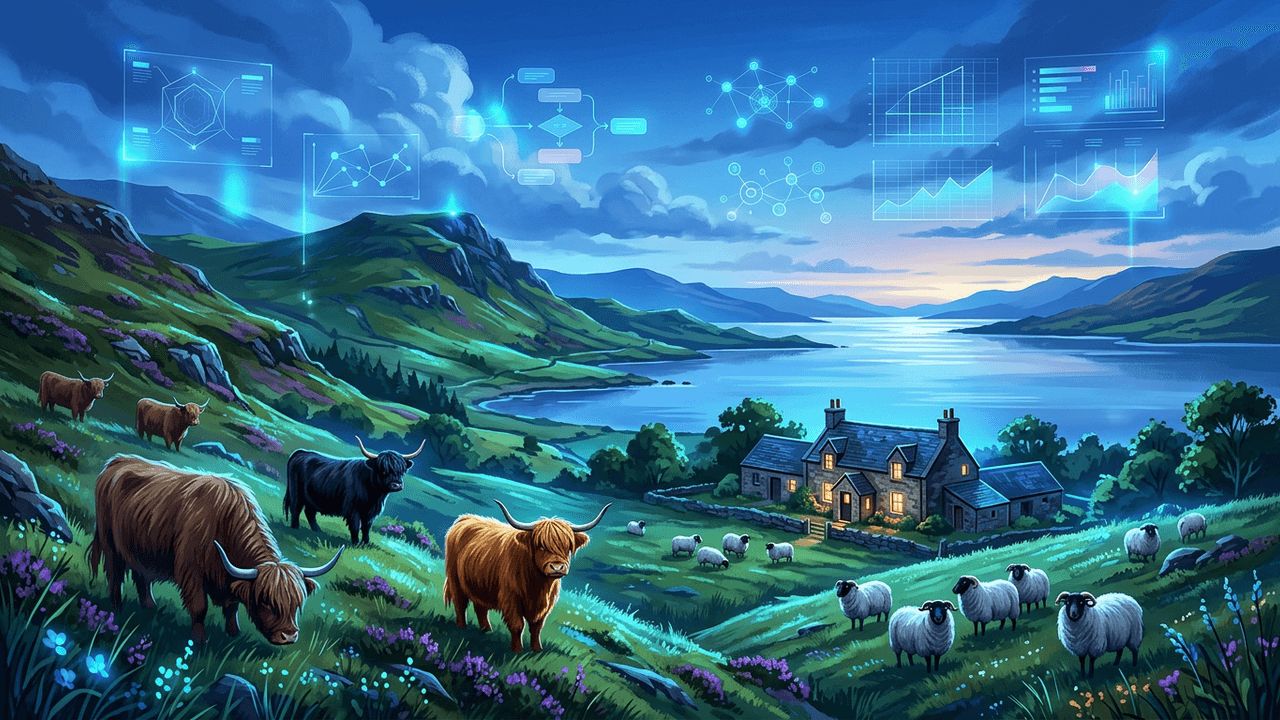
Agriculture in Argyll and Bute
Agriculture in Argyll and Bute is shaped by rugged hills, mild maritime climate and high rainfall. Much of the land is suited to livestock grazing, particularly hill sheep and suckler cattle, while lower ground in Kintyre, Bute and Islay supports dairy and mixed farming. Farming estates also manage woodland, renewable energy and tourism enterprises, reflecting the diversified nature of rural business.
This guide highlights ten farming companies, estates and agricultural organisations that play important roles in Argyll and Bute's rural economy.
Challenges and Opportunities
Farmers face high input costs, long distances to markets and the need to adapt to changing agricultural policy. At the same time, opportunities exist in premium food production, agritourism, renewable energy and nature restoration. Local provenance is a strong selling point for Argyll beef, lamb and dairy products.
The Top 10 Farming Companies and Estates
1. Argyll Estates
Argyll Estates, centred on Inveraray Castle, manages farmland, forestry and tourism. Its long history and diverse land use make it one of the most significant estates in the region.
2. Ardkinglas Estate
Ardkinglas Estate on Loch Fyne combines farming, forestry, renewable energy and tourism. It is known for innovative land management and its famous woodland garden.
3. Mount Stuart Trust
The Mount Stuart Trust manages extensive land on the Isle of Bute, including farms, woodland and the celebrated Mount Stuart house and gardens.
4. Isle of Mull Cheese
Based at Sgriob-ruadh Farm near Tobermory, this family business combines dairy farming with award-winning cheesemaking, demonstrating the value of adding value on farm.
5. Isle of Gigha Heritage Trust
The community-owned Isle of Gigha has supported farming tenancies and diversified rural enterprise, offering a model for community land ownership.
6. Islay Estates
Islay Estates manages farmland, forestry and sporting interests on Islay, contributing to the island's agricultural and tourism economy.
7. Fyne Ales at Achadunan
Fyne Ales brews craft beer on a working farm at the head of Loch Fyne, showcasing farm diversification and local enterprise.
8. SAC Consulting
Part of Scotland's Rural College, SAC Consulting provides agricultural advice, technical support and business planning to farmers across Argyll and the islands.
9. Kintyre Dairy Farmers
Kintyre has a long dairy tradition, with family farms producing high-quality milk on fertile coastal pasture. Their collective contribution remains important to the peninsula's economy.
10. Mid Argyll Agricultural Society
The Mid Argyll Agricultural Society organises the Mid Argyll Show, celebrating local livestock, produce and rural skills, and connecting farming communities.
Farming Trends
Regenerative agriculture, carbon management and biodiversity enhancement are increasingly central to farm planning. Diversification into tourism, renewables and direct sales is growing. Technology such as electronic livestock identification and precision grazing is improving efficiency.
Supporting Local Farming
Consumers can support Argyll farming by buying local meat, dairy and produce, visiting farm shops and attending agricultural shows. Businesses can source local ingredients and promote provenance. Policymakers can support infrastructure and services that keep rural communities thriving.
Livestock Farming on Hill and Island
Hill sheep farming remains central to Argyll and Bute's upland areas, with hardy breeds such as Scottish Blackface grazing steep ground that would be unsuitable for crops. Suckler cattle, including Highland and crossbred herds, graze lower pastures and contribute to the region's reputation for high-quality beef. Island farms on Islay, Mull, Coll and Tiree combine traditional crofting with modern livestock management. These systems shape the landscape, maintain open habitats and support rural employment.
Diversification and Rural Enterprise
Many Argyll farms now earn income from more than one source. Holiday cottages, glamping, farm shops, renewable energy, forestry and craft production all help farms remain viable. Some farms partner with distilleries to supply barley or use spent grains as cattle feed, creating local circular economies. Diversification helps families stay on the land and keeps communities populated.
Nature and Climate
Farmers are increasingly involved in peatland restoration, woodland creation, hedge planting and wetland management. These activities store carbon, improve water quality and boost biodiversity while supporting productive agriculture. Support schemes encourage farmers to integrate environmental measures into everyday management.
Young Farmers and the Future
Attracting young people into farming is vital. Starter farm opportunities, training programmes and local young farmers clubs help build skills and confidence for the next generation of Argyll farmers.
Frequently Asked Questions
What type of farming is most common in Argyll and Bute? Livestock farming dominates, particularly hill sheep and suckler beef cattle, with dairy farming on better ground in places such as Kintyre and Bute.
Can visitors buy produce directly from farms? Many farms sell beef, lamb, eggs and cheese through farm shops, local markets, honesty boxes and online orders.
Where can farmers get independent advice? Agricultural consultancies, rural colleges and farming unions provide technical, financial and regulatory guidance.
Conclusion
Farming in Argyll and Bute blends tradition with innovation. The estates, businesses and organisations listed here sustain landscapes, communities and food production, ensuring agriculture remains at the heart of the region's identity.
Want your brand featured in front of decision-makers? Publish a guest post or get a link insertion in our guides through AAMAX's guest post and link insertion service.
Helpful Links
 SponsoredAAMAX — Full-Service Digital Agency
Write for Us
Share your expertise with our readers. We welcome guest contributions from industry specialists.
Pitch your idea

