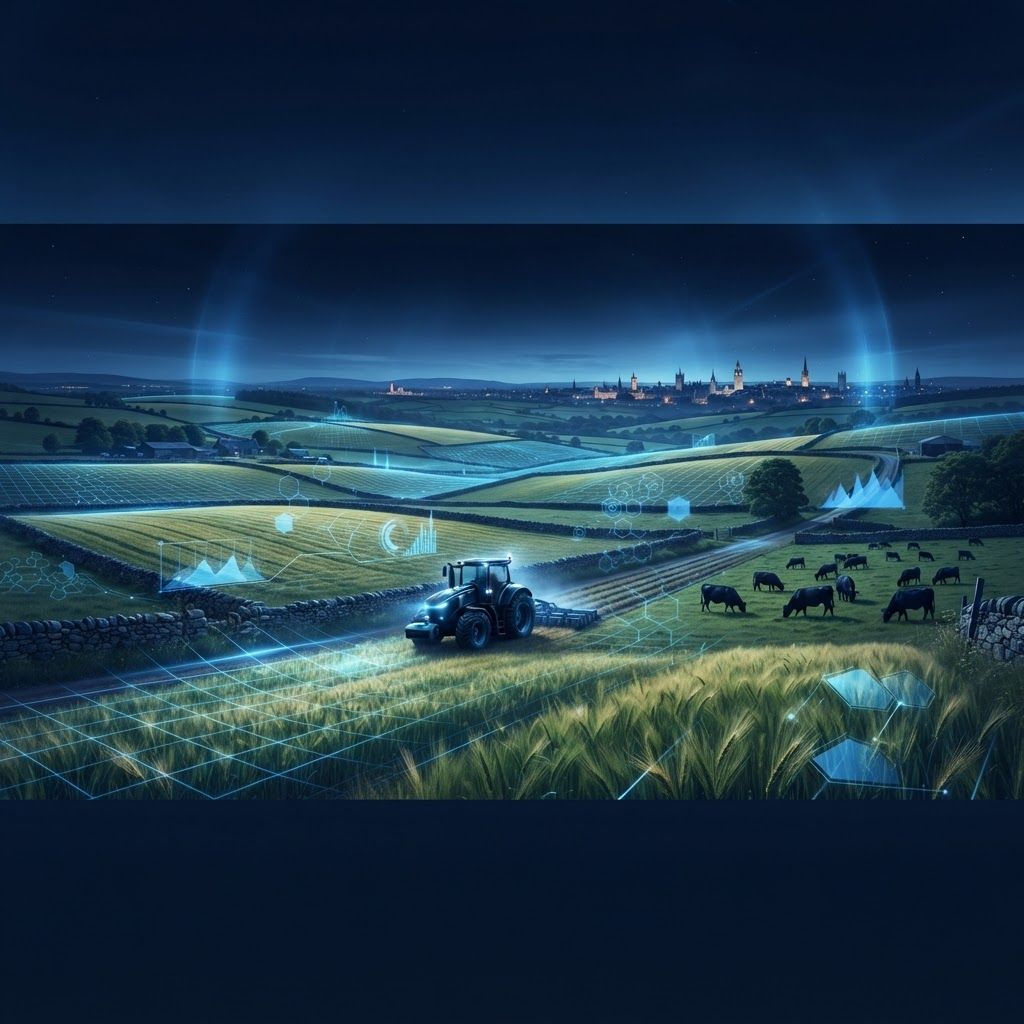
Farming and Aberdeen City: A Relationship Built Over Centuries
Aberdeen City may be best known for granite architecture and the North Sea energy industry, but agriculture has shaped its identity for far longer. The city sits at the heart of a farming hinterland that stretches across Aberdeenshire, the Garioch, Formartine and the Mearns, and for generations the city's markets, mills, auctions and processing plants have provided the commercial backbone for surrounding farms. Even today, the agricultural supply chain that flows through Aberdeen City supports thousands of jobs in haulage, processing, veterinary services, feed supply, machinery dealership and agri-finance.
The farming companies operating in and around the city are unusually diverse. Some are long-established family partnerships that have farmed the same ground for five or six generations. Others are modern agri-businesses combining livestock, arable production, renewable energy and contract farming under a single management structure. What unites them is a shared adaptation to the north-east's distinctive conditions: a cool maritime climate, a relatively short growing season, fertile but variable soils, and proximity to some of the best livestock genetics in Europe.
What Makes the North-East Farming Sector Distinctive
Aberdeenshire is the largest agricultural county in Scotland by output, and the city functions as its commercial capital. The region is globally recognised for native cattle breeds, particularly the Aberdeen-Angus, which was developed in this part of Scotland and is now farmed on every continent. That heritage gives local beef producers an unusual level of brand recognition, and many farming companies near the city have built premium supply relationships with butchers, restaurants and export markets on the strength of it.
Alongside beef, the area is a major producer of spring barley for malting, seed potatoes, oilseed rape, oats and grass silage. Soft fruit and vegetable production occurs on lighter coastal soils, while upland ground to the west supports sheep and suckler herds. Increasingly, farming companies also operate diversified enterprises: farm shops, holiday accommodation, anaerobic digestion, wind turbines, equestrian facilities and contract machinery services. This diversification has been an important buffer against volatile commodity prices and shifting agricultural support schemes.
Top Farming Companies Serving Aberdeen City
1. Aberdeen-Angus Heritage Farms Group. Representing the region's flagship beef identity, farming businesses working within the Aberdeen-Angus tradition are among the most respected producers in the north-east. Their strength lies in pedigree breeding, careful bloodline management and finishing cattle on grass and home-grown forage. Buyers value the consistency, marbling and traceability that these herds deliver, and many operate closed herds to protect health status.
2. Thainstone Agricultural Enterprises. Built around the enormous livestock and machinery trading activity that defines the Inverurie corridor just outside the city, businesses in this cluster combine primary production with marketing expertise. They are frequently the first point of contact for farmers looking to buy breeding stock, sell finished cattle or source quality store lambs, and their commercial intelligence about price trends is unmatched locally.
3. Formartine Arable Partnerships. Operating on the productive loams north of the city, these arable-focused businesses specialise in malting barley, oilseed rape and seed potatoes. They tend to invest heavily in precision agriculture, using variable-rate fertiliser application, yield mapping and soil scanning to protect margins. Their relationships with distillers and seed merchants make them dependable long-term suppliers.
4. Deeside Mixed Farming Companies. Along the Dee valley, mixed enterprises balance suckler cows, sheep, cereals and forage. This model spreads weather and market risk, and it suits the varied topography of the valley. Many of these businesses have added farm shops, butchery and direct-to-consumer boxes, giving Aberdeen households genuinely local meat and vegetables.
5. Donside Livestock Producers. The Don valley supports high-performing suckler herds and finishing units. Producers here are known for disciplined health planning, careful nutrition and consistent carcass quality. Several have adopted rotational grazing and multi-species swards to improve soil carbon and reduce bought-in feed.
6. Mearns Grain and Potato Growers. To the south of the city, the Mearns is one of Scotland's most reliable cereal-growing districts. Businesses here often combine large-scale grain production with potato growing and cold storage, supplying processors and packers year-round. Their scale allows investment in modern grain drying and storage infrastructure that smaller farms can share through cooperative arrangements.
7. Buchan Contract Farming Operators. Contract farming and share farming have grown rapidly across the north-east, and Buchan-based operators are among the most professional. They farm land on behalf of owners who lack the labour or machinery to do it themselves, providing full agronomy, cultivation, drilling, spraying and harvesting services with transparent budgeting.
8. Aberdeenshire Organic Growers. A smaller but influential group, organic and regenerative producers near the city supply vegetable box schemes, independent grocers and restaurants. Their emphasis on rotation, composting, cover crops and reduced inputs has attracted attention from conventional neighbours interested in lowering fertiliser dependency.
9. Coastal Soft Fruit and Vegetable Enterprises. On lighter, free-draining ground close to the coast, specialist growers produce strawberries, raspberries, brassicas, carrots and turnips. Polytunnel production has extended the season considerably, allowing local supply into Aberdeen's retail and hospitality sector for much of the year.
10. Renewable-Integrated Farming Businesses. An increasing number of farms in the region run wind, solar, biomass or anaerobic digestion alongside food production. These businesses treat energy as a core enterprise rather than a sideline, reinvesting income into soil improvement, better housing and lower-emission machinery.
Key Trends Shaping Farming Around the City
Three forces dominate current thinking. The first is the transition in agricultural support, which is steadily rewarding environmental outcomes such as habitat creation, peatland protection and carbon measurement alongside food production. Farming companies that can document their environmental performance are better positioned for both public funding and private supply-chain premiums.
The second is input cost volatility. Fertiliser, fuel and feed prices have swung sharply in recent years, pushing many north-east businesses toward home-grown protein, clover-rich swards, slurry nutrient analysis and reduced cultivation systems. The third is labour and succession. Skilled staff are scarce, and competition from the energy sector for mechanically minded workers is real, so automation, contractor use and clear succession planning have become strategic priorities.
How to Choose a Farming Partner in Aberdeen City
Whether you are a buyer sourcing produce, a landowner seeking a contract farmer, or a business looking for a supply relationship, a few criteria matter consistently. Look for verifiable assurance scheme membership and health status records. Ask about traceability from field or herd to delivery. Assess machinery capability and storage, since these determine whether a business can meet deadlines in a difficult harvest. Consider soil and environmental management, which increasingly signals long-term reliability rather than just goodwill. Finally, value communication: the best farming companies in the north-east are straightforward about what they can and cannot deliver.
Conclusion
Aberdeen City's farming sector combines deep heritage with genuine technical sophistication. From pedigree Aberdeen-Angus herds and malting barley growers to contract farming specialists and renewable-integrated enterprises, the businesses serving the city offer a breadth of capability that few UK regions can match. For anyone buying, partnering or investing locally, the north-east remains one of the most dependable agricultural landscapes in Britain.
Want your brand featured in front of decision-makers? Publish a guest post or get a link insertion in our guides through AAMAX's guest post and link insertion service.
Helpful Links
 SponsoredAAMAX — Full-Service Digital Agency
Write for Us
Share your expertise with our readers. We welcome guest contributions from industry specialists.
Pitch your idea