

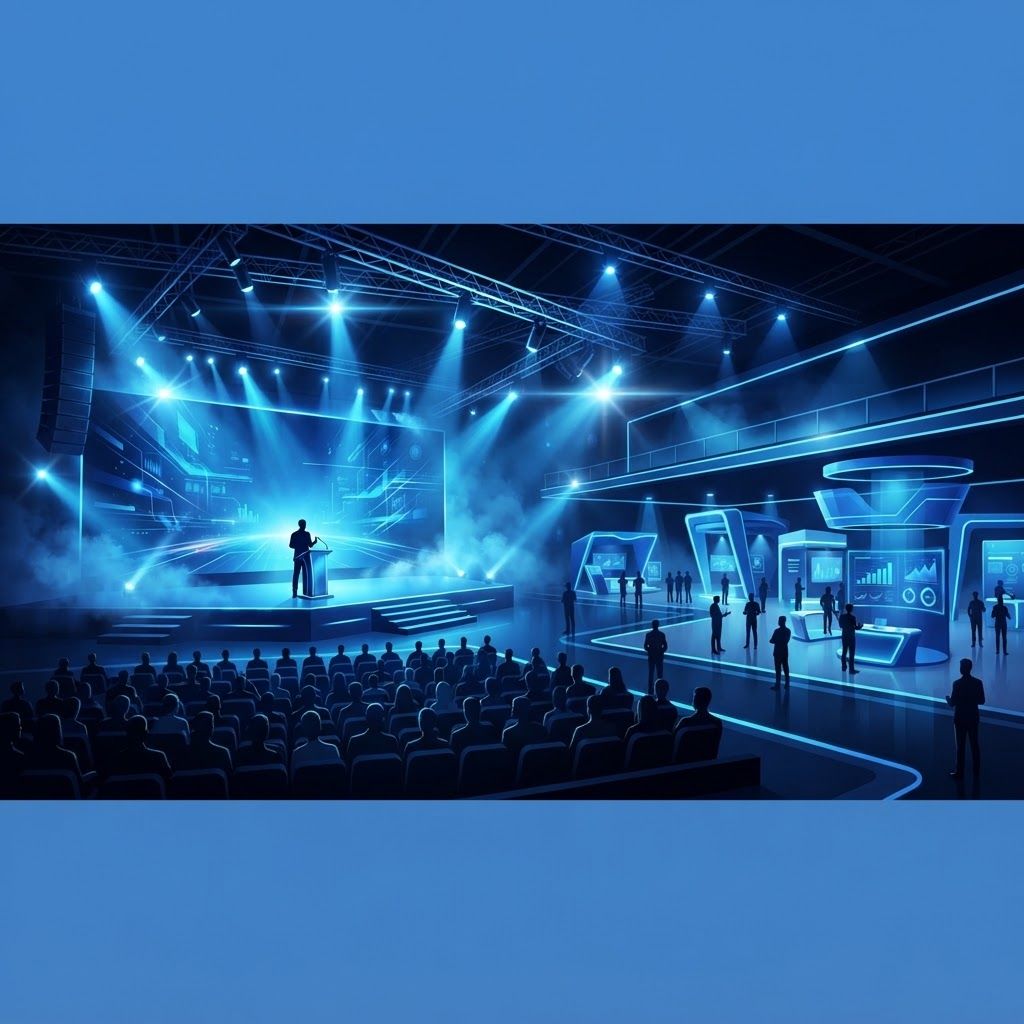
An Events Friendly Borough
Telford has a genuine claim to be a Midlands events destination. Its central location and motorway access put a large share of the country population within a straightforward drive, and the town hosts a substantial exhibition and conference venue alongside hotels, sports facilities and the striking historic settings of the Ironbridge Gorge. Add country estates, village halls, parks and community venues, and the borough can accommodate almost any type of event.
Supporting that infrastructure is a network of event management companies, production specialists, caterers, entertainment agencies and equipment hire businesses that together deliver conferences, exhibitions, weddings, festivals, product launches and community events throughout the year.
Types of Event Company
Full service event management companies handle the entire project, from concept and budgeting through venue sourcing, supplier coordination, on site delivery and post event evaluation. Production specialists focus on staging, lighting, sound and audio visual technology. Exhibition contractors design and build stands. Wedding planners coordinate personal celebrations with an emphasis on design and guest experience. Catering companies range from corporate hospitality to street food collectives. Hire businesses supply marquees, furniture, generators, toilets and barriers.
Top 10 Event Management Companies Serving Telford and Wrekin
1. Wrekin Conference and Event Management
Full service corporate event delivery covering conferences, seminars and awards evenings, with strong budget control and detailed run of show planning that keeps complex days on schedule.
2. Telford Exhibition Services
Stand design, build and logistics for exhibitors, including graphics production, storage between shows and on site build teams.
3. Severn Event Production
Staging, lighting, sound, screens and live streaming for conferences and performances, with technical crew who rehearse rather than simply arrive and plug in.
4. Ironbridge Heritage Events
Specialists in events within historic and sensitive settings, balancing atmosphere and guest experience against conservation requirements and access constraints.
5. Shropshire Wedding Planning
End to end wedding coordination including venue sourcing, supplier management, styling and day of delivery, with particular strength in countryside and marquee weddings.
6. Hortonwood Corporate Hospitality
Client entertainment, incentive days, team building and away days, combining venue, activity and catering into a single managed programme.
7. Halesfield Marquee and Structure Hire
Marquees, stretch tents, flooring, heating, lighting and furniture, with site surveys and weather contingency planning that experienced organisers value highly.
8. Newport Festival and Outdoor Events
Community festivals, food events and outdoor markets, handling licensing, stewarding, traffic management and event safety documentation.
9. Priorslee Catering and Event Dining
Banqueting, buffet and street food catering with dietary provision, capable of scaling from intimate dinners to large delegate numbers.
10. Wellington Event Safety and Licensing Consultancy
Event safety management plans, risk assessment, crowd modelling and liaison with licensing authorities and emergency services for larger gatherings.
Briefing an Event Company Properly
The quality of an event usually reflects the quality of the brief. Be specific about objectives. An event intended to generate sales leads should look very different from one designed to thank existing customers or motivate staff, yet organisers often describe only the format rather than the purpose.
State the budget honestly. Agencies cannot design within a figure they do not know, and withholding it typically produces proposals that must be reworked. Include a contingency, conventionally around ten percent, because late changes are normal rather than exceptional.
Define what success looks like and how it will be measured, whether through attendance, leads generated, feedback scores, media coverage or funds raised. Agree those measures in advance so that the post event review is meaningful rather than impressionistic.
Safety, Licensing and Risk
Event safety is a legal responsibility, not a formality. Depending on scale and content, requirements may include a premises or temporary event licence, a written event safety management plan, risk assessments, crowd capacity calculations, medical provision, stewarding, traffic management and public liability insurance. Larger events typically involve a safety advisory group bringing together the local authority, police, fire and ambulance services.
Weather contingency deserves particular attention for outdoor events in the British climate. Ground conditions, wind loading on temporary structures and heat or cold provision for attendees all need a documented plan and a decision point with clear ownership.
Where the Events Industry Is Heading
Hybrid and streamed formats have settled into a permanent role, extending reach for conferences and allowing content to live on afterwards. Sustainability has become a standard requirement rather than an optional extra, with organisers reducing single use materials, choosing local suppliers, measuring travel emissions and designing reusable stand systems.
Attendee expectations have also risen. People who travel to an in person event expect something they could not get on a screen, which places emphasis on networking design, memorable content and genuine hospitality. For organisers in Telford and Wrekin, the combination of accessible location, capable venues and experienced local suppliers makes delivering that experience entirely achievable, provided the brief is clear and the planning starts early.
Want your brand featured in front of decision-makers? Publish a guest post or get a link insertion in our guides through AAMAX's guest post and link insertion service.
Helpful Links
 SponsoredAAMAX — Full-Service Digital Agency
Write for Us
Share your expertise with our readers. We welcome guest contributions from industry specialists.
Pitch your idea

