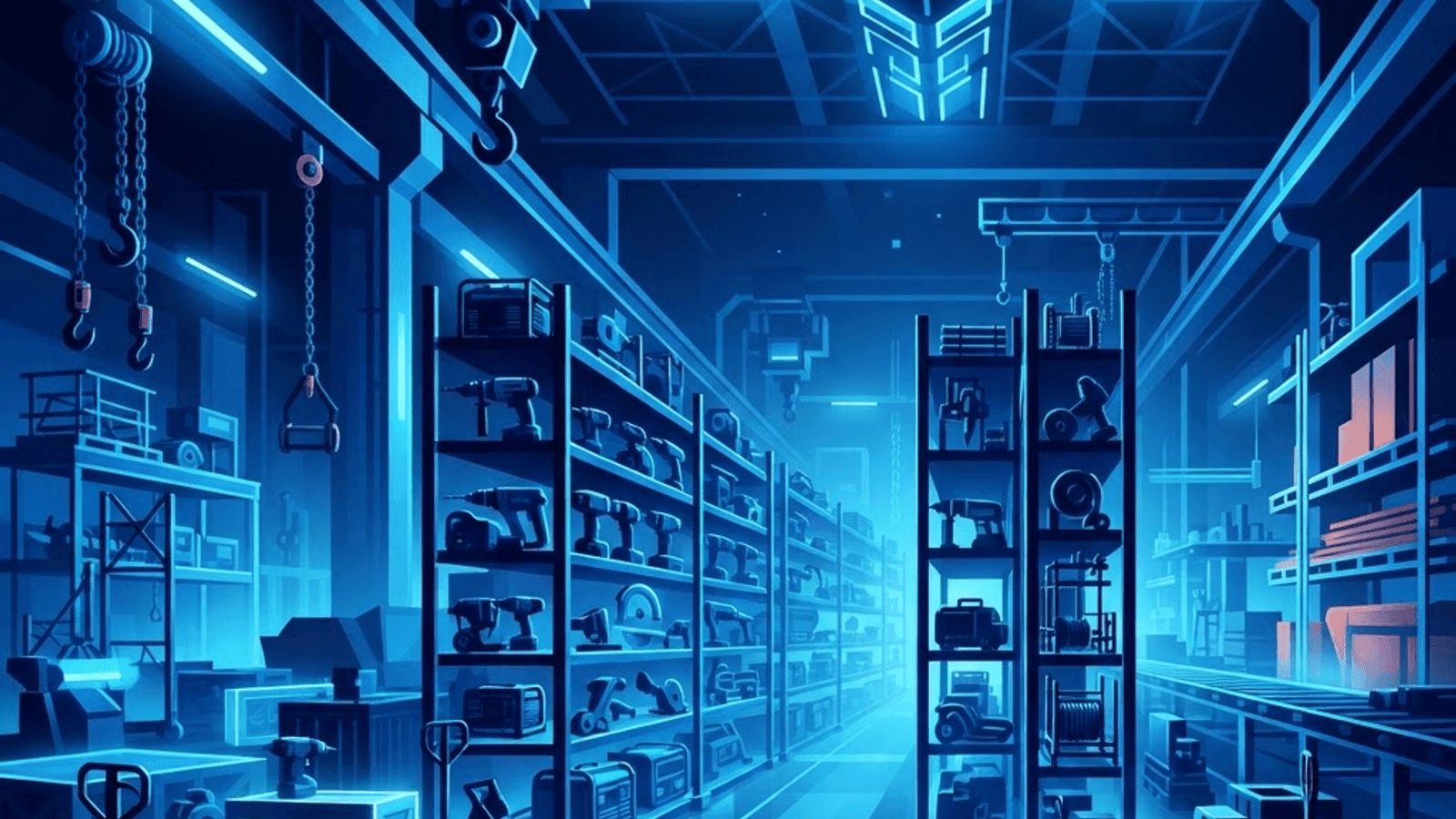
Equipping the Borough's Working Businesses
Equipment distribution sits behind almost every productive activity in West Lancashire. Construction sites need power tools, access equipment and safety gear. Factories need lifting equipment, compressors and material handling. Farms need workshop tools and grounds machinery. Catering businesses need commercial kitchen equipment. Offices, warehouses and care settings each have their own requirements.
What links these customers is a need for equipment that works reliably, arrives quickly and can be serviced when it fails. Unlike consumable purchasing, equipment buying involves longer-term commitments, statutory inspection obligations and ongoing maintenance relationships. That makes supplier selection considerably more consequential than the purchase price suggests.
Compliance, Servicing and Lifetime Cost
Much workplace equipment carries legal obligations. Lifting equipment requires periodic thorough examination. Pressure systems need written schemes of examination. Electrical equipment requires inspection and testing appropriate to its use. Personal protective equipment must meet relevant standards and be correctly selected for the hazard. A good wholesaler understands these requirements and supports customers in meeting them rather than simply selling boxes.
Lifetime cost usually outweighs purchase price. A cheaper tool that fails mid-project, lacks spare parts availability or cannot be serviced locally proves far more expensive than a quality alternative. Buyers should weigh warranty terms, spare parts support, service network access and expected working life alongside the initial quote.
The Top 10 Equipment Wholesalers in West Lancashire
1. West Lancs Tool and Equipment
A broad-range trade distributor covering power tools, hand tools, fixings and site equipment, with trade counter collection and next-day delivery across the borough.
2. Skelmersdale Industrial Equipment
Supplying material handling, lifting gear, compressors and workshop machinery to manufacturers, including statutory inspection support and servicing.
3. Ormskirk Safety Equipment
Focused on personal protective equipment, fall arrest, respiratory protection and site safety products, with fit testing and selection advice.
4. Burscough Catering Equipment
Distributing commercial kitchen equipment including refrigeration, cooking ranges and warewashing, with installation and maintenance contracts available.
5. Douglas Valley Groundcare Machinery
Supplying mowers, tractors, and grounds maintenance equipment to farms, estates and landscaping contractors, backed by an on-site service team.
6. Pimbo Access and Lifting
Providing access platforms, ladders, scaffold towers and lifting accessories, including inspection, certification and refresher training.
7. Lathom Welding Equipment
Distributing welding machines, consumables, fume extraction and protective equipment for fabrication workshops and maintenance departments.
8. Rufford Cleaning Equipment
Supplying scrubber dryers, vacuums, pressure washers and janitorial machinery to facilities management and industrial cleaning operations.
9. Up Holland Measuring and Test Equipment
Focused on instrumentation, electrical test equipment and metrology tools, with calibration services to maintain traceable accuracy.
10. Halsall Equipment Hire and Sales
Combining hire and outright sale, allowing customers to trial equipment before purchase or cover short-term peaks without capital expenditure.
Trends in Equipment Distribution
Battery technology has transformed the tool market. Cordless equipment now matches corded performance in most applications, and platform loyalty has become a significant purchasing factor as customers standardise on a single battery system across their tool fleet.
Connected equipment is emerging, with usage monitoring, location tracking and service scheduling data reducing losses and enabling predictive maintenance. Hire has grown relative to purchase as businesses preserve capital and avoid the compliance burden of ownership. Sustainability considerations are influencing choices too, with electric alternatives replacing petrol equipment in noise-sensitive and indoor environments, and refurbishment extending equipment life.
How to Choose an Equipment Wholesaler
Consider the whole lifecycle rather than the transaction. Ask where equipment will be serviced, how quickly, and whether loan units are available during repair. For anything requiring statutory inspection, confirm the supplier can provide or arrange it.
Check spare parts availability and the typical support period for a model before buying. Assess whether the supplier offers training, since incorrect operation causes both damage and injury. Compare hire against purchase honestly for equipment used infrequently. Evaluate stock holding on consumables associated with your equipment, as a machine without blades, filters or abrasives is idle. Finally, test responsiveness with a small order or service request before making a major commitment.
Managing an Equipment Fleet Effectively
Once a business owns more than a handful of items, equipment becomes a fleet requiring active management. Without a register recording what is owned, where it is, when it was last inspected and what condition it is in, businesses routinely re-buy items they already have while allowing inspection dates to lapse.
A simple asset register solves most of this. Recording purchase date, serial number, location, inspection schedule and service history allows planned maintenance rather than reactive repair, and makes compliance straightforward when an inspector or insurer asks. Many suppliers in West Lancashire now offer this as a managed service, tracking statutory examination dates and contacting customers before certificates expire.
Standardisation delivers further gains. Concentrating on fewer equipment brands and battery platforms reduces the range of spares and chargers needed, simplifies operator training and usually improves purchasing terms. Retiring equipment at the right point also matters, since machinery kept beyond its economic life generates repair costs and downtime that quietly exceed the cost of replacement.
Final Thoughts
Equipment wholesalers in West Lancashire serve an unusually diverse customer base spanning construction, manufacturing, agriculture, catering and facilities management. The strongest suppliers combine range and availability with genuine servicing capability, compliance knowledge and training support. Judging them on lifetime value and support quality rather than headline price consistently produces safer, more productive and more cost-effective outcomes.
Want your brand featured in front of decision-makers? Publish a guest post or get a link insertion in our guides through AAMAX's guest post and link insertion service.
Helpful Links
 SponsoredAAMAX — Full-Service Digital Agency
Write for Us
Share your expertise with our readers. We welcome guest contributions from industry specialists.
Pitch your idea