

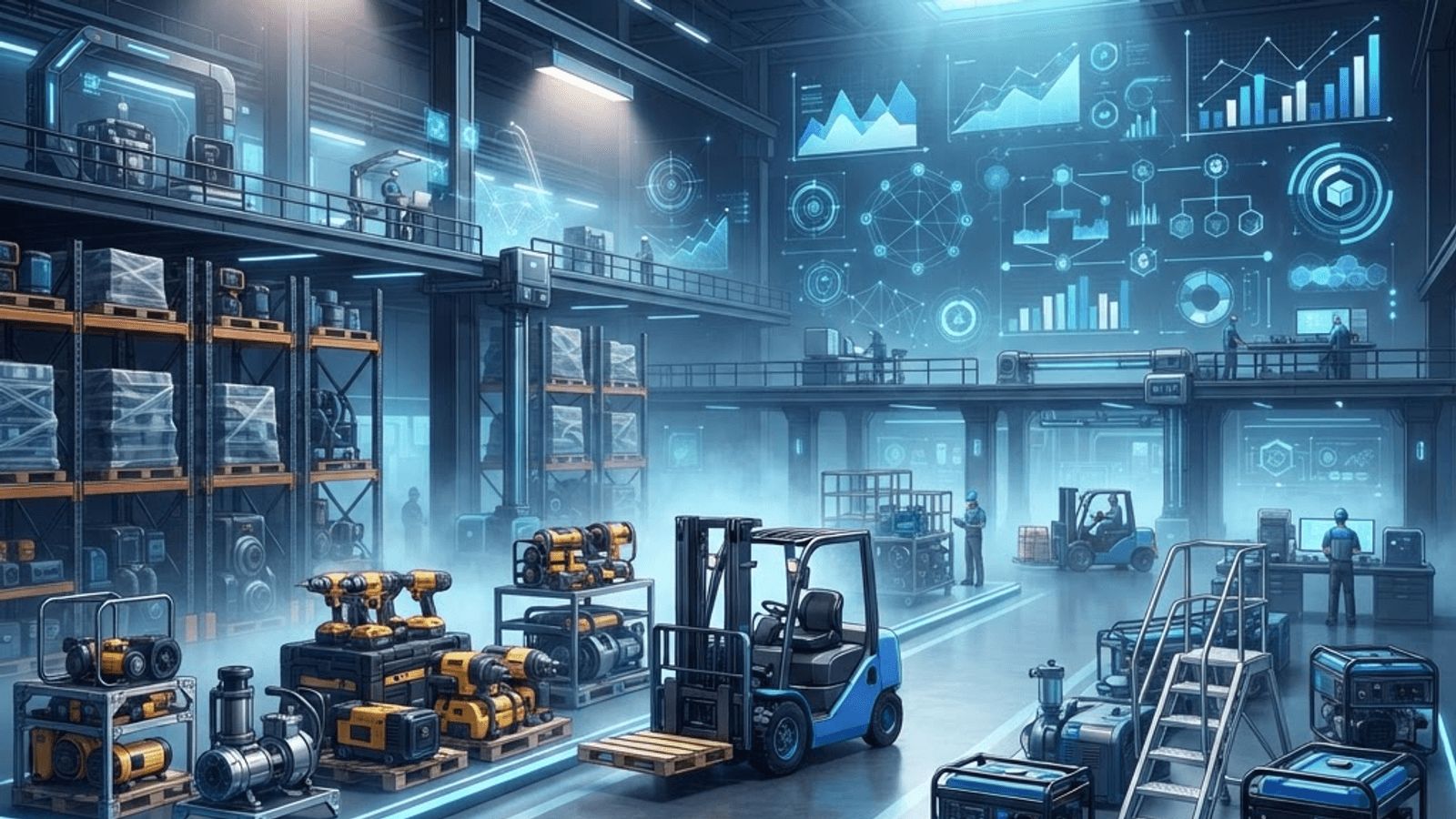
Thurrock as an Equipment Supply Hub
Equipment wholesale rewards proximity to industry, and Thurrock is surrounded by it. Port operations at Tilbury, vast warehousing along the A13, construction across the borough, manufacturing on the riverside estates and a substantial hospitality sector all consume equipment continuously. That concentration supports wholesalers who can hold real stock, provide spares and offer service backup rather than simply forwarding orders to manufacturers.
The category is deliberately broad. Materials handling, power generation, compressed air, cleaning machinery, catering equipment, workshop tooling, access platforms and safety equipment all sit under the equipment umbrella, and most local suppliers specialise in one or two of these areas rather than attempting everything.
What Really Matters When Buying Equipment
Purchase price is the least important number. Total cost of ownership, which includes energy consumption, consumables, servicing, spare parts availability and expected working life, determines whether equipment is genuinely economical. A machine that is fifteen per cent cheaper but consumes more power and needs proprietary parts will usually cost more within three years.
Aftersales capability is therefore the key evaluation criterion. Ask about response times for breakdowns, whether engineers are employed directly, how spares are stocked, and whether loan or hire units are available during repairs. Compliance also matters: check UKCA or CE marking, LOLER and PUWER obligations for lifting and work equipment, and whether the supplier provides statutory inspection support.
The Top 10 Equipment Wholesalers in Thurrock
1. Thames Materials Handling
Forklifts, pallet trucks, stackers and warehouse racking accessories with service contracts and thorough examination support. Their engineer coverage across the borough's logistics estates is a decisive advantage when downtime is costly.
2. Grays Power Tool Distribution
Corded and cordless power tools, accessories and consumables for trade users. Battery platform advice and same-day availability on high-wear items such as blades and abrasives keep contractors productive.
3. Tilbury Generator and Power Solutions
Generators, distribution boards, cabling and temporary power equipment. Demand from events, construction and business continuity planning has made them an important local resource.
4. Purfleet Cleaning Machinery
Scrubber dryers, sweepers, pressure washers and vacuum systems with servicing and chemical supply. Facilities managers value the combination of machinery and consumables from one account.
5. Essex Catering Equipment Wholesale
Commercial ovens, refrigeration, dishwashers, prep equipment and stainless furniture. Kitchen design support and gas and electrical installation coordination reduce risk on new venue fit-outs.
6. West Thurrock Compressed Air Systems
Compressors, dryers, receivers, pipework and filtration, plus energy audits. Compressed air is often a site's largest hidden energy cost, so their efficiency work delivers measurable savings.
7. Ockendon Access and Lifting Equipment
Scissor lifts, boom lifts, hoists, slings and lifting accessories with inspection and certification services. Their documentation discipline supports customers meeting statutory duties.
8. Chafford Safety and PPE Supplies
Protective equipment, fall arrest systems, gas detection and site safety products. Strong on fit testing and on advising which standards apply to specific tasks rather than selling generically.
9. Corringham Workshop and Garage Equipment
Vehicle lifts, tyre machines, diagnostic tools and workshop benches. Installation, calibration and ongoing servicing make them a practical partner for garages upgrading facilities.
10. Riverside Pumps and Process Equipment
Pumps, valves, hoses and filtration for industrial and water management applications. Technical selection support prevents the oversizing that quietly wastes energy for years.
Trends Shaping Equipment Supply
Electrification and energy efficiency dominate. Battery-powered tools have largely displaced corded equipment on site, electric materials handling has replaced much diesel plant indoors, and buyers increasingly compare energy consumption figures alongside capital cost. Emissions rules and noise limits reinforce this shift, particularly for urban work near residential areas.
Connectivity is the second trend. Telematics on forklifts, generators and cleaning machines provides utilisation data, service alerts and operator behaviour insight, allowing fleets to be sized correctly instead of by habit. Third, servitisation continues to grow, with more customers preferring rental, leasing or availability-based contracts rather than outright purchase, transferring maintenance risk to the supplier.
Rental Versus Purchase
One decision shapes equipment spend more than any other: whether to own or to hire. Ownership makes sense where utilisation is high, where the machine is central to daily operations and where the business can absorb maintenance responsibility. Hire makes sense for short-duration needs, for peak capacity and for equipment that changes rapidly in specification.
Many Thurrock operators now run a hybrid model, owning core plant and hiring around demand peaks such as seasonal warehouse volume or a construction phase. Suppliers who offer both routes, plus the option to hire with a purchase option, give buyers useful flexibility.
Whichever route you choose, insist on clarity about who holds statutory inspection duties, who pays for damage and fair wear, and what happens if a machine fails mid-contract. Ambiguity on these three points is behind most equipment disputes, and resolving them in writing at the outset costs nothing.
Practical Buying Guidance
Define the duty cycle before you shop. Equipment specified for occasional use will fail under continuous operation, and over-specified machinery wastes capital. Be honest about hours, load, environment and operator skill level.
Insist on a written aftersales proposition covering response times, labour rates, parts availability period and preventative maintenance schedule. Ask to speak to an existing customer with similar usage. Where lifting or pressure equipment is involved, confirm who owns responsibility for statutory examinations.
Finally, plan for training. Most equipment failures and safety incidents trace back to operator error rather than mechanical defect, and suppliers who include familiarisation training deliver far better outcomes. Thurrock's equipment wholesalers offer strong technical depth, and buyers who evaluate lifetime cost rather than invoice value consistently get better value.
Want your brand featured in front of decision-makers? Publish a guest post or get a link insertion in our guides through AAMAX's guest post and link insertion service.
Helpful Links
 SponsoredAAMAX — Full-Service Digital Agency
Write for Us
Share your expertise with our readers. We welcome guest contributions from industry specialists.
Pitch your idea

