

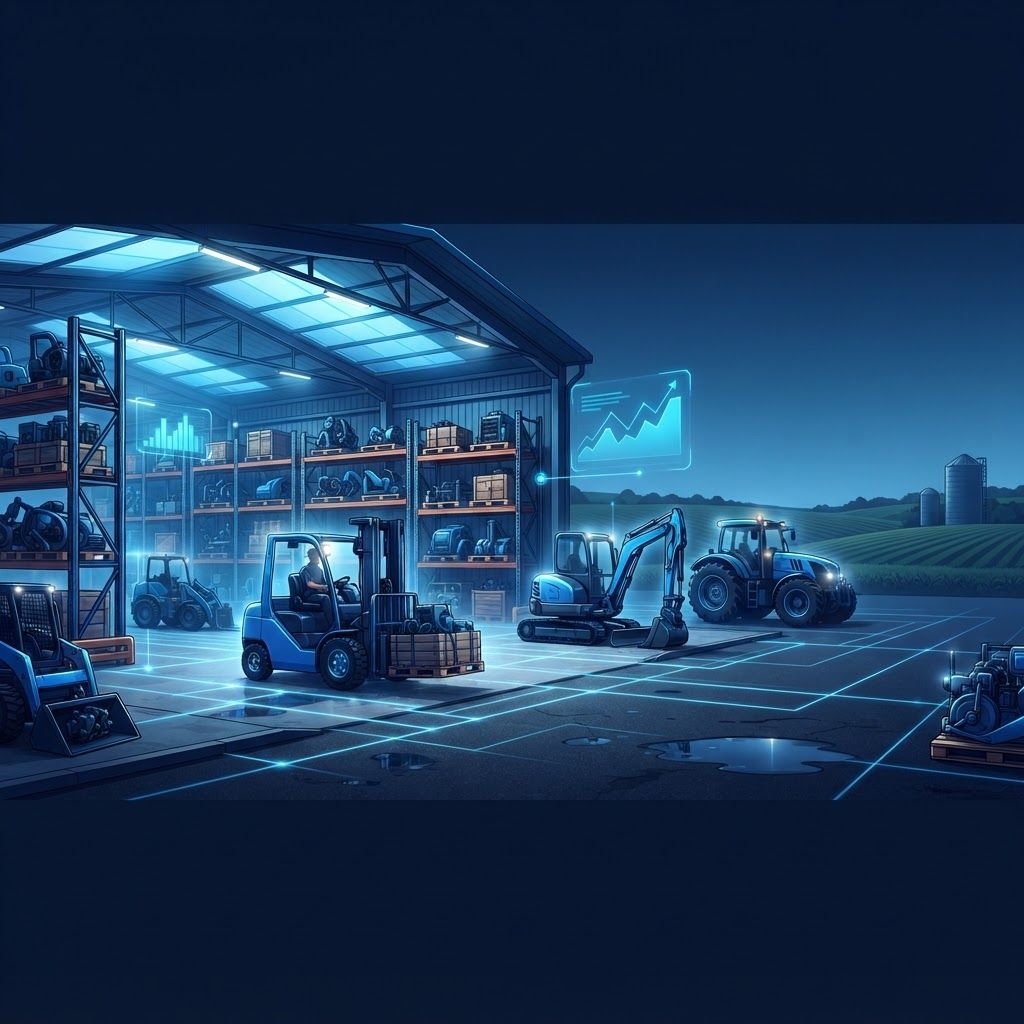
Equipment Distribution in Lancaster
Equipment wholesale sits at the intersection of product supply and service, and the balance between the two determines who succeeds. Selling a skid steer, a walk-in cooler or a forklift is only the beginning of the relationship. What follows is years of parts supply, preventive maintenance, emergency repair, operator training and eventually trade-in or disposal. Distributors who treat the sale as the transaction rarely retain customers, while those who build service infrastructure earn business for decades.
Lancaster's equipment sector serves a broad customer base. Farms need agricultural machinery and handling equipment. Contractors need earthmoving and compact equipment. The county's substantial food industry needs commercial kitchen and processing equipment. Warehouses and manufacturers need forklifts, conveyors and lifting gear. Each category has developed specialised distributors, though several of the strongest span multiple segments.
What to Evaluate in an Equipment Distributor
Service capacity is the primary consideration. How many technicians does the distributor employ? Do they have field service vehicles? What is typical response time for a breakdown? A distributor with excellent pricing and a two week service backlog will cost you far more in downtime than any purchase savings.
Parts availability follows directly. Ask about on-hand parts inventory for the equipment you are buying and what percentage of service calls are completed on the first visit. Distributors who stock deeply resolve problems in hours rather than days.
Financing and rental options provide flexibility that matters for businesses managing capital carefully. Rental with purchase option lets a buyer verify that equipment suits their application before committing. Trade-in programmes and used equipment offerings help customers manage fleet costs.
Finally, evaluate training and support. Proper operator training reduces damage, improves productivity and supports safety compliance, and distributors who provide it seriously add measurable value.
The Top 10 Equipment Wholesalers in Lancaster
1. Conestoga Equipment Distributors. Supplying compact construction equipment, attachments and utility machines to contractors and municipalities. Conestoga Equipment Distributors backs its sales with a substantial field service fleet and a parts inventory that resolves most breakdowns same day.
2. Red Rose Agricultural Equipment. Tractors, implements, hay equipment and livestock handling systems for the county's farming community. Seasonal service scheduling, harvest support and genuine understanding of farm economics define its customer relationships.
3. Susquehanna Foodservice Equipment. Commercial kitchen equipment including cooking, refrigeration, warewashing and ventilation. Kitchen design services and coordination with contractors during construction make it a project partner rather than only a supplier.
4. Ephrata Material Handling Equipment. Forklifts, pallet jacks, order pickers and warehouse equipment sold, rented and serviced. Operator certification training and fleet management reporting help customers control both safety risk and total cost.
5. Lititz Industrial Tool and Equipment. Compressors, generators, welders, pumps and general industrial equipment. Its rental fleet allows customers to access occasional-use equipment economically rather than purchasing assets that sit idle.
6. Manheim Packaging Equipment Supply. Distributing sealers, wrappers, strapping machines, labellers and case packers to manufacturers and distributors. Consumables supply alongside equipment ensures machines keep running rather than sitting for want of film or tape.
7. Pequea Landscape and Turf Equipment. Commercial mowers, trimmers, blowers and turf care machinery for landscape contractors and grounds crews. Early morning service hours accommodate crews who need equipment ready before the workday starts.
8. Strasburg Lifting and Rigging Supply. Hoists, cranes, slings, shackles and fall protection equipment with inspection and certification services. Regulatory knowledge around periodic inspection requirements protects customers from compliance failures.
9. New Holland Cleaning and Sanitation Equipment. Floor scrubbers, pressure washers, vacuums and janitorial machines for facilities, schools and industrial plants. Preventive maintenance contracts keep equipment functional in a category where neglect is common.
10. Lancaster HVAC and Refrigeration Equipment. Commercial heating, ventilation, air conditioning and refrigeration equipment for contractors and facility teams. Technical support on system selection and load calculation helps contractors specify correctly the first time.
Trends in Equipment Distribution
Telematics has transformed equipment ownership. Machines now report hours, location, fault codes and utilisation, allowing distributors to schedule maintenance proactively and helping owners understand which assets earn their keep. Distributors who built capability around this data provide meaningfully better fleet management advice.
Electrification is advancing steadily in compact equipment, forklifts and turf machinery, driven by emissions rules, noise restrictions and indoor use requirements. Distributors are investing in high voltage service training to support these machines.
Rental continues to grow as a share of equipment access, as businesses prefer converting capital expense to operating expense and avoiding ownership of specialised machines. Supply chain caution is a fourth theme, with buyers valuing distributors who hold real inventory after several years of extended factory lead times.
Choosing an Equipment Partner
Evaluate the service organisation before evaluating the equipment. Visit the shop, count the technicians, look at the parts room and ask about current backlog. This tells you more about your future experience than any product specification.
Calculate total cost of ownership including fuel or energy, maintenance, expected repairs and residual value, rather than comparing purchase prices. A machine that costs more initially frequently costs less over five years.
Where possible, rent before buying. A few weeks of real use in your actual application reveals suitability far better than a demonstration. Finally, value proximity, because a Lancaster distributor whose technician can reach your site within an hour delivers a form of operational insurance that distant suppliers, however competitive on price, simply cannot provide.
Want your brand featured in front of decision-makers? Publish a guest post or get a link insertion in our guides through AAMAX's guest post and link insertion service.
Helpful Links
 SponsoredAAMAX — Full-Service Digital Agency
Write for Us
Share your expertise with our readers. We welcome guest contributions from industry specialists.
Pitch your idea

