

Equipping a District of Varied Industries
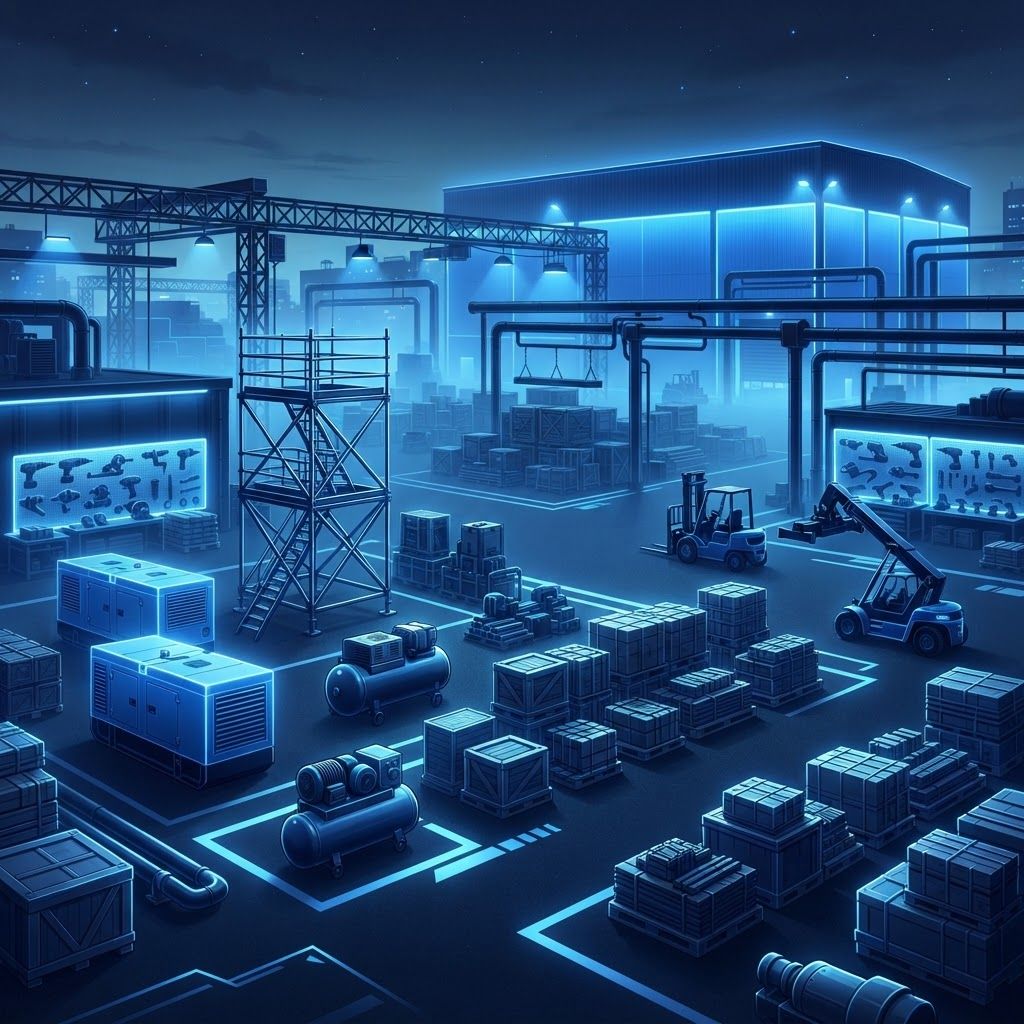
Equipment wholesaling covers an unusually wide territory. In East Lindsey it stretches from cordless power tools sold across a trade counter to commercial catering ranges installed in hotel kitchens, from scaffolding and access towers to grain store ventilation fans. What unites these products is that they are capital purchases rather than consumables, which changes how they should be bought.
Because equipment is expected to last years, the purchase decision involves durability, serviceability, spare parts availability and support quality as much as price. A cheap machine that cannot be repaired locally is expensive within eighteen months. Wholesalers in the district who understand this build their businesses around aftercare, not just supply.
Ten Equipment Wholesalers Serving East Lindsey
1. Lindsey Tool and Plant Distribution. Supplying power tools, hand tools, generators, compressors and small plant to contractors and trade customers, with an on-site service department for repairs and warranty work.
2. Coastal Catering Equipment Supplies. Providing commercial ovens, fryers, refrigeration, dishwashers and stainless preparation equipment to the district's hospitality sector, with design assistance for full kitchen layouts.
3. Wolds Agricultural Equipment Wholesale. Distributing grain handling equipment, ventilation fans, livestock handling systems, sprayers and workshop tooling to farms across the Lincolnshire Wolds and fen edge.
4. Louth Access and Lifting Equipment. Supplying ladders, towers, podiums, hoists, slings and lifting accessories, together with the inspection and certification services that keep them legally usable.
5. Horncastle Safety Equipment Distribution. Focused on personal protective equipment, fall arrest, gas detection, first aid and site safety products, with fit testing and training support.
6. Marsh Pumping and Water Equipment. Wholesaling pumps, irrigation equipment, hoses, filtration and water management systems, a critical category in a district shaped by drainage and irrigation needs.
7. Spilsby Cleaning and Facilities Equipment. Providing floor scrubbers, pressure washers, vacuum systems and janitorial machines to contract cleaners, holiday parks, schools and industrial sites.
8. Skegness Leisure and Amusement Equipment. Serving the coastal entertainment economy with equipment for arcades, play facilities, catering kiosks and outdoor attractions, plus maintenance parts for existing installations.
9. Alford Workshop Machinery Supplies. Distributing welders, compressors, lathes, saws, benches and lifting equipment for engineering workshops, farm shops and vehicle repair businesses.
10. Bolingbroke Groundcare and Landscaping Equipment. Supplying mowers, strimmers, chippers, blowers and turf care machinery to landscapers, groundskeepers, councils and estates, with seasonal servicing programmes.
Buying Capital Equipment Wisely
The most common mistake in equipment purchasing is optimising for the purchase price alone. Total cost of ownership is the better measure, and it includes energy consumption, consumables, servicing, expected life, downtime cost and residual value.
Consider a commercial dishwasher as an example. Two machines may differ by a modest amount at purchase, but differ substantially in water and energy consumption per cycle, in chemical usage, and in the availability of local service engineers. Over five years of daily operation in a busy coastal hotel, those differences dwarf the initial price gap.
Spare parts availability deserves specific investigation. Ask how long the manufacturer commits to supplying parts, whether the wholesaler stocks common wear items, and what typical lead times look like. Equipment that cannot be repaired promptly is equipment that will be replaced early.
Warranty and service response should be defined precisely. A twelve-month warranty means little if response times are measured in weeks. For business-critical equipment, ask about response guarantees and whether loan units are available during repairs.
Compliance, Inspection and Safety
Many categories of equipment carry legal inspection requirements. Lifting equipment requires thorough examination at defined intervals. Pressure systems need written schemes of examination. Electrical equipment needs periodic testing. Access equipment must be inspected before use and at intervals.
Good wholesalers in East Lindsey offer these services alongside supply, which simplifies compliance considerably for smaller businesses without dedicated safety staff. Keeping supply and inspection with the same trusted provider also means records are maintained systematically rather than scattered across paperwork.
Training is frequently overlooked. Equipment operated incorrectly is dangerous and wears prematurely. Suppliers who provide operator familiarisation at handover reduce both risks, and buyers should ask for this as part of any significant purchase.
Trends in Equipment Supply
Battery technology has transformed the tool market. Cordless equipment now handles tasks that once required petrol or mains power, which matters greatly on rural sites with no electricity supply. Platform compatibility has become a purchasing consideration in itself, since standardising on one battery system reduces cost and clutter.
Energy efficiency drives replacement decisions in catering and refrigeration, where older equipment can consume dramatically more power than modern alternatives. With energy costs elevated, payback periods on replacement have shortened considerably.
Telematics and monitoring are spreading from large plant into smaller equipment, allowing usage tracking, service scheduling and theft recovery. In a rural district where equipment is often left on site, tracking has practical value.
Hire and purchase blending is also growing. Many businesses now buy core equipment and hire peak-demand items, and wholesalers offering both models capture more of their customers' spending.
Choosing an Equipment Wholesaler
Prioritise suppliers with in-house service capability. When equipment fails, the difference between a local engineer and a manufacturer's national queue is measured in days of lost productivity.
Check demonstration availability for significant purchases. Handling a machine, or seeing it working, reveals ergonomic and practical issues that specifications never show.
Ask about financing options, as spreading capital cost can make a better specification affordable.
Finally, value honesty. A wholesaler who advises that a cheaper model is adequate for your usage, or who suggests hiring rather than buying an item you will use twice a year, is demonstrating the judgement that makes a long-term supplier worth keeping.
Want your brand featured in front of decision-makers? Publish a guest post or get a link insertion in our guides through AAMAX's guest post and link insertion service.
Helpful Links
 SponsoredAAMAX — Full-Service Digital Agency
Write for Us
Share your expertise with our readers. We welcome guest contributions from industry specialists.
Pitch your idea

