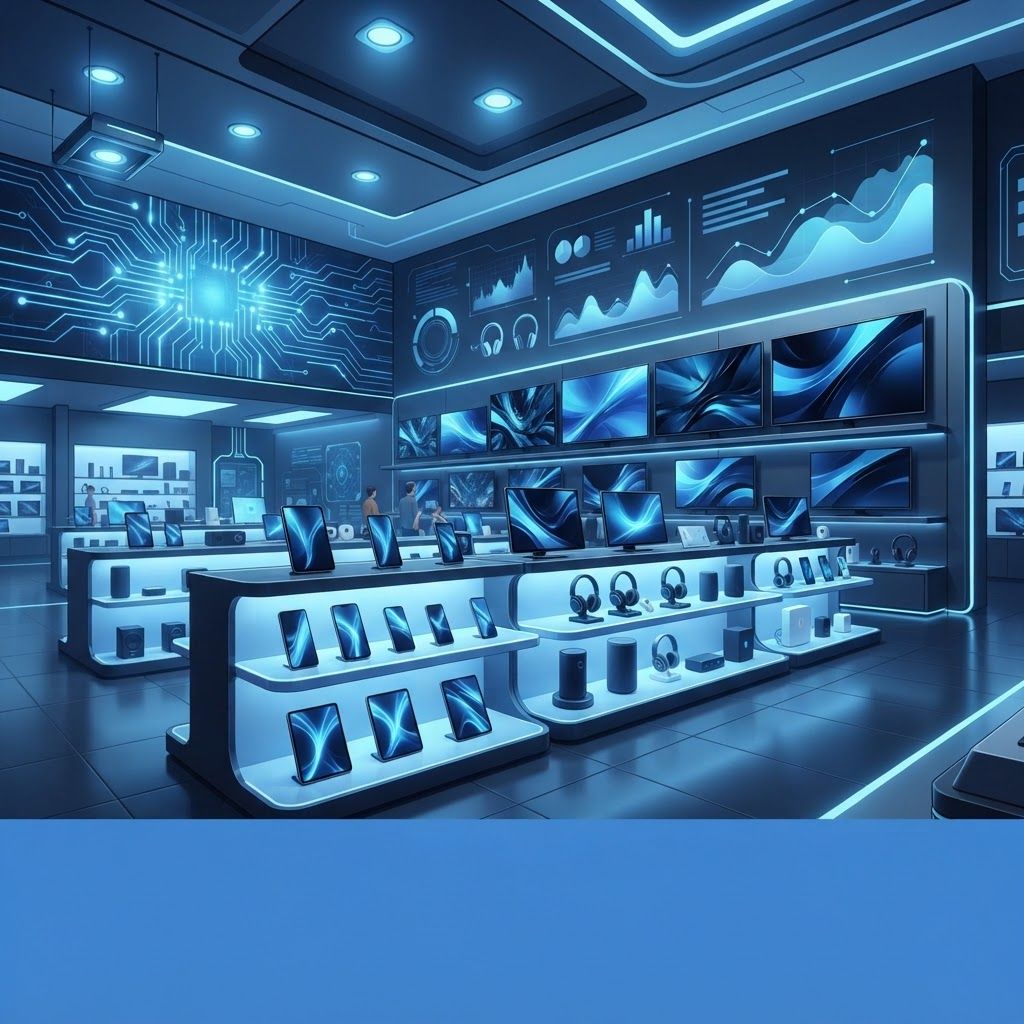
Buying Technology in the Epping Forest District
Electronics retail has changed profoundly, and the Epping Forest district illustrates the shift well. Physical stores no longer compete primarily on price, since online comparison makes that a losing battle. Instead they compete on the things online cannot easily offer: seeing a television's picture quality in person, hearing speakers properly, getting honest advice, arranging installation and having somewhere to return to when something goes wrong.
The district's residents buy technology for varied purposes. Commuters working hybrid schedules need home office equipment. Families need appliances, televisions and devices for children's education. The area's substantial housing stock, including many larger properties, generates demand for smart home systems, integrated audio visual installations and home networking that reaches across sizeable buildings.
1. Currys
Currys is the dominant physical electronics retailer nationally and serves the district through nearby stores. Its value lies in breadth: televisions, laptops, phones, large and small kitchen appliances, audio equipment and accessories under one roof. The practical advantages are the ability to compare screens side by side, immediate availability of common items, delivery and installation for large appliances, and a recycling service that takes away the old unit. Extended protection plans are offered, and while these are not always good value, the repair and support infrastructure behind them has genuine utility for major appliances.
2. John Lewis
John Lewis approaches electronics differently, curating a narrower selection with emphasis on quality and backing it with longer guarantees on many products at no extra cost. For buyers who value certainty over the lowest price, this proposition works well. Staff knowledge is generally strong, demonstration areas are properly set up, and the aftersales reputation reduces the anxiety that accompanies significant purchases. Television and audio departments in particular allow meaningful comparison in controlled conditions.
3. Apple Retail
For anyone within the Apple ecosystem, the brand's own retail presence nearby provides hands-on access to the full range alongside technical support and repair services. The ability to book a diagnostic appointment and have a device assessed by a trained technician resolves problems that would otherwise require posting equipment away. Setup assistance and data transfer services help less technical buyers move to new devices without losing anything.
4. Specialist Hi-Fi and Home Cinema Retailers
Serious audio and home cinema demands listening rather than reading specifications, and specialist dealers provide properly treated demonstration rooms where equipment can be assessed honestly. They also provide system matching expertise, since amplifier and speaker pairing affects results more than the quality of either component alone. For the district's larger homes, custom installation services covering multi-room audio, projection systems and hidden cabling turn equipment into an integrated result rather than a collection of boxes.
5. Independent Computer Shops and Repair Services
Local computer businesses fill a genuinely important role. They build custom desktops to specification, upgrade existing machines, recover data from failed drives, remove malware and repair laptops that manufacturers would rather replace. For small businesses across Loughton, Epping and the surrounding towns, these shops function as an outsourced IT department, providing support relationships that national retailers do not offer.
6. Mobile Phone Retailers and Network Stores
Phone purchasing splits between network stores offering contracts and independent retailers selling handsets outright. The financial difference is significant: buying a handset separately and pairing it with a SIM-only plan is usually cheaper over two years than a bundled contract, though it requires upfront capital. Independent shops also handle screen replacements, battery swaps and unlocking, extending device life considerably at modest cost.
7. Kitchen Appliance Specialists
Built-in appliances form part of a kitchen rather than a standalone purchase, and specialist retailers understand the integration requirements: dimensions, ventilation, plumbing, electrical supply and door configuration. They also supply premium brands that general retailers may not stock. For kitchen renovations across the district, coordinating appliance specification with the kitchen fitter from the outset prevents the expensive discovery that a chosen oven does not fit the planned aperture.
8. Smart Home and Security Installers
Smart home technology has moved from enthusiast hobby to mainstream installation. Lighting control, heating management, video doorbells, security cameras, smart locks and voice assistants are increasingly specified during renovations. Professional installers add value by designing systems that work reliably together rather than as an accumulation of apps, and by installing robust networking infrastructure, since most smart home frustration traces back to inadequate wireless coverage rather than the devices themselves.
9. Online Retailers With Local Delivery
Online purchasing remains central for price-sensitive buying, accessories and less common items. The practical advice is to use online for well-understood commodity purchases where advice adds nothing, and physical stores for anything requiring assessment, installation or likely support. Buyers should also note that consumer rights differ slightly between online and in-store purchases, with online orders carrying cancellation rights that in-store purchases do not.
10. Refurbished and Second-Hand Technology Dealers
Professionally refurbished electronics offer substantial savings with meaningfully reduced environmental impact. Reputable dealers test thoroughly, replace consumable components such as batteries, grade cosmetic condition honestly and provide a warranty. For laptops, phones, tablets and monitors, refurbished units frequently represent the best value available. Buyers should verify warranty length, check battery health where relevant and confirm that the device is not network locked or registered to a previous owner's account.
Making Sound Purchasing Decisions
Technology buying goes wrong in predictable ways. Buyers are drawn to headline specifications that make little practical difference while overlooking the factors that shape daily experience. With televisions, screen size relative to viewing distance, panel type and processing quality matter far more than resolution beyond a certain point. With laptops, memory and storage affect responsiveness more than processor tier. With appliances, energy efficiency and repairability affect lifetime cost more than feature lists.
Reading the specification honestly helps. Contrast ratio claims, peak brightness figures and battery life estimates are all measured under favourable conditions. Independent testing and long-term reviews give a more accurate picture than manufacturer claims or launch-day coverage.
Warranties, Rights and Protection Plans
Consumer law in the UK provides substantial protection independent of any warranty. Goods must be of satisfactory quality, fit for purpose and as described, and remedies are available for a considerable period after purchase where a fault indicates the product was not durable enough. Many buyers pay for protection plans that duplicate rights they already hold.
Extended warranties make most sense for expensive items with high repair costs and moving parts, such as large appliances, and least sense for small electronics that are cheap to replace. Buyers should check whether existing home insurance or payment card benefits already provide relevant cover before purchasing additional protection.
Registering products with the manufacturer is worthwhile, since it enables safety recall notifications and sometimes extends the standard guarantee at no cost.
Installation and Setup
Professional installation earns its cost in specific situations. Wall mounting a large television requires knowing the wall construction and using appropriate fixings. Integrated appliances require correct ventilation and secure fitting. Home networking requires thoughtful access point placement rather than relying on a single router in a hallway cupboard.
For older properties across the district, many of which have solid walls and thick construction, wireless coverage is a recurring problem. Mesh networking systems or wired access points solve it properly, whereas repeaters often halve throughput. Investing in networking infrastructure before buying streaming devices and smart home equipment prevents disappointment.
Sustainability and End of Life
Electronics carry significant embodied carbon, most of it in manufacturing, so extending device life is the most effective environmental action available. Replacing a laptop battery, adding memory, reinstalling software or repairing a screen typically costs a fraction of replacement and keeps a functional device in use.
When disposal becomes necessary, electrical waste must be handled properly. Retailers are obliged to take back old equipment when supplying a replacement, and local recycling centres accept electrical items. Data-bearing devices should be securely wiped before disposal, and reputable recyclers provide certificates confirming data destruction for business equipment. Working devices are better donated or sold than recycled, keeping them in use and out of the waste stream entirely.
Want your brand featured in front of decision-makers? Publish a guest post or get a link insertion in our guides through AAMAX's guest post and link insertion service.
Helpful Links
 SponsoredAAMAX — Full-Service Digital Agency
Write for Us
Share your expertise with our readers. We welcome guest contributions from industry specialists.
Pitch your idea