A Precision Electronics Cluster
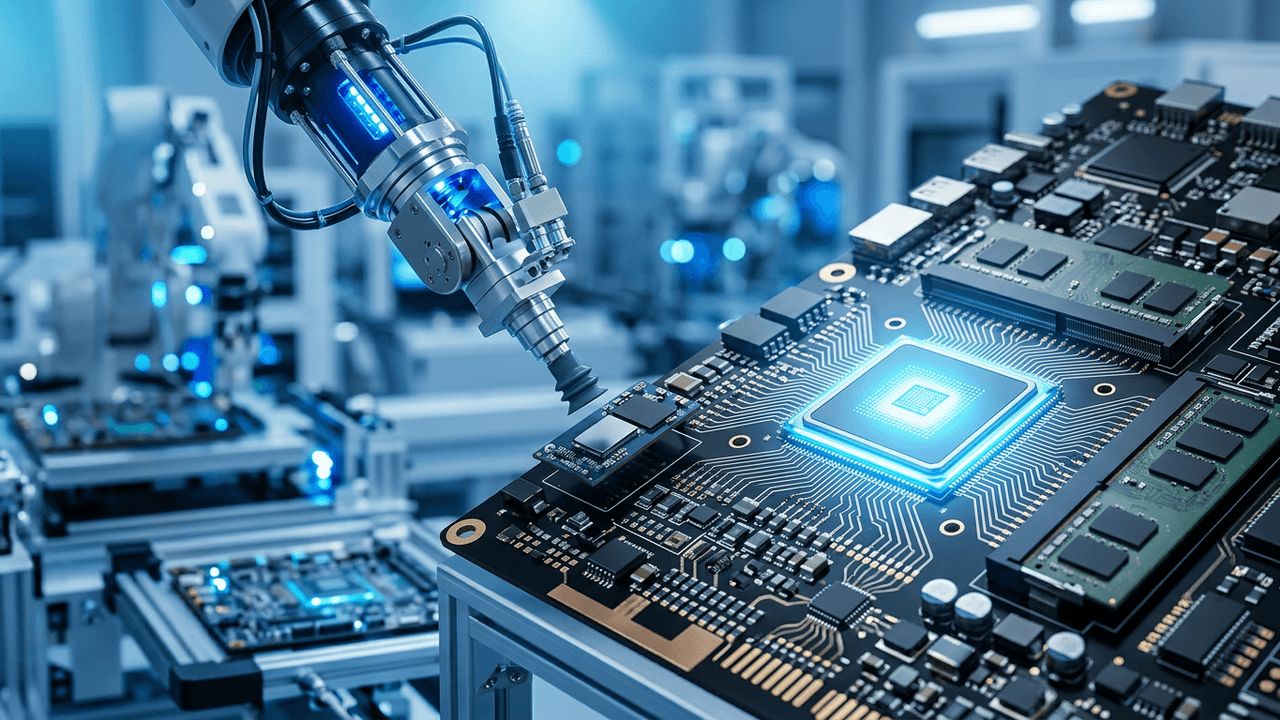
South Oxfordshire hosts one of the more distinctive electronics manufacturing communities in the United Kingdom. It is not a mass production region; there are no consumer device factories here. Instead, the district specialises in high-value, low-volume electronics where reliability, accuracy and traceability matter far more than unit cost.
The reason is customer proximity. Harwell Campus, the Culham fusion site, Oxford's laboratories and the surrounding cluster of scientific instrument companies all require bespoke electronics: detectors, controllers, power supplies, data acquisition systems and radiation-tolerant assemblies. Manufacturers that can build these to exacting standards, often as one-offs or in batches of a few dozen, have found a durable market.
The Main Areas of Local Capability
Scientific instrumentation is the largest segment, covering spectrometers, sensors, cryogenic control electronics and vacuum-compatible assemblies. Space electronics is a strong second, supported by the satellite applications community at Harwell, where products must survive launch vibration and radiation exposure.
Beyond that, the district supports contract electronics manufacturing services offering surface-mount assembly, through-hole soldering, cable harness build and functional testing. There are also design consultancies producing embedded systems, radio frequency modules and firmware, plus test and calibration laboratories that verify performance to traceable standards.
The Leading Electronics Manufacturers
1. Oxford Instruments
The best known technology name associated with the county, producing advanced scientific instrumentation, cryogenic systems, plasma processing tools and analytical equipment. Its engineering depth in magnetics, cryogenics and precision control electronics has influenced the wider regional supply chain for decades and trained a generation of local engineers.
2. Diamond Light Source and Rutherford Appleton Laboratory Engineering Groups
The in-house detector and instrumentation groups at Harwell design and build electronics that simply cannot be bought commercially: custom photon detectors, beamline control systems and high-speed data acquisition hardware. Their technical requirements drive innovation among nearby commercial suppliers.
3. Satellite Applications and Space Electronics Firms at Harwell
A concentration of space technology businesses at Harwell Campus produces onboard computing, power conditioning, communications payloads and sensor electronics. Space qualification imposes rigorous documentation, materials control and environmental testing, and companies meeting that bar are highly capable.
4. Contract Electronics Manufacturers in Abingdon and Didcot
Several contract manufacturers serve the region with printed circuit board assembly, conformal coating, box build and testing. Their value lies in flexibility: prototype runs, engineering change support and rapid turnaround for research customers who cannot wait months for overseas production.
5. Sensor and Detector Specialists
Producers of radiation detectors, gas sensors, photodetectors and precision measurement modules serve nuclear, medical, environmental monitoring and industrial process markets. Long calibration stability and detailed characterisation data are the defining requirements in this segment.
6. Power Electronics and High Voltage Engineering Firms
Fusion research, particle accelerators and industrial processing all require specialised power supplies, pulse generators and high voltage systems. Local firms producing this equipment work at the boundary of electrical engineering and physics, often building genuinely unique hardware.
7. Embedded Systems and Firmware Design Houses
Design consultancies across the district develop microcontroller-based products, wireless connectivity modules and control software, then transfer designs to manufacturing partners. Their strength is taking a research concept and turning it into a manufacturable, certifiable product.
8. Cable Assembly and Wiring Harness Manufacturers
An unglamorous but essential capability. Custom harnesses for laboratory equipment, vehicles and industrial plant require accurate schedules, correct connector selection, crimping to standard and full continuity testing. Local suppliers handle short runs that larger harness makers decline.
9. Test, Calibration and EMC Laboratories
Laboratories offering electromagnetic compatibility testing, environmental stress screening and traceable calibration are critical to bringing products to market. Access to accredited testing nearby saves manufacturers significant time and shipping risk compared with distant facilities.
10. Electronics Repair, Refurbishment and Obsolescence Services
Specialists who repair legacy laboratory and industrial electronics, redesign around obsolete components and manage lifetime buys provide substantial value. Research facilities run equipment for decades, and keeping it operational is often more practical than replacement.
Trends Shaping Local Electronics Manufacturing
Component availability remains the sector's dominant operational concern. The supply shocks of recent years taught manufacturers to design with second sources, hold strategic stock and build closer relationships with distributors. Design-for-availability is now a genuine engineering discipline.
Miniaturisation and integration continue to advance, with finer pitch components, ball grid arrays and embedded modules requiring investment in placement accuracy, X-ray inspection and rework capability. Manufacturers that have made that investment can take on work that others cannot.
Sustainability and regulatory compliance are also rising in importance. Restriction of hazardous substances rules, energy efficiency requirements and expectations around repairability and material declaration all shape design decisions. Meanwhile, growing demand for edge computing and artificial intelligence at the sensor level is pushing more processing power into small, low-energy devices, a trend that plays to local design strengths.
How to Select an Electronics Manufacturing Partner
Match the supplier to your volume and complexity. A manufacturer geared to thousands of units monthly will handle a batch of twenty poorly, and vice versa. Ask directly about typical batch sizes and the mix of prototype versus production work.
Check quality certification. ISO 9001 is a baseline; aerospace, medical or space work requires additional standards and full traceability. Request evidence of inspection processes, IPC workmanship class capability and whether testing is performed in-house.
Discuss documentation and intellectual property from the outset. Clear agreements on design ownership, bill of materials management, firmware handling and confidentiality prevent disputes later. Finally, visit the facility, since observing assembly discipline, static control and inspection practice reveals more than any certificate.
Final Thoughts
South Oxfordshire's electronics manufacturers thrive by doing difficult things well. Serving research institutions, space missions and precision industry, they offer engineering depth, flexibility and quality assurance that make the district a strong choice for anyone needing electronics built to genuinely demanding specifications.
Want your brand featured in front of decision-makers? Publish a guest post or get a link insertion in our guides through AAMAX's guest post and link insertion service.
Helpful Links
- Top 10 Best Appliance Repair Services in Southend-on-Sea
- Top 10 Best Event Management Companies in Huntingdonshire
- Top 10 Best IT Services Companies in Bath and North East Somerset
- Top 10 Best Home Renovation Companies in Bath and North East Somerset
- Top 10 Best Employment Lawyers in South Cambridgeshire
 SponsoredAAMAX — Full-Service Digital Agency
Write for Us
Share your expertise with our readers. We welcome guest contributions from industry specialists.
Pitch your idea