A Genuine Electronics Cluster
Mid Sussex sits within one of the most significant electronics corridors in southern England. The area between Gatwick, Burgess Hill, Haywards Heath and Crawley has attracted electronics businesses for decades, drawn by skilled engineering labour, proximity to an international airport for component logistics, and access to aerospace, medical and defence customers across the South East.
The sector locally covers the full development chain. Design consultancies produce schematics and firmware, contract manufacturers assemble printed circuit boards, box-build specialists integrate enclosures and wiring harnesses, and test houses verify compliance with electromagnetic and safety standards. That density means a product concept can move from prototype to certified production within a relatively small geographic radius.
What Local Manufacturers Actually Do
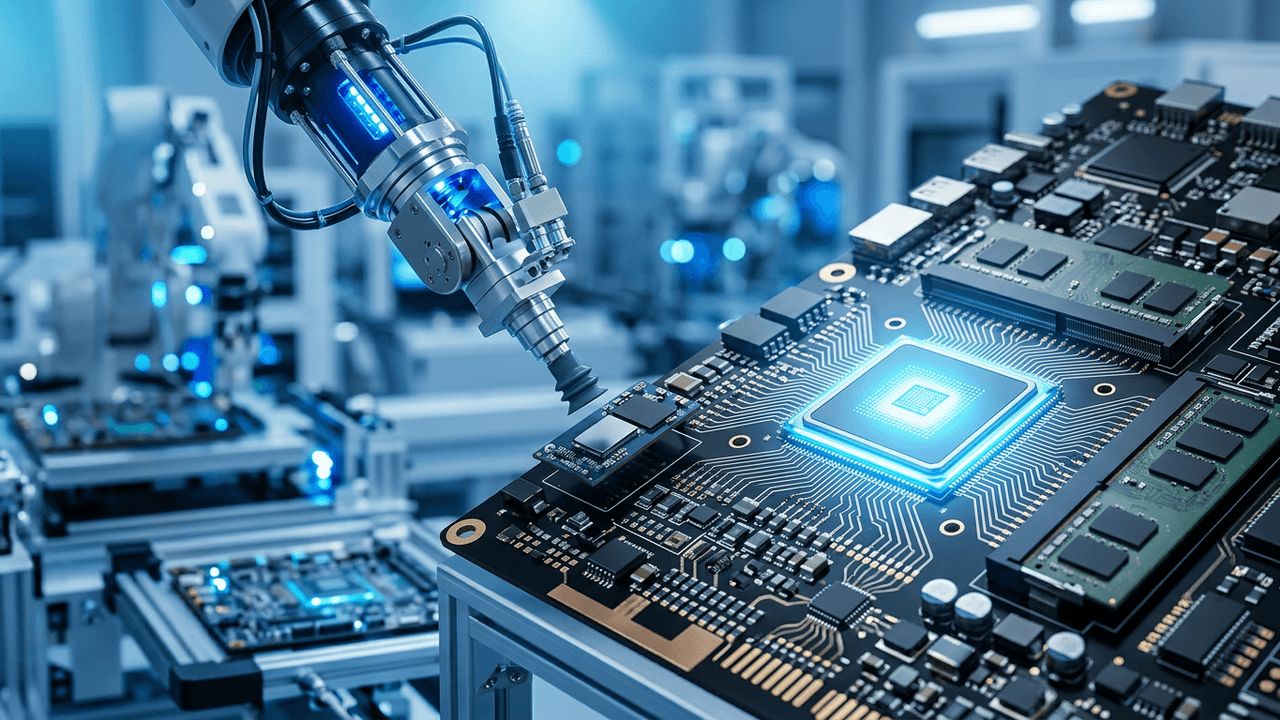
Printed circuit board assembly is the core activity. Surface mount technology lines place components at high speed and accuracy, supported by automated optical inspection and, for high-reliability work, X-ray inspection of hidden joints such as ball grid arrays. Through-hole and mixed technology assembly remain important for connectors, power components and legacy designs.
Beyond assembly, box build integrates boards into finished products with cable assemblies, displays, enclosures and firmware loading. Many Mid Sussex manufacturers specialise here because it allows them to add value through configuration, functional testing and direct despatch to end customers.
Design for manufacture is the third pillar. Experienced manufacturers review layouts before production, identifying component availability risks, thermal problems, insufficient test access and panelisation issues. This early involvement typically prevents costly redesign later.
The Top 10 Electronics Manufacturers in Mid Sussex
1. Elektec Electronic Manufacturing Services provides contract assembly with strong emphasis on quality systems and traceability. The company handles low to medium volume work with complex board requirements, serving instrumentation and industrial control customers.
2. Corintech combines electronics manufacturing with its own product ranges in sensing and monitoring. Its dual role as manufacturer and product developer gives it practical insight into design for reliability, which contract customers benefit from directly.
3. Sussex Circuits focuses on printed circuit board assembly with rapid prototyping capability. Engineering teams value short turnaround on first articles, allowing iterative development without long procurement delays.
4. Nexus Precision Electronics specialises in high-reliability assembly for medical and aerospace applications, operating to recognised quality management standards. Documented process control and full material traceability are central to its offering.
5. Burgess Hill Electronic Assembly serves industrial automation and power electronics customers with mixed technology assembly, cable harness production and functional testing. Its flexibility on batch size suits businesses with fluctuating demand.
6. Weald Embedded Systems operates at the design end, developing firmware and embedded hardware for connected devices, then transferring designs into local manufacturing partners. Its work in low power wireless and sensor integration reflects strong demand for connected industrial products.
7. Gatwick Instrumentation produces precision measurement and test equipment, combining analogue expertise with digital signal processing. Calibration capability and metrology knowledge distinguish it from general assembly houses.
8. Haywards Heath Power Electronics concentrates on power conversion, motor drive and battery management assemblies. As electrification expands across transport and industry, this specialism has become increasingly valuable.
9. Mid Sussex Cable and Harness manufactures wiring looms, connector assemblies and control panels, supporting electronics manufacturers and machinery builders throughout the region. Consistent crimp quality and testing discipline are its principal strengths.
10. Sussex Compliance Testing completes the local ecosystem by providing electromagnetic compatibility and safety pre-compliance testing. Access to nearby test facilities materially reduces certification timelines for new products.
Technology and Market Trends
Component availability remains the defining commercial issue of the decade. Extended semiconductor lead times taught manufacturers to design with alternates, maintain strategic buffer stock and monitor obsolescence proactively. The most valuable manufacturing partners now offer active supply chain management rather than passive purchasing.
Miniaturisation and higher integration continue to raise technical demands. Fine pitch packages, embedded components and high-density interconnect designs require better placement accuracy, controlled reflow profiles and X-ray verification. Manufacturers investing in inspection capability can accept work that others cannot.
Connectivity is the third trend. Industrial internet of things products combine sensing, wireless communication and cloud integration, which blurs the boundary between electronics manufacturing and software development. Local firms that offer firmware, connectivity provisioning and device management alongside assembly capture more of the value chain.
Sustainability requirements are also rising. Restriction of hazardous substances compliance, conflict minerals reporting, energy efficient production and design for repairability increasingly feature in customer specifications, particularly for products sold into regulated European markets.
Selecting an Electronics Manufacturing Partner
Match capability to volume. A prototyping specialist and a high-volume line have different economics and process controls, and choosing the wrong one leads to either excessive cost or missed deadlines.
Assess quality systems in detail. Ask which standards apply, how process capability is monitored, what inspection stages exist and how nonconformances are handled. For safety-critical products, verify sector-specific accreditation.
Examine test strategy early. Functional test development often costs more than assembly, and a partner who designs test coverage alongside the product prevents field failures. Confirm data retention for traceability, particularly for medical or aerospace applications.
Finally, evaluate engineering engagement. The best manufacturers challenge your design constructively before quoting. That input, offered early, usually saves far more than any per-unit price difference.
Final Thoughts
Electronics manufacturing in Mid Sussex is a mature, technically sophisticated sector with genuine depth from design through assembly to compliance testing. Its strength lies in high-mix, high-reliability work where engineering collaboration and traceability matter more than lowest unit cost. For product developers, having that entire capability chain within a short drive remains a substantial competitive advantage.
Want your brand featured in front of decision-makers? Publish a guest post or get a link insertion in our guides through AAMAX's guest post and link insertion service.
Helpful Links
 SponsoredAAMAX — Full-Service Digital Agency
Write for Us
Share your expertise with our readers. We welcome guest contributions from industry specialists.
Pitch your idea