An Under-Recognised Engineering Cluster
East Devon is not the first place most people associate with electronics manufacturing, yet the wider Exeter and East Devon corridor supports a genuine cluster of electronics and instrumentation businesses. Their presence owes something to the region's aerospace and defence heritage, something to marine and environmental monitoring demand along the coast, and something to the quality of life that has attracted engineers and founders to relocate from larger cities.
The businesses involved are typically small to medium enterprises with high technical content: contract electronics manufacturers assembling circuit boards, design houses developing embedded firmware and hardware, sensor specialists, test and measurement instrument builders, and industrial control system integrators. Many export a substantial share of output, which makes them disproportionately valuable to the local economy.
What Electronics Manufacturing Involves
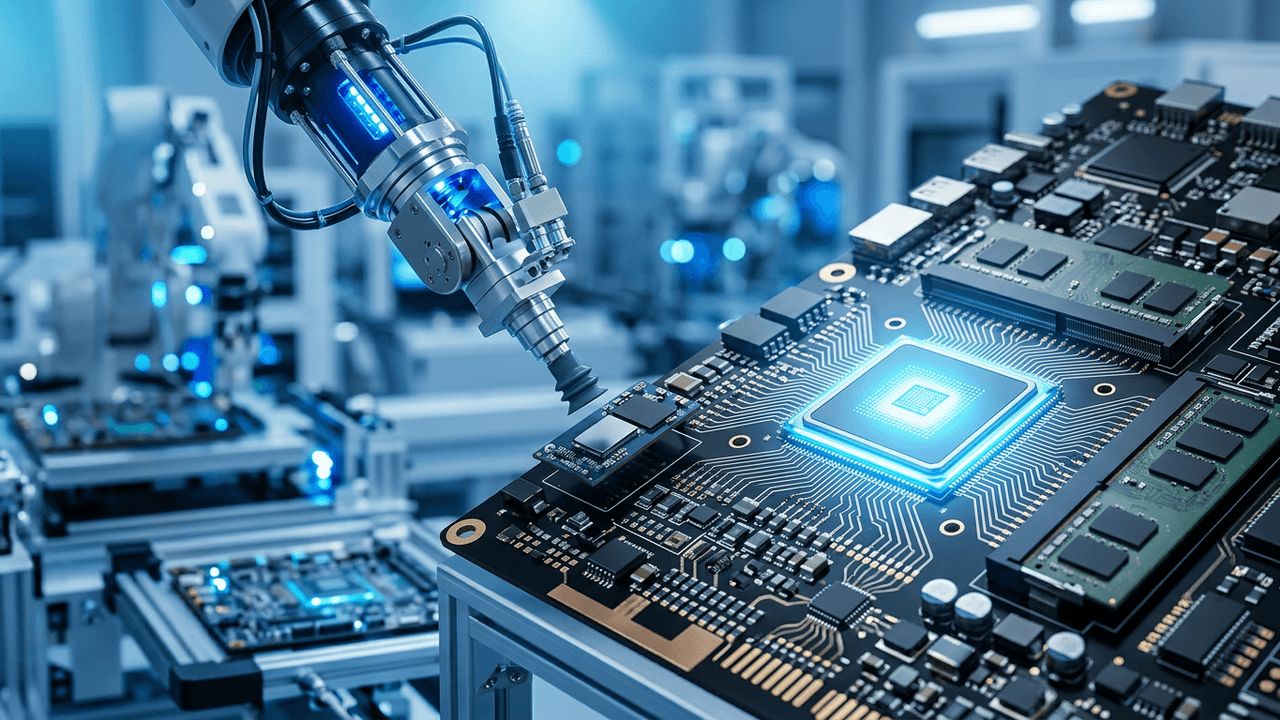
Contract electronics manufacturing forms the industrial backbone. It includes surface mount assembly using automated placement and reflow soldering, through-hole assembly for connectors and power components, conformal coating for harsh environments, cable and harness assembly, box build integration and functional testing.
Quality control is central. Automated optical inspection identifies placement and solder defects, X-ray inspection checks hidden joints under ball grid array packages, in-circuit testing verifies electrical characteristics and functional test rigs confirm that finished assemblies behave correctly. Traceability systems record component batch data against serial numbers, which is essential in regulated sectors such as medical and aerospace.
Design services complement manufacturing. Schematic capture, printed circuit board layout, signal integrity analysis, thermal management, enclosure design, firmware development and electromagnetic compatibility pre-compliance testing all determine whether a product can actually be manufactured economically. Design for manufacture review is one of the highest-value services a local manufacturer can offer a start-up.
Ten Electronics Manufacturers Serving East Devon
Exe Valley Electronics Assembly provides surface mount and through-hole contract assembly with automated optical inspection and full component traceability for low to medium volume production.
Jurassic Coast Marine Electronics designs and builds instrumentation for marine and coastal monitoring, including sealed sensor housings, data loggers and telemetry units built for prolonged salt water exposure.
Otter Embedded Systems develops hardware and firmware for connected devices, covering microcontroller platforms, wireless communication, low power design and secure device provisioning.
Blackdown Precision Instruments manufactures test and measurement equipment for laboratory and industrial customers, with calibration services and documented measurement uncertainty.
Honiton Industrial Controls builds control panels, programmable logic controller systems and motor control assemblies for manufacturing and water treatment applications.
Axe Valley Sensor Technology produces environmental and process sensors covering temperature, humidity, pressure, air quality and water quality measurement for agricultural and industrial monitoring.
Sidmouth Cable and Harness Manufacturing assembles custom wiring harnesses, connector looms and interconnect solutions with crimp validation and pull testing.
Cranbrook Circuit Design Studio offers printed circuit board layout, prototyping and design for manufacture consultancy aimed at start-ups moving from concept to production.
Seaton Power Electronics specialises in power conversion assemblies, battery management systems and charging electronics for renewable energy and mobility applications.
East Devon Electronics Repair and Rework completes the list with component-level repair, board rework, obsolescence management and refurbishment of legacy industrial equipment.
Supply Chain and Component Sourcing
Component availability has been the defining challenge of recent years. Semiconductor shortages taught manufacturers to design with alternates specified from the outset, to hold strategic buffer stock of critical parts, and to verify sourcing channels rigorously because counterfeit components entered the market wherever scarcity appeared.
Good manufacturers now offer active obsolescence monitoring, alerting customers when a component approaches end of life so a redesign can be planned rather than forced. They also advise on lifetime buys where a product has a defined production horizon.
Standards, Compliance and Certification
Electronics products entering the market must satisfy safety, electromagnetic compatibility and environmental requirements, with additional obligations for restricted substances and waste electrical equipment. Sector-specific standards apply in medical, automotive, rail and aerospace applications, requiring documented processes and often formal quality management certification.
Manufacturers operating to recognised workmanship standards for soldered assemblies provide customers with an objective quality baseline. For anyone commissioning production, asking which class of workmanship applies is a quick way to gauge capability.
Choosing a Manufacturing Partner
Match volume to capability. A manufacturer optimised for high volume automated production will price a fifty-unit run unattractively, while a prototyping specialist may struggle with ten thousand units. Be explicit about expected annual quantities and growth.
Assess engineering support. The most valuable partners review a design before quoting, flagging footprint errors, testability problems, thermal risks and component choices that will cause difficulty. That input frequently saves more than the assembly cost.
Consider location seriously. Being able to visit the line, discuss a first article inspection in person and resolve a technical query face to face compresses development timescales considerably compared with offshore production, and often offsets the apparent unit price difference once freight, tooling, communication delay and quality risk are counted.
Skills and the Future
The sector's constraint is people. Skilled assembly operators, test technicians, electronics engineers and firmware developers are in demand nationally, and regional employers compete through apprenticeships, partnerships with colleges and the University of Exeter, and the genuine appeal of living in Devon.
Growth areas look promising. Environmental monitoring, marine technology, renewable energy power electronics, agricultural technology and connected devices all align with existing regional strengths. For businesses needing electronics designed and built with close technical collaboration, East Devon offers considerably more capability than its rural character might suggest.
Want your brand featured in front of decision-makers? Publish a guest post or get a link insertion in our guides through AAMAX's guest post and link insertion service.
Helpful Links
 SponsoredAAMAX — Full-Service Digital Agency
Write for Us
Share your expertise with our readers. We welcome guest contributions from industry specialists.
Pitch your idea