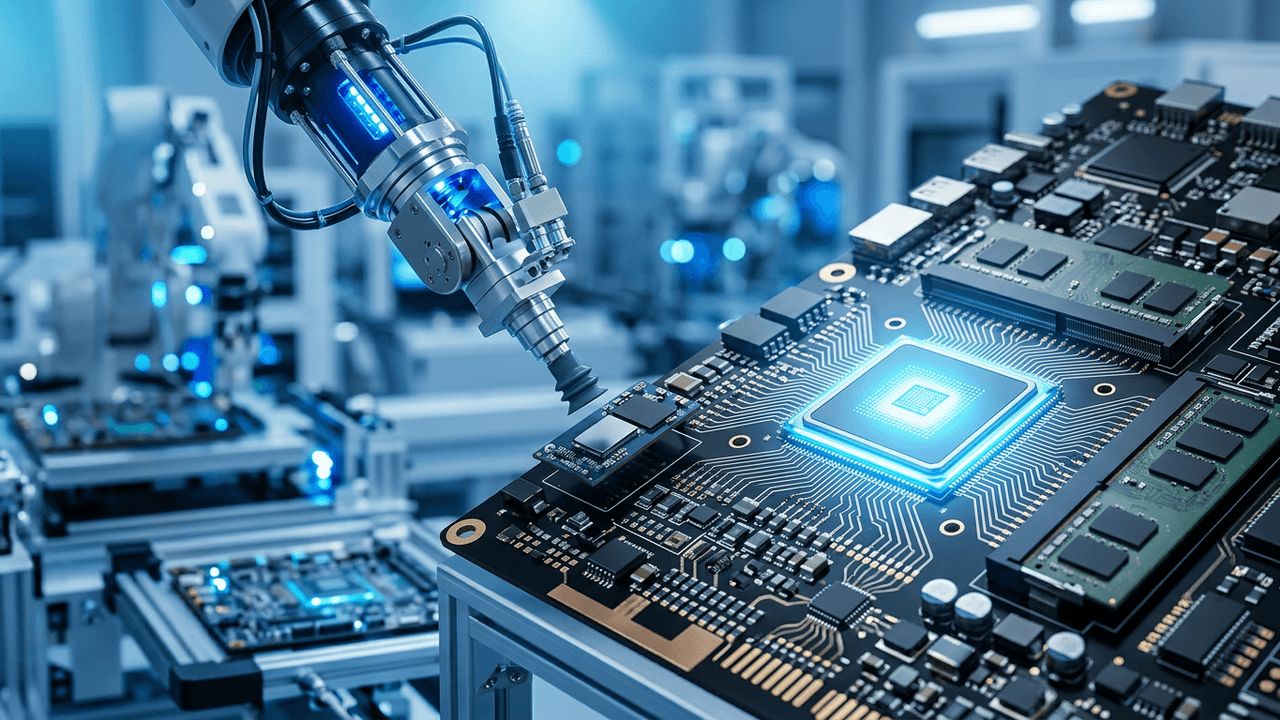
A Genuine Advanced Manufacturing Base
Electronics manufacturing is one of the areas where Derry City and Strabane substantially exceeds expectations for a district of its size. The presence of high technology manufacturing here is not incidental; it reflects decades of investment, a skilled technical workforce, strong engineering education through Ulster University Magee and North West Regional College, and industrial sites at Springtown, Campsie and Maydown that were developed specifically for advanced production.
The output ranges from data storage technology and power distribution equipment to electronic assemblies, control systems, instrumentation and electrical products used in construction and infrastructure. Much of it is exported, and much of it sits invisibly inside products and buildings worldwide. This is a sector where local employment is highly skilled, comparatively well paid and connected to global supply chains.
Ten Companies in the District Electronics Sector
Seagate Technology has operated a significant facility at Springtown in Derry for many years, working in data storage technology. Its presence represents one of the most technically advanced manufacturing operations in Northern Ireland and has been instrumental in developing high level engineering, process and materials science skills locally.
E and I Engineering, a major electrical engineering manufacturer in the North West cross-border region, produces switchgear, busbar systems and power distribution equipment supplied to data centres, hospitals, airports and industrial facilities internationally. It is among the most substantial engineering employers in the area.
Electrical and electronic assembly operations across the district provide contract manufacturing services, including printed circuit board assembly, cable harnessing, panel building and product integration for original equipment manufacturers.
Control systems and automation specialists design and build industrial control panels, programmable logic controller systems and instrumentation for manufacturing, water treatment and energy clients throughout Ireland and beyond.
Precision engineering firms supplying the electronics sector produce machined components, enclosures and tooling to tight tolerances, forming an essential part of the local supply chain.
Test, measurement and calibration providers support manufacturers with compliance testing, electrical safety verification and calibration services required for regulated products and export markets.
Medical device and diagnostics related manufacturers in the district produce electronic and electromechanical products for healthcare applications, operating under quality regimes considerably more demanding than general industrial manufacturing.
Renewable and power electronics specialists manufacture inverter-adjacent equipment, distribution assemblies and control gear serving the growing wind, solar and storage sectors across the North West.
Product design and engineering consultancies in Derry support hardware development, including electronic design, embedded software, enclosure design and route to manufacture, enabling local start-ups to develop physical products.
Strabane based engineering and electrical manufacturers serve industrial, agricultural and construction markets with electrical assemblies, control equipment and fabricated products, contributing significantly to employment in the western part of the district.
What Underpins the Sector Strength
Skills depth is the foundation. Decades of high technology manufacturing have produced process engineers, technicians, quality specialists and maintenance craftspeople with experience that cannot be recruited quickly elsewhere. This concentration is itself an attraction for new investment.
Education links are unusually productive. Engineering and computing programmes at local institutions, combined with apprenticeship routes, supply the sector directly, and employer involvement in curriculum design keeps that pipeline relevant.
Infrastructure matters too. Established industrial sites with appropriate power supply, floor loading and expansion capacity allow manufacturing operations to scale without relocating.
Trends Shaping Electronics Manufacturing
Automation and Industry 4.0 adoption continues, with connected equipment, real-time production monitoring and predictive maintenance improving yield and reducing downtime. This raises the skill profile of the workforce rather than reducing headcount uniformly.
Supply chain resilience has become strategic. Component shortages in recent years pushed manufacturers to redesign for component availability, increase inventory of critical parts and qualify alternative suppliers, changes that are proving durable.
Energy sector demand is growing rapidly. Electrification of heat and transport, data centre construction and renewable generation all require substantial power distribution and control equipment, which plays directly to the district manufacturing strengths.
Sustainability requirements are tightening, with restrictions on hazardous substances, expectations around repairability and product carbon footprint reporting increasingly influencing design decisions.
Working With Local Electronics Manufacturers
Confirm quality certification appropriate to your sector, as requirements for medical, automotive and general industrial applications differ substantially. Discuss volume expectations honestly, since contract manufacturers structure processes very differently for prototype, low volume and high volume production. Engage early on design for manufacture, because decisions taken at the design stage determine most of the eventual production cost. Clarify testing and traceability arrangements, which are essential for regulated products and valuable for all. For businesses across Derry City and Strabane and further afield, the district electronics capability offers a level of technical depth that few comparable locations can match.
Careers and the Talent Pipeline
For young people in Derry City and Strabane, electronics manufacturing represents one of the strongest career paths available locally. Roles span apprentice technician, maintenance craftsperson, process engineer, quality specialist, automation programmer and design engineer, with clear progression and salaries competitive with any sector in the district. Entry routes are varied: apprenticeships through further education, foundation degrees, full engineering degrees and conversion from related trades all lead into the sector. Employers here have generally been proactive in supporting training, partly from necessity, since specialised skills cannot be recruited easily in a regional labour market. For anyone weighing whether to leave the district to build a technical career, the presence of globally connected manufacturing operations makes staying a genuinely viable option rather than a compromise.
Want your brand featured in front of decision-makers? Publish a guest post or get a link insertion in our guides through AAMAX's guest post and link insertion service.
Helpful Links
 SponsoredAAMAX — Full-Service Digital Agency
Write for Us
Share your expertise with our readers. We welcome guest contributions from industry specialists.
Pitch your idea