Chelmsford and the Birth of the Electronics Industry
Few cities can claim a more significant place in electronics history than Chelmsford. The world's first purpose-built radio factory was established here in the early twentieth century, and the city subsequently hosted the first regular public radio broadcasts in Britain. Marconi's operations in Chelmsford made the city a global centre of wireless innovation for decades, and the engineering culture that developed around it shaped the region permanently.
That heritage is not merely commemorative. The concentration of engineering skill, the supply chain relationships, the training pathways and the technical institutions that grew up around radio manufacturing left Chelmsford with an electronics ecosystem that continues to support advanced manufacturing today. The businesses have changed, and the technology has changed beyond recognition, but the underlying capability persisted through the transitions from valves to transistors to integrated circuits to embedded systems.
What Modern Electronics Manufacturing Involves
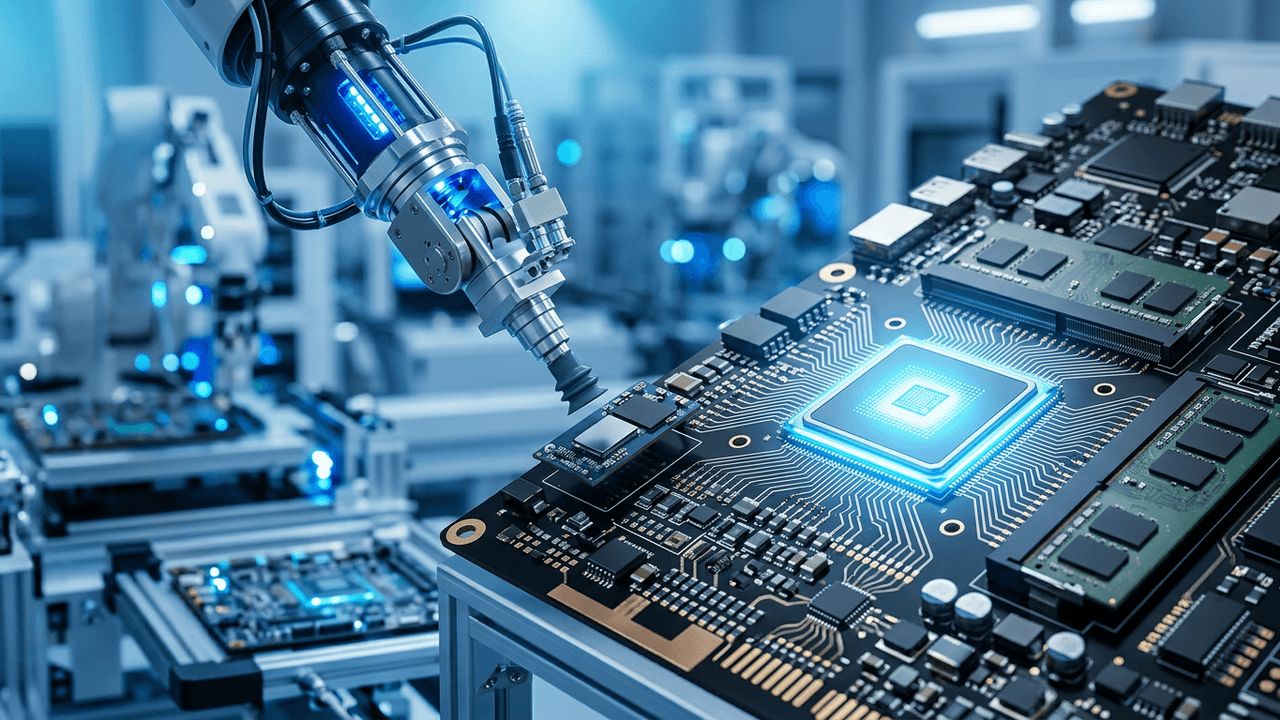
Contemporary electronics manufacturing in Essex divides into several distinct capabilities that buyers should distinguish clearly. Printed circuit board assembly covers surface mount and through-hole population of bare boards, and is the most common outsourced electronics service. Box build extends this to complete product assembly including enclosures, wiring, displays and final packaging. Design services cover schematic capture, board layout, firmware development and compliance testing. Contract manufacturing at full service level combines all of these with procurement and supply chain management.
Quality in electronics assembly is heavily standards-driven. Workmanship acceptability standards define what constitutes an acceptable solder joint, and assemblers certified to the higher classes can serve aerospace, defence and medical applications that lower-tier operations cannot. Quality management certification, and sector-specific approvals for aerospace, automotive and medical device work, determine which markets a manufacturer can legitimately supply.
Ten Notable Electronics Manufacturers and Engineering Businesses Serving Chelmsford
Teledyne e2v maintains a substantial Chelmsford presence and represents the most direct continuation of the city's advanced electronics heritage. Its work centres on high-performance imaging sensors, radio frequency power devices and semiconductor products for space, scientific, medical and defence applications. Its image sensors have flown on major space science missions, and the technical sophistication of its output places it among the most advanced electronics operations in the country.
e2v Semiconductors and the associated Chelmsford semiconductor operations produce specialist components for demanding environments where commercial-grade parts cannot survive. Radiation-tolerant devices for space applications, high-reliability components for critical systems and custom sensor solutions represent a category of manufacturing that requires decades of accumulated process knowledge.
BAE Systems maintains significant electronic systems operations in Essex, supporting defence electronics, avionics and mission systems. The engineering employment and supply chain activity generated by defence electronics work is a substantial part of the regional advanced manufacturing economy, and it sustains a skills base that benefits the wider sector.
Selex and Leonardo electronics operations in the region contribute to radar, electronic warfare and avionics systems development and manufacture. These are technically demanding programmes with long development cycles and exacting reliability requirements, and they anchor a supply chain of specialist regional subcontractors.
Chelmsford Electronics style contract manufacturers serving the local market provide printed circuit board assembly and box build services to businesses across Essex. Regional contract assemblers of this kind are essential infrastructure for the county's product companies, offering prototype through to volume production without the minimum order quantities and communication friction of offshore supply.
Anglia Components operates as a major electronic component distributor serving the East of England design and manufacturing community. Distribution businesses of this scale provide more than logistics: they offer design-in technical support, obsolescence management, component alternative sourcing and inventory programmes that allow small manufacturers to operate efficiently.
Amphenol connector and interconnect operations in the region supply components critical to industrial, aerospace and automotive electronics. Interconnect reliability is one of the most common causes of electronic system failure, and specialist connector manufacturing is correspondingly demanding in its tolerance and materials engineering requirements.
Trident Microsystems style embedded systems developers in the Essex corridor provide design services covering hardware, firmware and compliance for companies bringing connected products to market. The growth of industrial internet-of-things applications has substantially increased demand for this capability among Essex manufacturers digitising their equipment.
Essex Electronics Manufacturing Services providers operating across the county deliver cable assembly, wiring harness production and electromechanical assembly. This category of work is often overlooked but is essential to almost every finished electronic product, and it requires genuine craft skill alongside process control.
Ultra Electronics operations in the wider region contribute specialist electronic systems for defence, security and critical infrastructure applications. Businesses in this category typically combine deep domain knowledge with high-reliability manufacturing disciplines, serving customers for whom failure carries consequences well beyond commercial cost.
The Skills Question
The most persistent constraint on Essex electronics manufacturing is not demand or capital but skilled people. Surface mount process engineers, radio frequency design engineers, embedded firmware developers and experienced test technicians are in short supply nationally, and the competition from London employers is intense given Chelmsford's commuting position.
The regional response has centred on apprenticeship expansion and closer relationships with technical education providers. Anglia Ruskin University's engineering provision in Chelmsford and the county's further education colleges supply a meaningful pipeline, and several of the larger employers have invested substantially in structured apprenticeship programmes that develop process and test skills internally rather than competing for scarce experienced hires.
Reshoring and Supply Chain Resilience
Global component shortages and shipping disruption over recent years changed procurement thinking permanently. Companies that had optimised exclusively for unit cost discovered that a low-cost supply chain with a single point of failure carries risk that does not appear on a purchase order. The result has been renewed interest in regional manufacturing capacity, dual sourcing and higher inventory buffers on critical components.
Essex assemblers have benefited from this shift, particularly for products where volumes are moderate, engineering change is frequent, or intellectual property sensitivity makes offshore production unattractive. The competitive argument for local assembly is rarely lowest piece price; it is total cost including inventory, freight, quality risk, engineering change responsiveness and the value of being able to visit the production line.
Selecting an Electronics Manufacturing Partner
Buyers should match the manufacturer to the product's requirements rather than seeking the broadest capability. Confirm the workmanship class the assembler works to and whether it matches the application. Verify sector approvals if the product serves aerospace, medical or automotive markets. Establish test capability, because assembly without meaningful electrical test transfers risk downstream. Understand how component procurement and obsolescence will be managed across the product lifecycle.
For Chelmsford companies, the value of local electronics manufacturing lies in engineering collaboration. Being able to walk the line, review a first article in person, and resolve a design-for-manufacture issue in a single conversation rather than a fortnight of correspondence is a genuine commercial advantage that unit price comparisons consistently understate.
Want your brand featured in front of decision-makers? Publish a guest post or get a link insertion in our guides through AAMAX's guest post and link insertion service.
Helpful Links
 SponsoredAAMAX — Full-Service Digital Agency
Write for Us
Share your expertise with our readers. We welcome guest contributions from industry specialists.
Pitch your idea