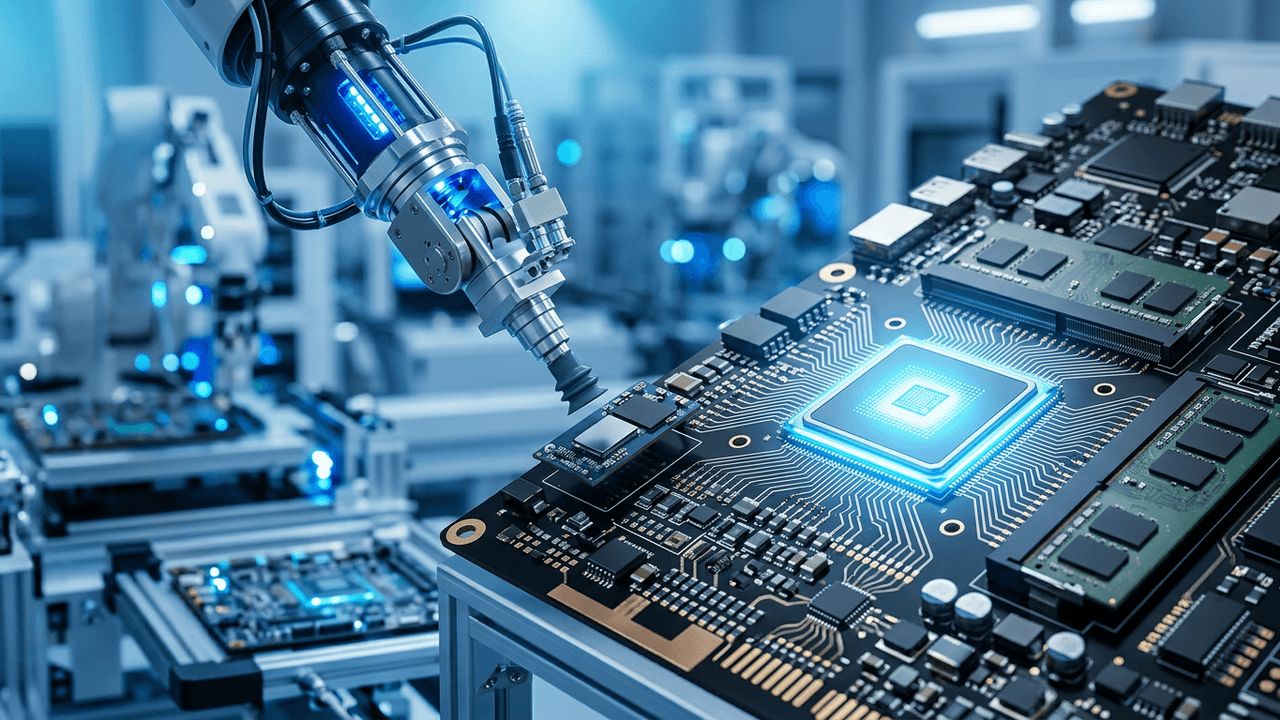
Cambridge occupies a position in electronics that few cities of comparable size anywhere in the world can match. The processor architectures designed here power the majority of mobile devices globally, and the surrounding cluster includes semiconductor designers, sensor developers, radio specialists, embedded systems engineers and contract manufacturers. This concentration, often described as Silicon Fen, developed over four decades and continues to generate new companies at a remarkable rate.
Why Cambridge Became an Electronics Centre
The cluster's origins lie in a combination of university research, early computing ventures and a culture of technical entrepreneurship in which engineers repeatedly left established companies to found new ones. That pattern created dense networks of expertise in low-power design, wireless communication, analogue circuitry and system architecture, alongside investors who understood long semiconductor development cycles.
The result is an ecosystem where design capability dominates and manufacturing is often outsourced to specialist foundries, complemented locally by high-mix, low-volume contract manufacturers producing prototypes, instruments and specialist equipment. For companies developing new hardware, this proximity between design and build capability is genuinely valuable.
What the Sector Encompasses
Local activity includes semiconductor intellectual property and chip design, radio frequency and wireless systems, sensors and photonics, printed circuit board assembly, scientific and analytical instrumentation, embedded software and firmware, test and measurement systems, and electronics design consultancy covering the full path from concept to production.
Ten Electronics Companies Connected to Cambridge
1. Arm
Headquartered in Cambridge, Arm designs the processor architectures used across an enormous range of devices worldwide. Its presence anchors the entire cluster, supplying talent, standards and commercial gravity to the regional electronics economy.
2. Nordic Semiconductor Cambridge operations
Low-power wireless design teams in the city contribute to Bluetooth and short-range radio technology used extensively in connected devices, reflecting the region's long-standing strength in radio frequency engineering.
3. Cambridge Consultants
A major technology development firm, Cambridge Consultants designs electronics, sensors and complete products for clients across medical devices, industrial systems and communications, with substantial in-house prototyping capability.
4. CML Microcircuits
Operating in the eastern region, CML designs and supplies mixed-signal and radio frequency integrated circuits for communications applications, representing the applied semiconductor side of the local industry.
5. Xaar
Cambridge-founded Xaar develops industrial inkjet printhead technology, combining microelectronics, fluid dynamics and precision manufacturing in a demanding high-reliability product.
6. Alphasense
Producing gas sensors for air quality and industrial safety applications, this regional manufacturer illustrates how electrochemical and electronic engineering combine in high-volume sensing products.
7. Cambridge Sensoriis and sensing spin-outs
Numerous smaller ventures in the city develop radar, photonic and environmental sensing modules, frequently emerging from university research and moving into commercial production locally.
8. Riverside Electronics and regional contract manufacturers
Contract electronics manufacturers across Cambridgeshire provide printed circuit board assembly, cable harnessing and box build services, supporting the prototyping and low-volume production needs of the design cluster.
9. TTP Group
The Technology Partnership develops products and production systems combining electronics, software and precision engineering, working across healthcare, industrial and digital printing applications.
10. Nu Quantum and quantum hardware ventures
Cambridge quantum technology companies build photonic and control electronics of extreme precision, representing the frontier of the city's electronics capability and drawing directly on local research.
Trends in Electronics Manufacturing
Energy efficiency has become the primary design constraint. Whether for battery-powered sensors, edge computing devices or data centre processors, performance per watt now drives architectural decisions, and Cambridge's historic strength in low-power design is consequently more valuable than ever.
Artificial intelligence at the edge is reshaping hardware requirements, with dedicated accelerators appearing in devices that previously relied on cloud processing. This has generated demand for new chip designs and for embedded software capable of running inference within tight power budgets.
Supply chain considerations have altered manufacturing strategy. Component shortages prompted greater emphasis on design flexibility, second sourcing and closer relationships with assembly partners. Regional contract manufacturers benefited from this shift, particularly for products where responsiveness matters more than unit cost. Sustainability requirements covering materials, repairability and end-of-life recovery are increasingly influencing product design from the outset.
How to Choose an Electronics Partner
Distinguish clearly between design consultancy and manufacturing services, as few organisations excel equally at both. For design work, examine relevant domain experience and ask how intellectual property will be owned and documented. For manufacturing, review quality accreditations, test capability and traceability processes. Discuss volume expectations honestly, since partners optimised for prototypes differ from those geared to production runs. Confirm component sourcing strategy and how obsolescence will be managed over the product lifetime. Finally, ensure design for manufacture is considered early rather than after the schematic is complete.
Final Thoughts
Electronics remains the defining industry of technical Cambridge, spanning globally significant chip architecture through to specialist sensing and instrumentation. For any organisation developing hardware, the density of expertise in the city means design, prototyping and low-volume manufacturing partners can often be found within a short distance of one another. The companies above show both the scale and the specialism that characterise the cluster.
Want your brand featured in front of decision-makers? Publish a guest post or get a link insertion in our guides through AAMAX's guest post and link insertion service.
Helpful Links
 SponsoredAAMAX — Full-Service Digital Agency
Write for Us
Share your expertise with our readers. We welcome guest contributions from industry specialists.
Pitch your idea