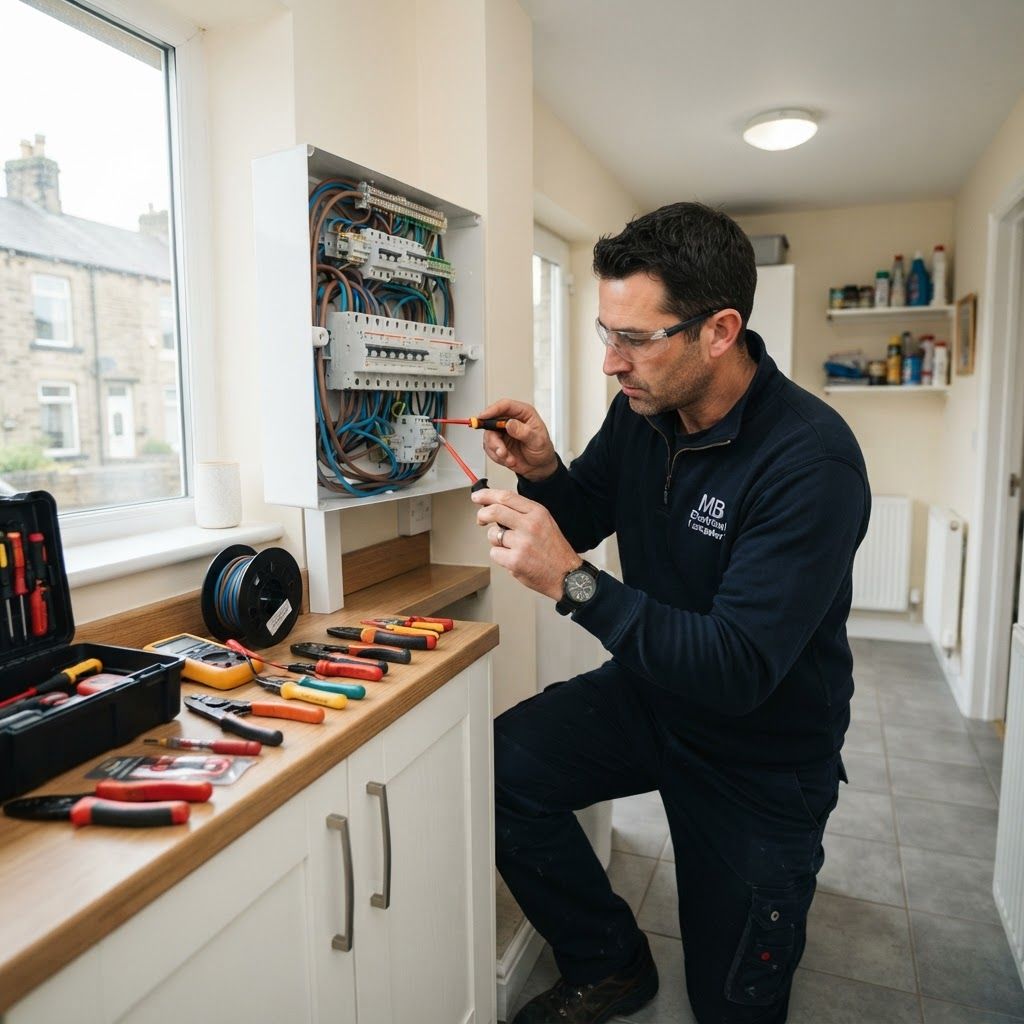
Choosing an Electrician Is a Safety Decision
Electrical work differs from most trades in one important respect: faults are usually invisible until they cause harm. A badly hung door is obvious immediately. A poorly terminated connection inside a socket may function normally for years before overheating. This is why registration, certification and demonstrable competence matter more than price when appointing an electrician.
In Lancaster the stakes are heightened by the age of much of the housing stock. Properties wired decades ago frequently contain deteriorated insulation, inadequate earthing, no residual current protection and far too few sockets for modern life, leading to reliance on extension leads and adaptors.
Registration and Certification to Verify
Electricians undertaking domestic work in England should be registered with a government-approved competent person scheme. Registration allows them to self-certify that work complies with building regulations and to issue the certificates that building control and future purchasers expect.
Homeowners can and should verify registration through the scheme's public database rather than relying on a logo. It is also worth confirming that the individual attending is the registered person or is properly supervised by them.
Work must comply with the current edition of the national wiring regulations, which have introduced requirements including surge protection, arc fault detection in certain circumstances and specific provisions for electric vehicle charging installations.
Common Electrical Work in Lancaster Homes
Consumer unit replacement. Replacing older fuse boards with modern units incorporating residual current devices dramatically improves protection against electric shock and fire. This is frequently the single most valuable safety upgrade in an older property.
Full and partial rewiring. Properties still containing rubber, lead or early PVC wiring require rewiring. Signs include round-pin sockets, fabric-covered flex, brown bakelite fittings and a fuse board with rewireable fuses.
Additional sockets and circuits. Home working, kitchen appliances and entertainment systems have vastly increased demand. Adding properly designed circuits is far safer than daisy-chained extension leads.
Lighting. LED replacement, downlight installation with fire-rated fittings, outdoor and security lighting, and smart controls.
Electrical installation condition reports. Periodic inspection identifying deterioration and non-compliance, legally required for rented property and advisable every ten years for owner-occupied homes.
Fault finding. Tracing intermittent tripping, flickering lights and dead circuits, which requires methodical testing rather than guesswork.
Rewiring Period Property Without Destroying It
Rewiring a Victorian or Georgian home in Lancaster is disruptive by nature, but the degree of damage depends heavily on the electrician's approach. Careless chasing destroys original lime plaster and cornicing; careless floorboard lifting splits boards that cannot be matched.
Skilled electricians plan routes using existing voids, chimney breasts and under-floor spaces, lift boards with the intention of relaying them intact, avoid cutting through structural joists incorrectly and coordinate timing with plasterers and decorators so that making good happens efficiently.
In listed buildings, consent may be required for works affecting historic fabric, and surface conduit or discreet trunking in appropriate finishes is sometimes preferable to invasive chasing. Homeowners should discuss this explicitly before work begins.
Electric Vehicle Charging at Home
Home charging is now a mainstream request. A compliant installation requires assessment of the incoming supply capacity, verification of earthing arrangements, dedicated circuit protection, and often notification to the local distribution network operator.
Lancaster's dense terraced streets create particular difficulty, as many residents have no off-street parking. Electricians are increasingly involved in workplace charging, communal parking installations and solutions for residents' associations. Where supply capacity is constrained, load management devices allow charging to modulate according to household demand rather than requiring an expensive supply upgrade.
Solar Panels, Batteries and Smart Homes
Rising energy costs have driven strong interest in solar photovoltaic systems and battery storage. Competent installers assess roof orientation, pitch and shading realistically, size systems to household consumption patterns, and set up monitoring so owners can see the effect of their usage habits.
Smart home installation is another growth area, covering intelligent lighting, heating controls, networked audio and integrated security. The quality difference here lies in infrastructure: running proper data cabling and providing adequate power and network points during first fix produces a far more reliable system than retrofitting wireless devices onto an inadequate foundation.
Landlord Obligations and Testing
Lancaster's extensive rental market makes electrical safety testing a significant activity. Landlords must obtain an electrical installation condition report at prescribed intervals, supply copies to tenants and remedy any faults classified as requiring urgent attention within defined timescales.
Electricians offering scheduled portfolio compliance, digital certification and prompt remedial quotations are highly valued by agents and landlords managing multiple properties, particularly around the summer turnover period.
Warning Signs That Need Attention
Certain symptoms warrant prompt investigation: repeated circuit breaker tripping, warm or discoloured sockets and switches, a burning smell near electrical fittings, flickering lights across multiple circuits, mild shocks from appliances or taps, and a fuse board with rewireable fuses rather than modern protective devices.
None of these should be ignored or addressed by an unqualified person. Electrical fires frequently begin at loose connections that produce exactly these early warnings.
How to Select an Electrician
Verify scheme registration independently. Request an itemised written quotation specifying accessories, cable types and the certificates to be issued on completion. Confirm whether building control notification is included where required.
Ask for references relevant to your project, especially for period property rewires. Check public liability insurance. Establish whether the price is fixed or subject to variation, and clarify who makes good plaster and decoration afterward, as this is a frequent source of dispute.
Avoid uncertified work offered cheaply. Beyond the safety risk, uncertified electrical work causes problems during property sale and can invalidate buildings insurance following an incident.
Final Thoughts
The best electricians in Lancaster pair current regulatory knowledge with genuine care for the buildings they work in. They test methodically, certify properly, explain findings in plain language and handle period fabric with respect. Electrical work is rarely the most visible investment a homeowner makes, but it is consistently among the most important for safety, functionality and the long-term value of the property.
Want your brand featured in front of decision-makers? Publish a guest post or get a link insertion in our guides through AAMAX's guest post and link insertion service.
Helpful Links
 SponsoredAAMAX — Full-Service Digital Agency
Write for Us
Share your expertise with our readers. We welcome guest contributions from industry specialists.
Pitch your idea